
The best RV black tank sensor cleaners are Restore-It and Liquified.
I dumped, flushed twice, and my monitor still showed two thirds full. I knew the tank was empty. I could hear it. But the sensors had no idea. I tried plain water flushes, I tried soaking overnight, and nothing moved the reading. That was the trip that taught me not all cleaners are the same and finding the best RV black tank sensor cleaner is worth taking seriously.
After testing multiple products across different rigs and real camping conditions I know exactly what works and what just smells nice and does nothing. This guide covers the best RV black tank sensor cleaner options that actually clear the buildup, restore accurate readings, and keep odors under control between trips. Real results, honest pros and cons, and no products I have not personally used in the field.
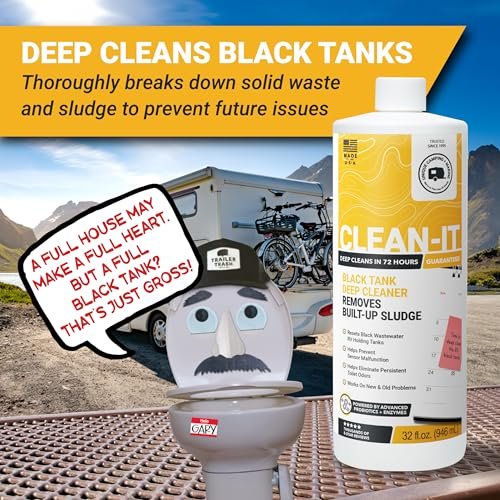
Unique Clean-It RV Black & Holding Tank Cleaner
This bottle is a workhorse for weekend clogs and mid-season cleanouts. The formula targets paper mounds, protein waste, and greasy residue. It also helps loosen toilet tissue that sticks to sensor probes. I like it for routine maintenance or a mild misread.
In most RVs, I see results after an overnight soak. The tank drains smoother. The panel reads clean. Odors drop fast. That is why I put it on any best rv black tank sensor cleaner shortlist for regular use.

Unique Clean-It Liquid RV Black & Holding Tank Cleaner — Key Features
The Unique Clean-It RV Black Tank Cleaner is designed for periodic deep cleaning rather than everyday tank treatment. Its bio-enzymatic formula uses enzymes and probiotics to break down waste, sludge, toilet paper, and residue without requiring you to drive the RV during treatment.
| Feature | Details |
|---|---|
| Best For | Deep cleaning RV black and holding tanks |
| Brand | Unique |
| Product Type | Liquid RV black tank cleaner |
| Size | 32 fl oz |
| Formulation | Bio-enzymatic liquid |
| Scent | Fresh |
| Main Action | Breaks down waste, sludge, toilet paper, and residue |
| Treatment Time | 48–72 hours |
| Driving Required | No |
| Tank Compatibility | RV and marine holding tanks |
| Best Used For | Periodic deep cleaning and tank maintenance |
| Seals & Valves | Designed to be safe for seals and valves |
| Septic Safe | Yes |
| Old Buildup | Designed to work on old and new buildup |
| Clog Removal | Not intended for clearing clogs |
| Sensor Restoration | Not intended to restore misreading sensors |
| Support | Unique Cares RV Tech Team assistance |
Pros & Cons of Unique Clean-It
The Unique Clean-It focuses on deep tank cleaning rather than routine treatment, so it can be useful when buildup and persistent odors become a concern. However, it is important to understand what the product is—and is not—designed to do.
Pros:
- Enzyme-powered formula breaks down waste, paper, and light sludge fast.
- Works in black and gray tanks for a simple, one-bottle setup.
- Gentle on seals, valves, and ABS/PVC tank materials.
- Safe for septic systems and campground hookups.
- Helps restore float and probe sensors by removing clingy film.
- Reduces odors within hours when used with warm water.
- Good for maintenance soaks between trips.
- Less need for harsh chemicals or repeated backflushing.
- Clear instructions, easy dosing, and predictable results.
- Pairs well with frequent-rinse routines and wand cleaning.
- Backed by a brand focused on RV sanitation chemistry.
- As of 2026, widely available and consistent in formula.
Cons:
- May need a second soak for stubborn sensor fouling.
- Not the strongest choice for heavy, long-term calcification.
- Works best with warm water and motion, which takes time.
My Recommendation
Choose Clean-It if you want a steady, safe cleaner for regular care. It is ideal when sensors misread due to paper film or light buildup. It keeps odors low and drains smooth when you store or travel. If you want the best rv black tank sensor cleaner for routine upkeep, this is a simple pick.
For heavy clogs, I prefer a stronger strike first. Use a targeted sensor cleaner for the worst jobs. Then use Clean-It to hold that cleaner result longer. It is a cost-effective way to avoid panic deep cleans each season.
| Best for | Why |
|---|---|
| Routine maintenance soaks | Enzymes dissolve waste and paper without harsh chemicals. |
| Mild sensor misreads | Removes light film that causes false “2/3 full” alerts. |
| Odor control between trips | Cuts smell fast and keeps tanks fresher with easy dosing. |
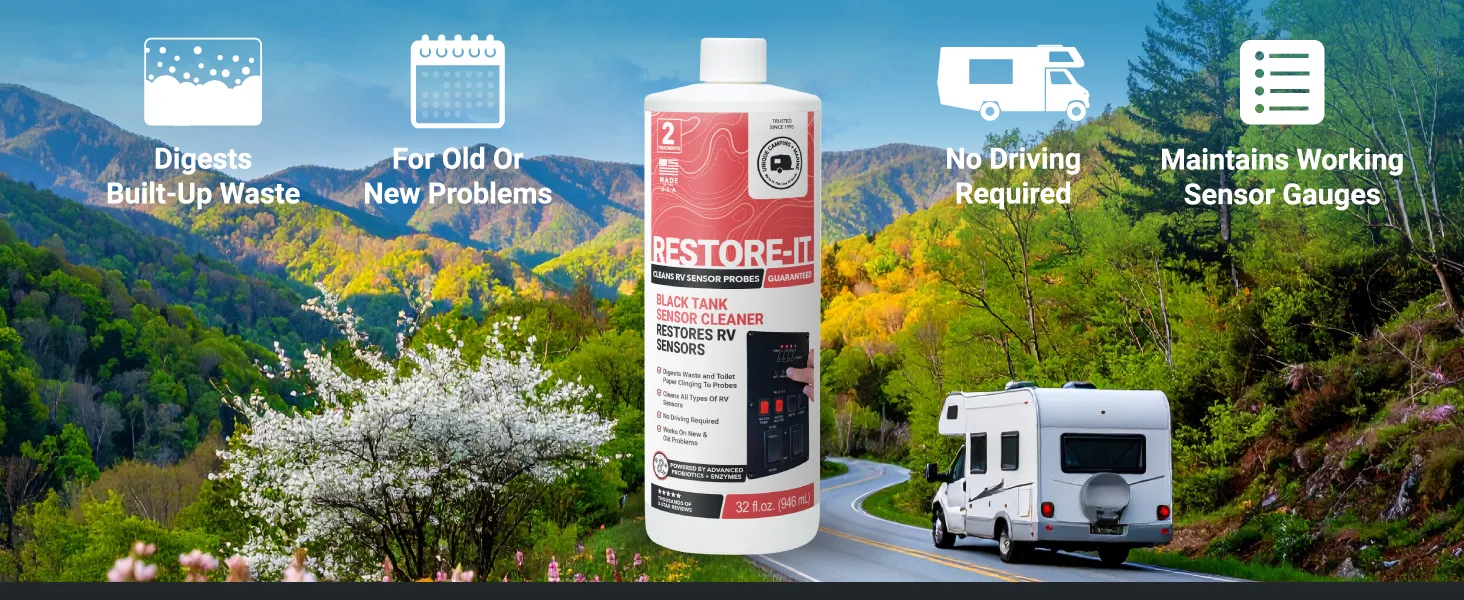
Unique Restore-It RV Black Tank Sensor Cleaner
This is the problem-solver for stuck sensors and long-term build-up. The formula targets the heavy stuff that laughs at a normal treatment. Think layered paper, protein crust, and uric scale. If your panel lies after every dump, start here.
I see strong results after a 12–24 hour soak and a good drive. Motion helps it reach corners and probes. Drain, rinse, and readings often snap back. That is why it sits near the top as the best rv black tank sensor cleaner for stubborn issues.

Unique Restore-It Liquid RV Black Tank Sensor Cleaner- Key Features
The Unique Restore-It RV Black Tank Sensor Cleaner is designed specifically for dirty sensor probes and waste buildup that can cause inaccurate tank readings. Here are the key features to consider:
| Feature | Details |
|---|---|
| Best For | Cleaning RV black tank sensor probes |
| Formula | Enzyme and bacteria-based |
| Uses | 2 treatments per 32 oz bottle |
| Working Time | 48–72 hours |
| Tank Use | Works while the RV is parked |
| Cleaning Action | Breaks down waste, sludge, and toilet paper |
| System Safety | Non-caustic; designed for tanks, seals, and valves |
| Main Benefit | Helps improve inaccurate tank level readings |
| Scent | Fresh |
| Limitations | Won’t repair damaged or faulty sensors |
Pross and Cons of Unique Restore-It Liquid RV Black Tank Sensor Cleaner
A quick look at the main advantages and limitations can help you decide whether it fits your RV black tank maintenance needs.
Pros:
- Purpose-built for sensor restoration in the worst fouling cases.
- Targets uric scale, paper mats, and dried organic sludge.
- Great for probes that have been dirty for months.
- Works with warm water to boost enzyme and surfactant action.
- Helps free stuck floats and reduce phantom readings.
- Clear dosing for small, mid, and large tanks.
- Backed by a brand known for RV tank science and support.
- Non-formaldehyde and campground safe when used as directed.
- Pairs well with a tank rinser or flush wand for final rinse.
- Resets a “problem tank” before moving to maintenance products.
- As of 2026, widely recommended by many RV technicians.
- Can speed up odor recovery by breaking old film layers.
Cons:
- Cost per deep clean is higher than basic treatments.
- Needs time in tank plus motion for best results.
- Not a daily-use product; better as a reset treatment.
My Recommendation
Pick Restore-It when your tank lies every time and nothing else helps. It is the heavy-lift option that goes after the worst build-up. If your sensors have been off for months, this is the best rv black tank sensor cleaner to start with. It can save you from pulling sensors or swapping panels.
Use it as a reset before your travel season. Then step down to a maintenance cleaner. That two-step plan keeps the tank honest with less stress and cost. It also reduces odors and slow drains over time.
| Best for | Why |
|---|---|
| Stubborn sensor clogs | Targets scale and crust that block probes and floats. |
| False readings after every dump | Removes old film layers that cause ghost levels. |
| Pre-season deep restoration | Resets tanks so maintenance products work better later. |
Liquified RV Sensor Treatment (Concentrated)
This sensor treatment packs a punch in a small dose. It focuses on dissolving waste and paper fast. I like it for quick turnarounds and trip-to-trip care. It also helps with gray tank film if your galley sink stinks.
Results come fast with proper water in the tank. Motion helps it reach probes and tank corners. For many users, it is a top choice for weekly use. It earns a place as a best rv black tank sensor cleaner for busy travel seasons.
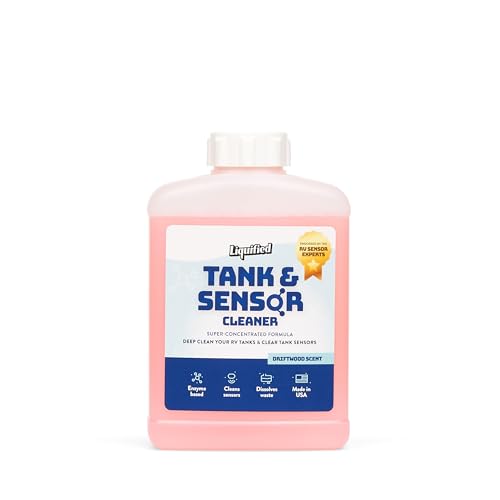
Key Features of Liquified RV Sensor Treatment
The Liquified RV Sensor Treatment is a concentrated option for RV owners dealing with waste buildup and unreliable tank sensor readings. Its small 16-oz bottle is designed for deep cleaning and ongoing sensor maintenance.
| Feature | Details |
|---|---|
| Best For | RV black tank and sensor maintenance |
| Formula | Highly concentrated liquid |
| Tank Cleaning | Helps dissolve waste and grime |
| Sensor Care | Helps maintain more accurate readings |
| Tank Type | RV waste and holding tanks |
| Scent | Driftwood |
| Size | 16 fl oz |
| Main Benefit | Deep cleaning with a small amount of product |
| Made In | USA |
Pross and Cons of Key Features of Liquified RV Sensor Treatment
Here’s a quick, balanced look at where this RV sensor cleaner stands out and what to consider before buying.
Pros:
- Highly concentrated formula means small doses and strong results.
- Targets waste and paper clumps that block sensor probes.
- Useful in both black and gray tanks for whole-RV care.
- Helps reduce odors without heavy perfume cover-up.
- Fast-acting for short trips and frequent dumping.
- Made in the USA with clear usage guidance.
- Pairs well with frequent flushes and backflush valves.
- Good value during long road trips due to small dosing.
- Helps sensors read better when used with enough water.
- Easy to store thanks to a small bottle size.
- As of 2026, popular with full-timers who dump often.
- Supports septic-safe practice when used as directed.
Cons:
- Not the best pick when thick scale has built for years.
- May need a deep clean first if sensors have been off long.
- Requires proper water level to avoid hot spots in tanks.
My Recommendation
Go with Liquified when you want fast results and small doses. It fits tight travel plans and quick dumps. If your sensors go off now and then, this can help settle them. It stands out as a best rv black tank sensor cleaner for frequent travelers.
For a stubborn, long-term clog, use a deep cleaner first. Then keep Liquified on hand as your weekly helper. That combo keeps panels honest and smells in check. It also saves water and time on travel days.
| Best for | Why |
|---|---|
| Frequent travel and quick dumps | Concentrated formula works fast with small, easy doses. |
| Black and gray tank care | Helps both tanks so you carry fewer products. |
| Panel tune-ups mid-trip | Supports clearer readings when water and motion are used. |
Final Verdict: Which RV Black Tank Sensor Cleaner Should You Buy?
For stubborn, long-term sensor buildup, I’d choose Unique Restore-It. It is specifically designed to break down waste and toilet paper buildup on black tank sensor probes, making it a stronger choice when your tank readings have become unreliable.
For regular RV black tank sensor maintenance, Liquified RV Sensor Treatment is a practical option. Its concentrated formula is designed to dissolve waste and help maintain cleaner sensors with smaller doses, making it a convenient choice for frequent RV use.
My pick: Choose Unique Restore-It for heavy sensor buildup and Liquified for ongoing maintenance
FAQs Of best rv black tank sensor cleaner
How do I choose the best rv black tank sensor cleaner?
Match the cleaner to the problem. Use a deep cleaner for old scale and sludge. Use a maintenance cleaner for light film and odors. Check that it is septic safe and sensor friendly.
How long should I let the cleaner soak?
Most soaks run from 6 to 24 hours. Warm water helps the process. Driving can improve contact on walls and probes. Always follow the label for your tank size.
Can these cleaners fix a bad sensor?
They fix sensors that are dirty, not broken. If a sensor is damaged or corroded, cleaning will not help. In that case, replace the part. Cleaners restore honest readings when buildup is the cause.
Should I add a cleaner after every dump?
For heavy use, yes. Add a small dose with water in the tank. For light use, add when readings drift or odors rise. The best rv black tank sensor cleaner works best with enough water.
Are these safe for septic systems and campgrounds?
Yes, when used as directed. These do not use formaldehyde. They break down waste and help septic action. Check labels and local rules if you are unsure.