
An rv water pressure gauge helps you spot high supply pressure before it puts your camper’s plumbing at risk.
Campground water pressure can vary, and a strong flow alone cannot tell me whether a hookup is safe for an RV’s plumbing. I recommend using an RV Water Pressure Gauge to check supply pressure against the manufacturer’s limits for your RV, hose, and connected fittings.
In this review, I assess the SENCTRL gauge’s listed features, peak-reading function, and practical limitations. My evaluation is based on product information, not hands-on testing. A gauge measures pressure—it does not lower it, so a suitable regulator is still needed to control excessive supply pressure.

Is SENCTRL Water Pressure Gauge Good?
Yes—for checking tap pressure and tracking its peak, the listed design makes sense. The SENCTRL Water Pressure Gauge pairs a 0–200 PSI scale with a peak-reading hand. It also has a standard 3/4-inch female garden hose thread. That makes it a useful test tool for RV owners who want to check a campsite tap before they hook up.
My verdict is based on the supplied product details, not hands-on testing. I would use this type of gauge in two common cases: checking an unknown campground tap and looking for pressure rises over time. Those are use cases, not personal test results. The key limit is clear: this gauge measures pressure; it does not lower it. You still need a suitable regulator when the source pressure exceeds your RV maker’s limit.
My First Impression for SENCTRL Water Pressure Gauge
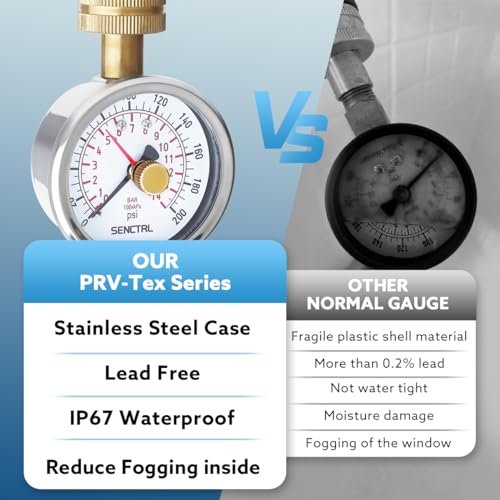
The supplied images show a compact dial gauge with a steel case and a hose-thread fitting. The listing does not show enough detail to judge how well the shipping box protects it. I have not opened or handled this unit, so I cannot verify its weight, finish, or fit by touch. On paper, though, the design looks direct and easy to grasp.
For first use, the female fitting should screw onto a matching male garden hose outlet. Check that the sealing washer is in place, then open the tap slowly. My initial reaction to the feature set is positive: the peak hand adds real value beyond a basic dial. I would still want to check for leaks and compare readings with a known reference before trusting it for close diagnostic work.

What Makes It Stand Out / Key Features
- 0–200 PSI range: Covers a broad span for checking household and campsite water supplies.
- Peak-reading “lazy hand”: Designed to mark the highest pressure reached during a test.
- 2.5-inch dial: Gives you a dedicated face to read without a phone or app.
- 3/4-inch female garden hose thread: Fits matching male garden hose outlets commonly found at campsites.
- Stainless steel case: Provides a practical outer shell for a tool used near water.
- Listed IP67 rating: Adds water and dust protection within the rating’s test limits. It does not make the gauge freeze-proof.
- Listed lead-free design: Intended for potable-water use. Check the current listing for any specific certifications you require.

What I Like
These are the design benefits I value most, rather than claims from field testing. They address the main reason to carry a pressure tester: less guesswork at an unfamiliar tap.
- Peak tracking adds context. A single glance may miss a later rise in pressure.
- The hose fitting keeps checks simple. You should not need a special adapter for a matching campsite outlet.
- The dial needs no batteries. There is no charge level to check before a trip.
- It has uses beyond camping. You can also check compatible hose taps at home.
- It separates diagnosis from control. You can assess the source, then choose or adjust a regulator as needed.
- The listed weather protection suits wet work. That is a useful feature for a tool used beside a hose.

What Could Be Better
- No pressure control: This is a test gauge, not a regulator. Its single connection also means you need a suitable tee or other setup to monitor a line while supplying the RV.
- A broad scale has a trade-off: A 0–200 PSI dial gives less space to normal RV readings than a similar-size, lower-range dial.
- Accuracy needs verification: The supplied details do not establish a calibration tolerance. Do not assume lab-grade precision or that the peak hand will capture every brief surge.

My Recommendation
I recommend the SENCTRL Water Pressure Gauge for RV owners who already have a regulator and want a separate test tool. Its peak hand is the main draw if you suspect that pressure changes after your first check. Think of it as a dashboard, not a brake: it shows the pressure but cannot keep it in check.
| Best for | Why |
|---|---|
| Checking new campsites | The garden hose fitting lets you test a compatible tap before hookup. |
| Watching for pressure rises | The peak hand can retain a higher reading reached during the test. |
| RV and home use | One gauge can serve compatible outdoor taps in both places. |
If you need one device to reduce pressure and show the result, buy a regulator with a gauge instead. The SENCTRL Water Pressure Gauge is worth considering when its price suits your budget and you need its testing features. Check the current Amazon listing for price, stock, and warranty terms.

Alternative Products You Can Consider
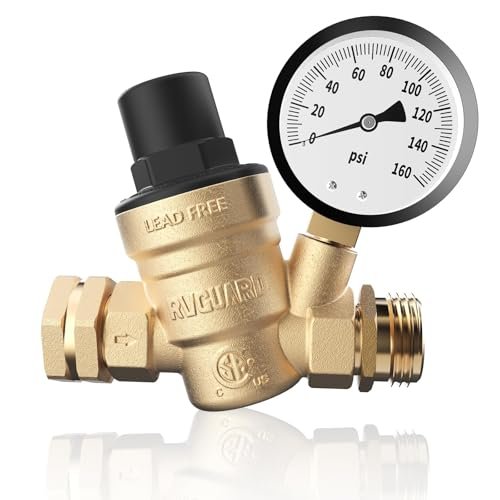
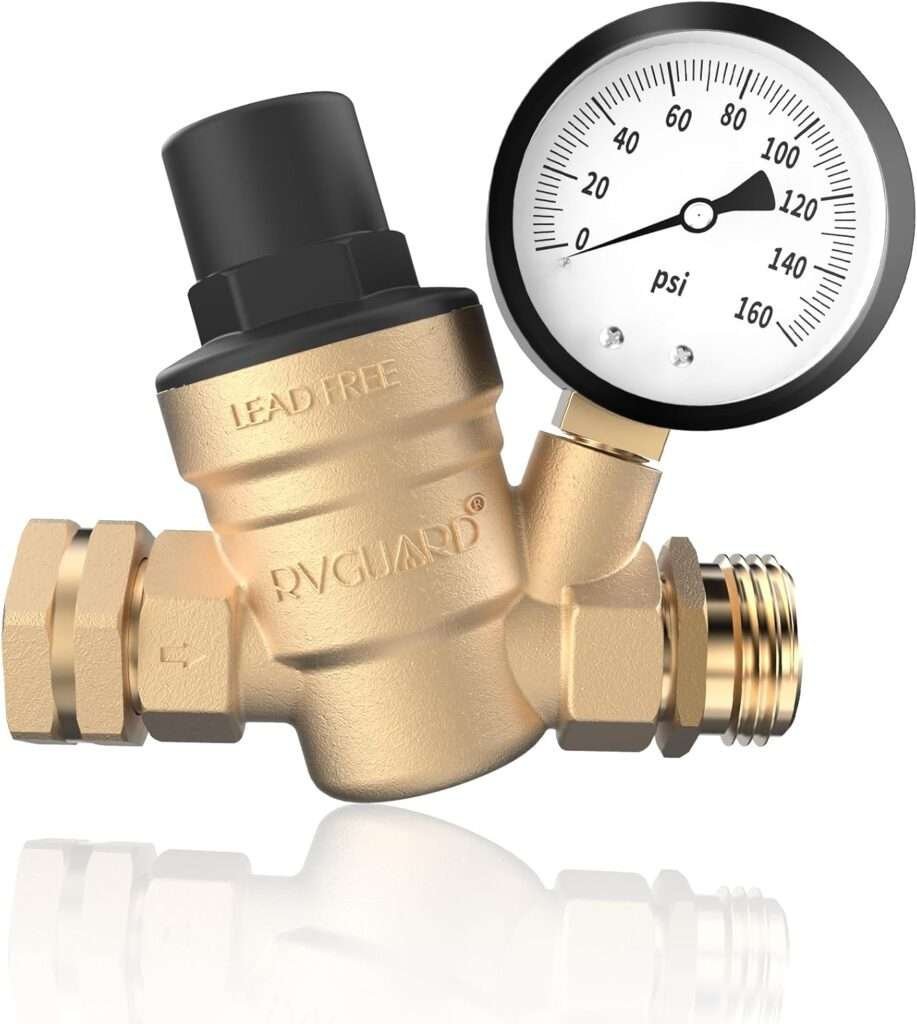
Renator M11-0660R Adjustable Water Pressure Regulator is a better fit if you need to control incoming pressure. It combines an adjustable regulator with a gauge, rather than serving only as a tester. Unlike the SENCTRL, it is meant to work in the supply line while water flows to your RV. Check its current specifications and set it within your RV maker’s stated limit.
Camco Brass Water Pressure Regulator with Gauge suits owners who prefer a simple preset regulator. It reduces incoming pressure and shows a reading, so it handles a different job from the standalone SENCTRL tester. The trade-off is less control over the pressure setting than an adjustable model offers. Confirm the exact model’s preset range and flow rating before you buy.
| Product | Best For | Key Difference |
|---|---|---|
| SENCTRL Water Pressure Gauge | Source checks and peak tracking | Measures pressure; does not regulate it |
| Renator M11-0660R | Adjustable pressure control | Combines a regulator and gauge |
| Camco Brass Regulator with Gauge | Simple preset control | Reduces pressure to a preset range |
The image below shows the reviewed SENCTRL gauge, not either alternative.

Final Verdict: Which Should You Buy?
Choose the SENCTRL Water Pressure Gauge if your main goal is to test a tap and track peak pressure. Its hose fitting, peak hand, and listed IP67 protection make a useful feature set. It is most compelling as a partner to a regulator you already own.
Choose the Renator M11-0660R if you want adjustable pressure control with a gauge. Choose the Camco regulator with gauge if a preset model meets your RV’s needs. For safe hookups, the key is not just knowing the pressure—it is keeping that pressure within your system’s limits.
FAQs Of rv water pressure gauge
What water pressure is safe for an RV?
Many owners use a setting around 40–50 PSI, but that is not a universal rule. Follow your RV maker’s limit and the ratings of your hose, filter, and other parts. Use the lowest applicable limit.
Does this gauge reduce water pressure?
No. The SENCTRL gauge only measures pressure. You need a separate regulator to reduce high incoming pressure.
What does the lazy hand do?
It is designed to mark the highest reading reached during a test. Reset it as directed before a new test. It is not a time-stamped log and may not catch every very brief spike.
Can I leave the gauge attached while using water?
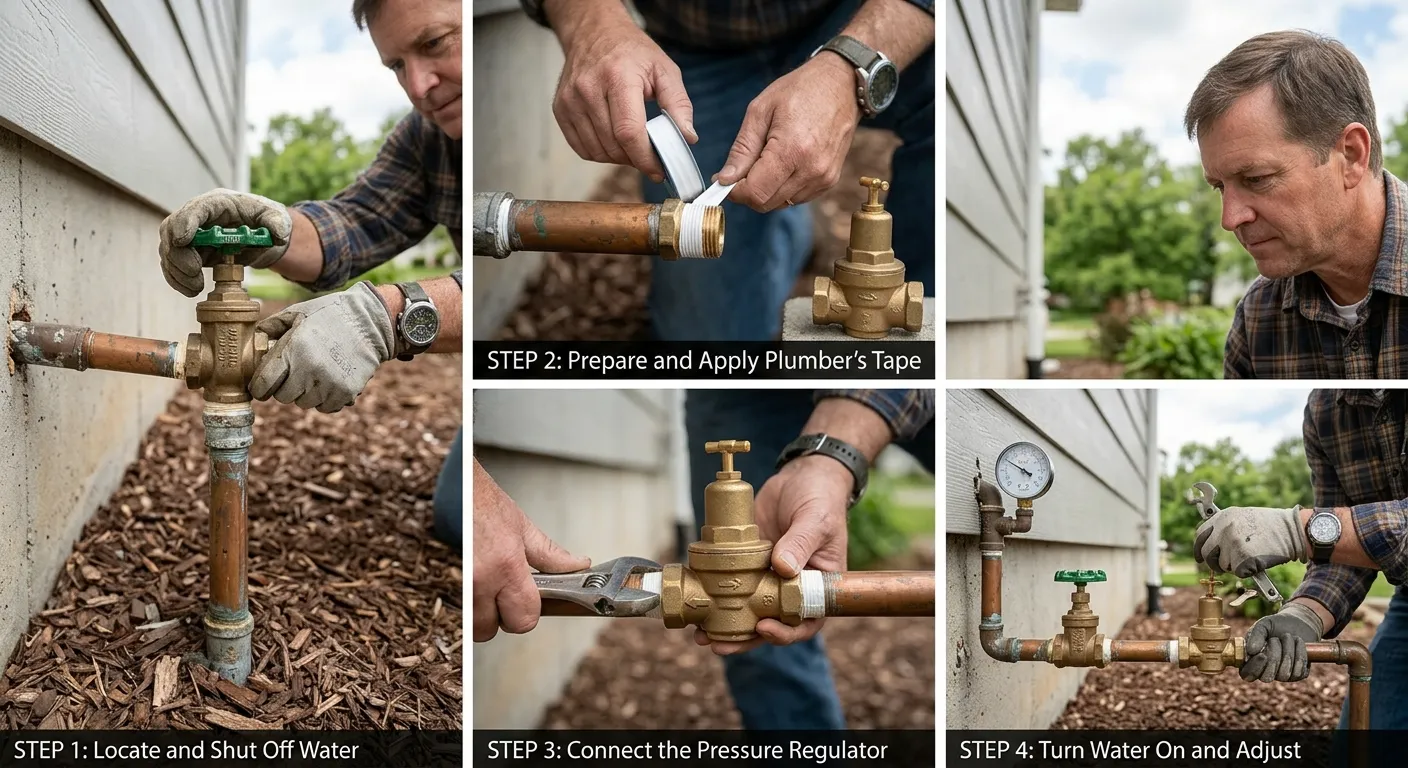
Not in a normal straight-through hookup by itself, since it has only one water connection. A suitable tee can let you monitor the line while supplying water. Its location matters: upstream readings show source pressure, while downstream readings show pressure after the regulator.
Why does pressure drop when I open a faucet?
A reading with no water flowing is static pressure. Pressure during flow can be lower due to the hose, filter, regulator, or supply limits. A normal static reading alone does not prove that the system has good flow.