

Campground water pressure isn’t something I leave to guesswork. A city-water hookup can deliver more pressure than an RV’s plumbing can safely handle, putting hoses, toilet valves, and concealed fittings at risk. When choosing the Best RV Water Pressure Regulator, I look beyond the gauge and brass body to assess pressure adjustability, drinking-water material claims, inlet-screen maintenance, and everyday usability.
I favor adjustable regulators with readable gauges because they help me check and manage incoming pressure rather than rely on a fixed setting alone. In this comparison, I evaluate three options: the standard adjustable RVGUARD, the Renator M11-0660R, and the tool-free RVGUARD knob model. I explain their advertised features and practical trade-offs while clearly separating manufacturer claims from independently verified performance. An inlet screen does not establish drinking-water safety, and a regulator’s pressure setting should always suit your RV manufacturer’s guidance.
I based this review on the supplied product descriptions and practical RV plumbing selection principles, not on hands-on testing, laboratory measurements, or an invented professional credential. My ratings are provisional editorial assessments of the listed design features and usability, with unverified certification, flow, durability, and pressure-control claims identified rather than presented as established results.
Recommended Products
| Product | Details | Links |
|---|---|---|
|
Top Pick
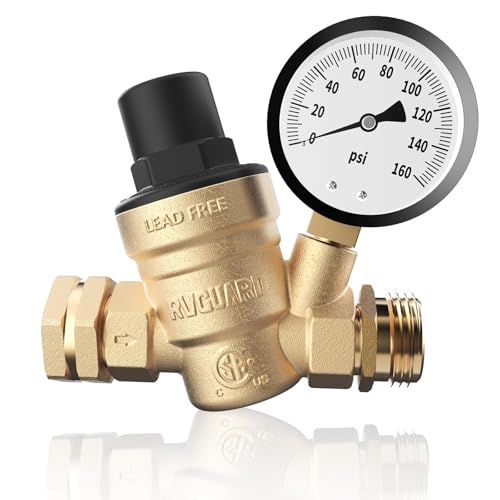 |
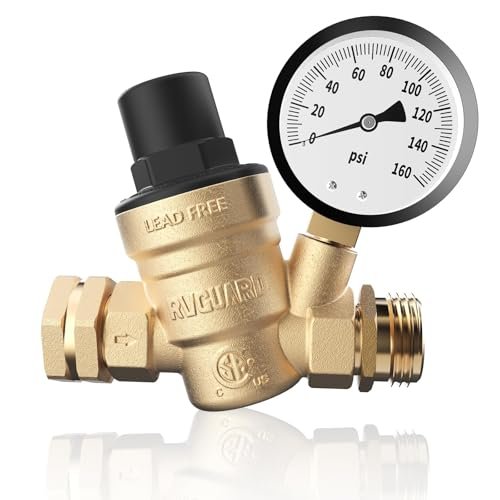
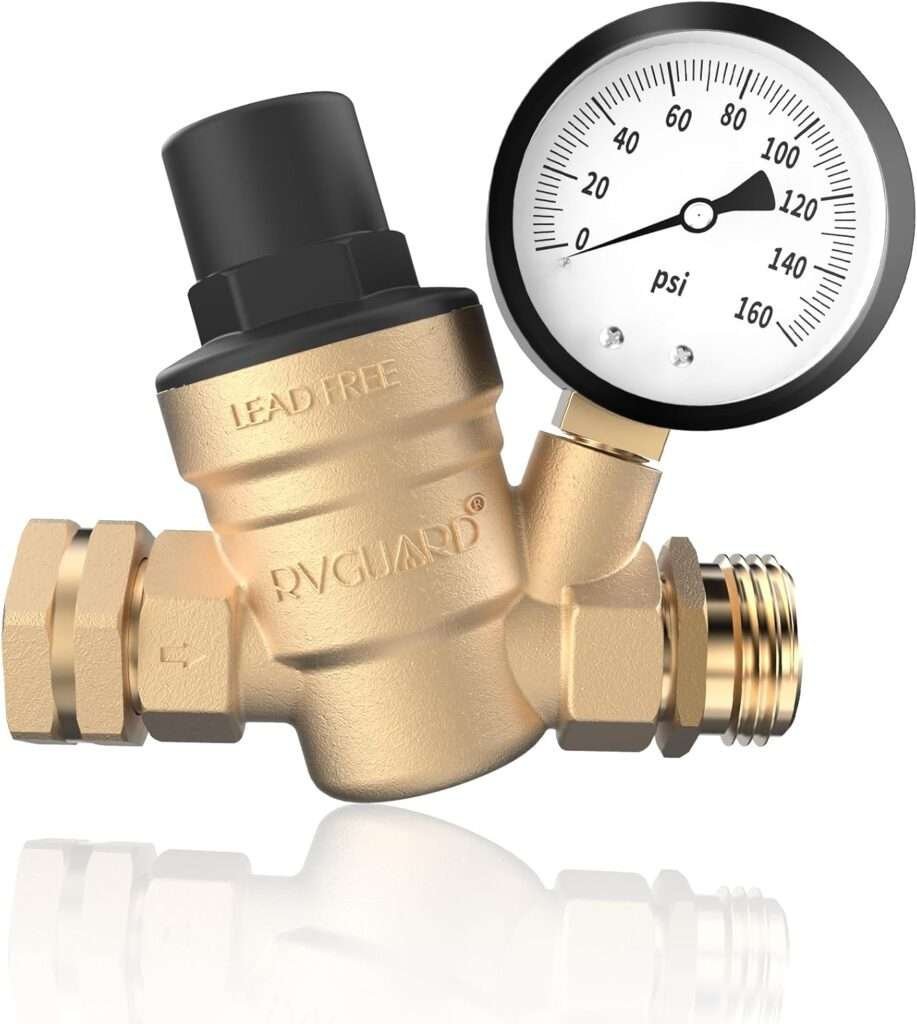
RVGUARD Adjustable RV Water Pressure Regulator 0, provisional editorial score. Advertised lead-free brass, adjustable pressure, gauge, and inlet screen. Best straightforward adjustable pick. |
Buy Now |
|
Premium
 |
Renator M11-0660R RV Water Pressure Regulator 0, provisional editorial score. Advertised lead-free brass, adjustable pressure, gauge, and inlet filter. Best alternative to compare on current documentation and price. |
Buy Now |
|
Best Seller
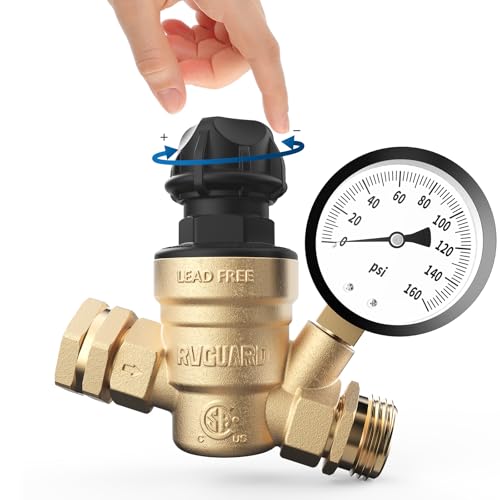 |
RVGUARD Tool-Free Knob RV Water Pressure Regulator 0, provisional editorial score. Advertised lead-free brass, tool-free adjustment knob, gauge, and inlet screen. Best convenience-focused design. |
Buy Now |
1. RVGUARD Adjustable RV Water Pressure Regulator Valve
Key Features That Stand Out
RVGUARD Adjustable RV Water Pressure Regulator Valve — here are the features that make it worth your attention:
- Advertised lead-free brass body: The supplied listing identifies brass construction and a lead-free claim. That makes this a relevant candidate for potable-water service, but I would still check the exact model’s current drinking-water compliance documentation before purchasing.
- Adjustable pressure control: Unlike a fixed-pressure reducer, this design lets the owner choose an outlet setting compatible with the RV manufacturer’s guidance. Adjustment is useful when moving between campgrounds, although no regulator can increase an inadequate incoming supply pressure.
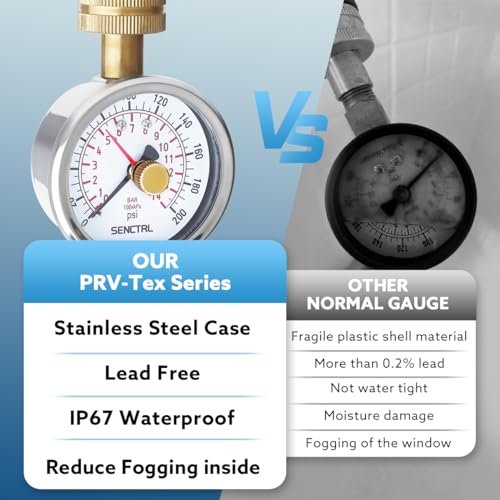
- Outlet pressure gauge: The included gauge gives a local pressure reference for setup and troubleshooting. Its reading should not automatically be treated as the pressure at a running shower because hoses, filters, fittings, and elevation can introduce downstream losses.
- Inlet screen filter: The listed screen can intercept debris large enough to be caught by its openings. It is a mechanical protective feature, not a substitute for a drinking-water filter, disinfectant, or verified treatment system.
- Advertised CSA approval: The title includes a CSA-approved claim. Before treating that as a purchasing advantage, verify the applicable standard, certification scope, and exact model identification; an approval statement alone does not establish every possible drinking-water or performance certification.
Why Recommended
- I recommend this configuration for owners who want visible pressure control without paying specifically for a hand-operated knob. Its essential combination is practical: an adjustable valve, a gauge, and an inlet screen address three different hookup concerns.
- The listed brass construction makes it worth considering for repeated campsite use, provided the regulator receives physical support and freeze protection. Brass does not make the gauge impact-resistant, and it does not protect seals or internal passages from damage caused by trapped freezing water.
- The inlet screen supports valve reliability by helping keep larger debris away from internal components. That matters after campground plumbing work or at rarely used hookups, but owners must still inspect, clean, and sanitize the water connection separately.
- I see it as a sensible baseline against which to compare the other two products. Buy it for the documented feature set and a favorable current price, not because a provisional rating proves better pressure stability, higher flow, or a longer service life.
Performance Analysis
- Pressure-control assessment: I have not measured this regulator’s accuracy or pressure creep. A useful field check is to set the permitted outlet pressure, close all fixtures, and watch for a sustained rise toward supply pressure; residual downstream pressure and water-heater thermal expansion must also be considered.
- Flow assessment: The supplied information does not establish delivered gallons per minute at a stated pressure drop. Check shower performance while another fixture runs, and compare readings under flow before blaming the regulator for restrictions caused by a clogged filter or undersized hose.
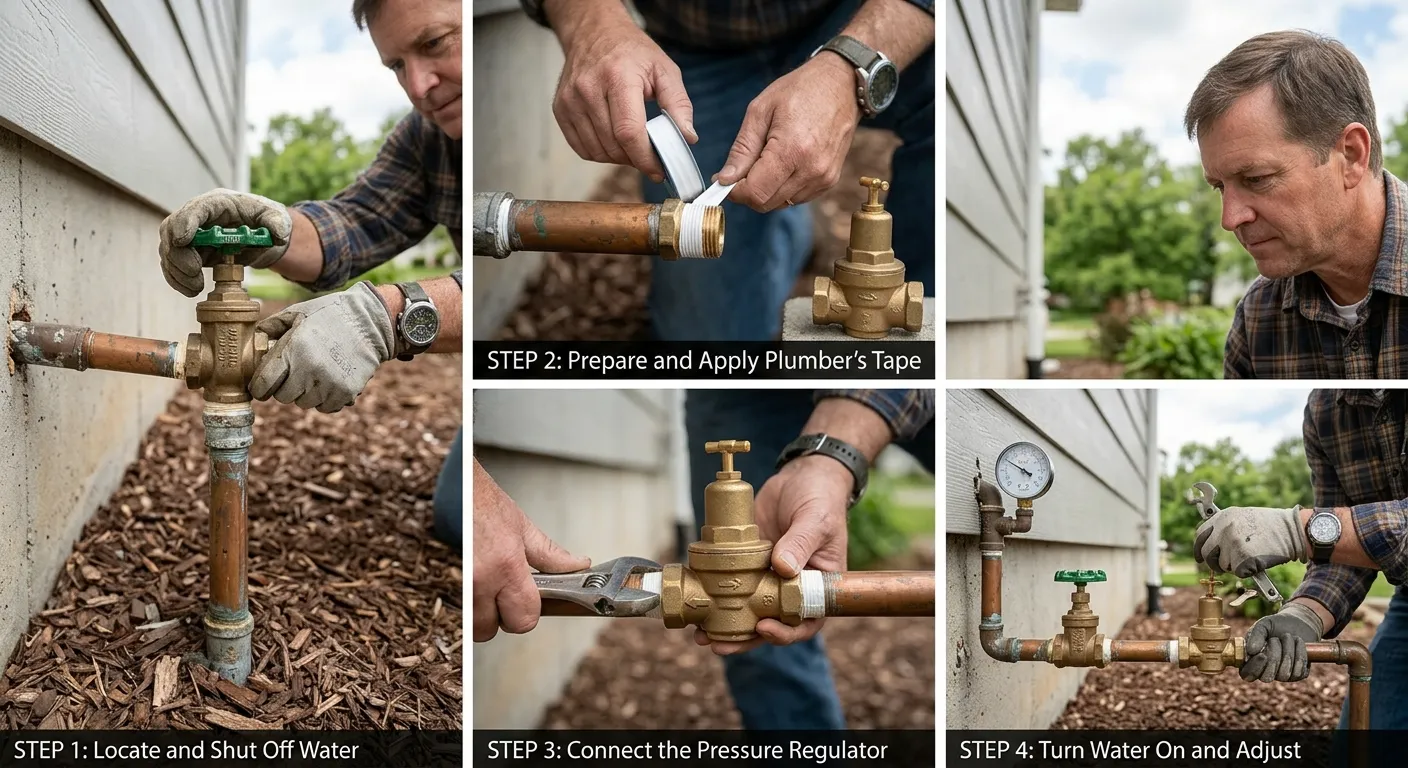
- Connection assessment: Install according to the marked flow direction and check both joints under pressure. If the connections use standard washer-sealed garden-hose fittings, sound washers normally provide the seal; additional thread tape is not a reliable fix for a damaged or missing washer.
- Cleaning assessment: Inspect the inlet screen after initial hookups and whenever flow declines unexpectedly. Shut off and relieve pressure before servicing, rinse removable parts as directed, and avoid probing the valve seat or gauge port with tools that could damage sealing surfaces.
Best For
2. Renator M11-0660R RV Water Pressure Regulator
Key Features That Stand Out
Renator M11-0660R RV Water Pressure Regulator — here are the features that make it worth your attention:
- Identifiable model designation: The supplied listing names the M11-0660R. A specific model number makes it easier to match instructions, replacement information, seller descriptions, and certification records instead of assuming every similar-looking Renator regulator has identical specifications.
- Advertised lead-free brass construction: The body is described as brass and lead-free. I consider that an appropriate starting point for selection, but the claim should be supported by current documentation covering the complete wetted product, not merely an unspecified brass alloy.
- Adjustable pressure reduction: This model provides a selectable outlet pressure rather than forcing every RV into one fixed setting. The practical benefit depends on the approved adjustment range, incoming pressure, and the operating requirements of the connected plumbing.
- Included pressure gauge: A visible gauge helps owners establish a baseline and notice changes. The supplied description does not establish gauge accuracy, damping method, calibration tolerance, or long-term resistance to weather exposure, so I would not assume those details.
- Listed inlet filter: The title identifies a filter associated with the valve. Confirm its construction and cleaning instructions in the current manual; an inlet debris filter should not be interpreted as certified removal of microbes, dissolved metals, or chemical contaminants.
Why Recommended
- I recommend the Renator as a direct alternative to the standard RVGUARD, not as a proven hydraulic upgrade. Both supplied descriptions cover the core adjustable-regulator features, so documentation quality and current purchase conditions can reasonably decide between them.
- The named model helps reduce ambiguity when checking compatibility or contacting support. Before purchase, I would confirm maximum inlet pressure, permissible water temperature, connection size, and the outlet adjustment range against the actual unit being sold.
- The adjustable design can accommodate different manufacturer-approved RV pressure targets. That flexibility matters more than chasing a high gauge reading, because comfortable fixture flow must never come at the expense of the lowest-rated hose, filter housing, or plumbing component.
- Its listed gauge and inlet filter support a repeatable hookup routine. Owners can observe pressure, inspect for debris, and compare changes over time, which is more useful than treating a regulator as a permanently installed part that needs no attention.
Performance Analysis
- Pressure stability assessment: No supplied bench data establishes how closely this model maintains its setting as supply pressure or demand changes. To evaluate it, record inlet pressure separately and compare outlet readings at no flow and during a consistent fixture demand.
- Multi-fixture assessment: A shower that weakens when a faucet opens does not automatically indicate failure. The cause may be supply limitations or pressure losses elsewhere; meaningful comparison requires the same hose, filter, fixture demand, and upstream conditions for each regulator.
- Gauge assessment: I have not checked this gauge against a calibrated reference. If readings appear implausible, compare it with a known-good instrument at the same point under equivalent conditions rather than using an unrelated gauge elsewhere in the water system.
- Durability assessment: The brass description supports consideration for campsite handling, but it does not establish impact, corrosion, or freeze-test results. Support the assembly, keep it out of standing water, and investigate a sticking adjustment or persistent leak before continuing potable-water use.
Best For
3. RVGUARD Tool-Free Knob RV Water Pressure Regulator
Key Features That Stand Out
RVGUARD Tool-Free Knob RV Water Pressure Regulator — here are the features that make it worth your attention:
- Tool-free adjustment knob: The clearest listed difference is a hand-operated adjustment control. It removes the need to locate a separate adjustment tool, which can make pressure checks less inconvenient during frequent arrivals and departures.
- Advertised lead-free brass body: Like the standard RVGUARD, this version lists brass construction and a lead-free claim. Verify the complete product’s applicable drinking-water documentation rather than assuming the knob version shares every certification or internal component with another model.
- Integrated pressure gauge: The gauge supports setting and checking outlet pressure at the regulator. Position it where it remains readable without forcing the assembly against the pedestal, twisting the hose, or placing stress on the campground faucet.
- Inlet screen filter: A screen provides a first barrier against appropriately sized debris entering the regulator. It cannot establish water safety, and accumulated sediment can itself become a restriction if the owner neglects inspection and cleaning.
- Advertised CSA approval: The listing title includes this claim, but I would check the current model-specific record and standard before relying on it. Certification scope matters more than the presence of an approval abbreviation in a product title.
Why Recommended
- This is my convenience-focused first choice among the three listed designs. The slightly higher editorial score reflects easier adjustment access, not measured superiority in flow, outlet-pressure stability, contamination control, or service life.
- A hand knob can reduce friction in a good operating routine: connect, inspect, set, and recheck. That is particularly useful when different campground supplies require attention, although owners should not adjust pressure unnecessarily after establishing a safe setting.
- The combination of a knob and gauge makes the relationship between adjustment and indicated pressure easier to observe. Pressure may not immediately decrease in a closed downstream system, so opening a fixture briefly can be necessary to confirm a reduced setting.
- I recommend paying extra for this version only when the convenience will be used. An owner who sets the regulator infrequently and already carries the appropriate adjustment tool may get equally suitable practical protection from a less expensive compatible model.
Performance Analysis
- Adjustment assessment: I have not measured knob torque, adjustment precision, or long-term wear. During setup, make small changes according to the manual, avoid forcing the control at its limit, and allow the system to respond before making another adjustment.
- Static-pressure assessment: A readable knob does not eliminate the need to watch the gauge after fixtures close. A sustained unexplained rise can indicate regulator leakage or a downstream thermal-expansion issue; distinguish those conditions before deciding the regulator needs replacement.
- Handling assessment: Tool-free access may be more convenient than a recessed adjustment screw, but actual accessibility depends on pedestal clearance and installation angle. Leave room around the control and gauge, and prevent the assembly from hanging where people or equipment can strike it.
- Maintenance assessment: The knob adds convenience, not immunity to grit, freezing, or seal wear. Inspect the body and fittings, service the screen as instructed, drain the unit for freezing conditions, and replace damaged pressure-containing components rather than improvising repairs.
Best For
Your Guide To Buying best rv water pressure regulator
Documented Potable-Water Compatibility
Look for model-specific documentation covering the product’s intended drinking-water use. Where applicable, NSF/ANSI/CAN 61 addresses health effects associated with drinking-water system components, while NSF/ANSI/CAN 372 addresses lead-content requirements. A lead-free statement does not mean absolutely no lead, and a generic approval claim does not establish both standards. Match documentation to the exact product and verify certification in the issuing body’s records when available.
Useful Adjustment And Readable Pressure Feedback
Choose an adjustment mechanism you can operate at the actual campsite connection and a gauge you can read comfortably. The RV manufacturer’s permitted pressure governs the setting; the regulator’s maximum adjustment does not authorize that pressure inside your RV. Confirm whether a screw, locknut, or knob requires a specific procedure. A gauge helps detect changes, but its presence alone says nothing about accuracy or pressure stability.
Adequate Flow At Your Required Pressure
Pressure and flow are related but different. A regulator can show an acceptable static pressure while creating a noticeable restriction when fixtures run. Favor published performance data that specifies flow, inlet pressure, outlet setting, and pressure drop. If such data is unavailable, evaluate the installed system under repeatable demand and retain realistic expectations; none of these supplied descriptions establishes a measured flow advantage.
Serviceable Debris Protection And Compatible Connections
An accessible inlet screen can help protect the valve, especially where sediment appears after supply interruptions. Confirm cleaning instructions, hose-thread compatibility, washer availability, maximum inlet pressure, temperature limits, and approved orientation. Many RV hookups use 3/4-inch garden-hose threads, but that common size should not replace a model-specific check. Similar-looking tapered pipe threads are not interchangeable with garden-hose connections.
Important Materials
Brass is the listed body material for all three products, so this comparison does not establish a material-based winner. Brass offers useful strength and a familiar threaded connection format, but alloy composition, manufacturing quality, internal parts, and seals still determine suitability. Lead-free brass is a regulated composition claim, not a promise that every possible contaminant is absent or that stagnant water needs no management. Stainless-steel regulator bodies can also be suitable when properly specified, but the material name alone does not establish certification, freeze resistance, or valve performance. Plastic-bodied designs may reduce weight and metal content, yet their pressure, temperature, impact, and ultraviolet-exposure limits require equally careful review. I would not choose any regulator solely because its surface looks smooth or its body feels heavy. For hygiene, focus on verified wetted-material compatibility, clean handling, draining and storage practices, and an appropriate RV water-system sanitation routine. Exterior polishing does not clean internal passages, and an inlet screen does not replace treatment for unsafe source water.
Essential Factors
Body thickness, total weight, and installation stability matter differently here than they do in a countertop product. A thicker-looking casting is not evidence of a higher verified pressure rating, and a heavier regulator can place more leverage on a campsite faucet if it hangs unsupported with filters and adapters attached. I favor a compact, supported layout that protects the gauge and keeps the hose from pulling sideways on the connection. Put the regulator near the supply when practical so downstream hoses and accessories receive pressure protection, while following each component manufacturer’s installation requirements. If a filter needs a particular sequence or operating pressure, design the assembly around those instructions rather than copying a universal diagram. Leave enough clearance to read the gauge, operate the adjustment, and remove the inlet screen without dismantling an unstable stack of adapters. Finally, account for freezing weather: pressure regulation does not protect water trapped in a brass body from expansion damage.
Budget Planning Guide
| Category | Description | Typical Features |
|---|---|---|
| Budget-Friendly | Broad shopping guide: approximately $10–$25, not a verified current price for any reviewed product. Appropriate only when the device’s documented pressure and potable-water specifications meet your needs. | Often a fixed-pressure reducer or a basic adjustable design. A gauge, serviceable screen, detailed performance data, or convenient adjustment may be absent; verify rather than assuming. |
| Mid-Range | Broad shopping guide: approximately $25–$50. This is a useful comparison range for many consumer adjustable regulators, but actual prices, bundles, and availability change. | Commonly brass construction, an outlet gauge, adjustable pressure, and an inlet screen. Compare certification scope, support, connection details, and documented pressure limits. |
| Premium | Broad shopping guide: approximately $50–$100 or more. Pay extra for documented capabilities or usability that matter to your installation, not simply a higher price. | May include easier adjustment, more substantial components, service options, or better documentation. Premium pricing does not automatically establish higher flow, certified sanitation, or freeze protection. |
Final Verdict
The best rv water pressure regulator is the one you can verify, install correctly, and check consistently. Among these three supplied products, I would choose the RVGUARD tool-free knob model for adjustment convenience, provided its current specifications and drinking-water documentation meet the installation’s requirements. I would choose the standard RVGUARD when its price offers better value and separate-tool adjustment is no inconvenience. The Renator M11-0660R deserves equal consideration alongside that standard model when its documentation, support, or purchase terms are stronger. None earns a claimed advantage here for measured flow, pressure accuracy, sanitation, or long-term durability because those results were not supplied or independently tested. Before buying, confirm pressure limits, thread compatibility, potable-water suitability, and service instructions. After buying, protect downstream components, use the RV manufacturer’s pressure guidance, check the gauge under both static and flowing conditions, and keep the assembly clean and supported. A regulator is a useful layer of plumbing protection, not a replacement for safe water handling or routine inspection.
FAQs About best rv water pressure regulator
1 What is the best RV water pressure regulator among these three?
2 What pressure should I set my RV water regulator to?
3 Should the regulator go before or after the drinking-water hose?
4 Does an RV regulator filter bacteria or make campground water safe?
5 What is the difference between static pressure and flowing pressure?
6 Can a water pressure regulator increase low campground pressure?
7 Why does the gauge pressure rise after I close every faucet?
8 Should I adjust the regulator while a faucet is open?
9 Do I need thread tape on an RV regulator connection?
10 How should I maintain and store the regulator?
11 Is a tool-free regulator worth paying more for?
12 Do these regulators protect against freezing or every pressure surge?
13 How can I compare two regulators fairly at a campsite?