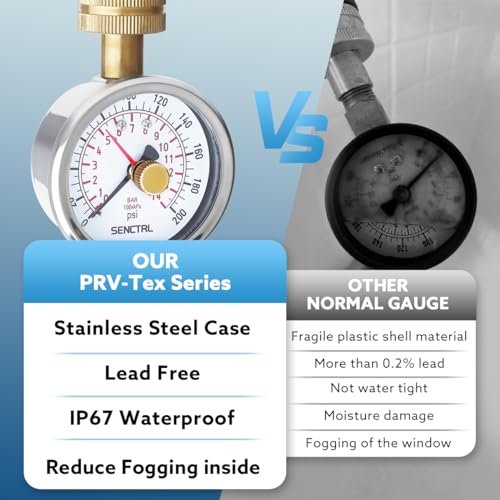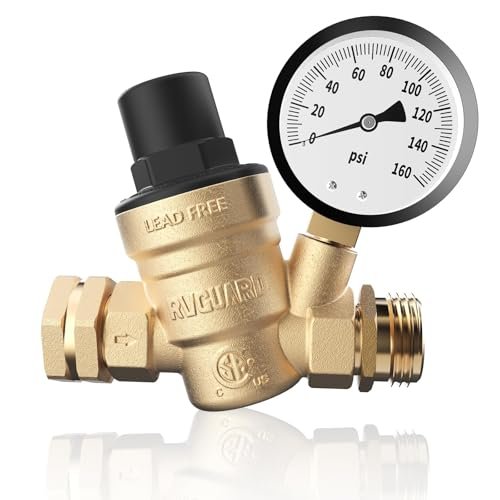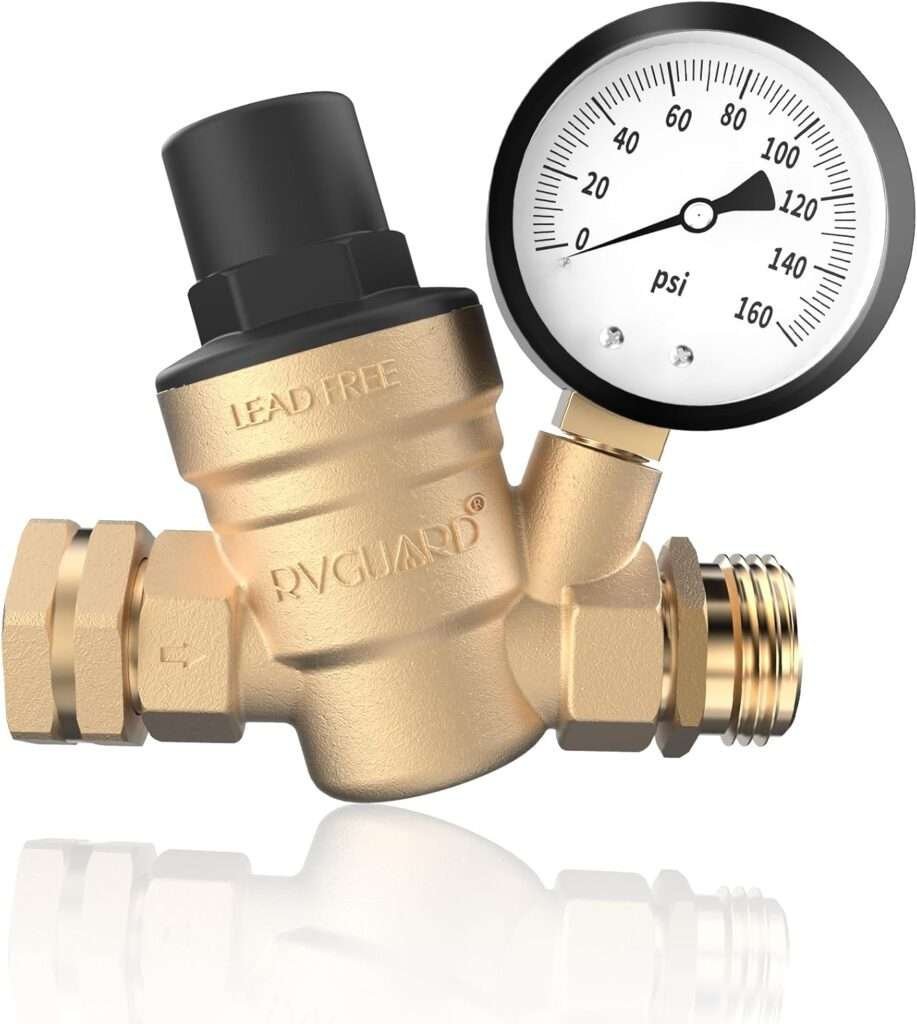


The best RV pressure regulator for adjustable control is the RVGUARD, with its gauge and brass body.
Campground water pressure can exceed the limits of an RV’s plumbing, putting hoses, fittings, and faucets at risk. My approach to choosing the Best RV Pressure Regulator starts with adjustable pressure control, a readable gauge, and materials suitable for drinking-water use.
The RVGUARD RV Water Pressure Regulator combines an adjustment mechanism with a gauge to help you set and monitor incoming pressure. In this review, I assess its listed features, limitations, and value alongside competing options. My assessment is based on product information, not hands-on testing. For a suitable pressure setting, I recommend following your RV manufacturer’s guidance and the ratings of every connected component.
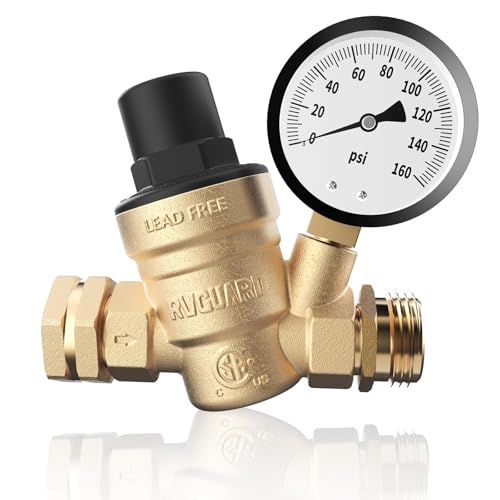
Is RVGUARD RV Water Pressure Regulator Good?
Yes—on its listed features, it is a strong choice for RV owners who want adjustable pressure and a clear gauge. The brass body, inlet screen, and pressure control cover the main things I look for in a campground water regulator. It makes more sense for frequent travel than a basic model with no way to see the pressure.
My assessment is based on the supplied product details, not hands-on testing. I cannot claim personal campsite results, verified gauge accuracy, or long-term durability. Still, two common camp situations show why this design is useful.
At a park with high supply pressure, I would want to set a safe limit before water reaches my RV. At the next stop, I would check that setting again rather than assume all taps are alike. The RVGUARD RV Water Pressure Regulator gives you a way to do both, though it cannot raise pressure from a weak source.

My First Impression for RVGUARD RV Water Pressure Regulator
The supplied photos show a brass valve body with a gauge attached. I cannot judge its shipping box, packing, or arrival condition from those images. My first impression of the design is positive: it puts pressure control and a readout in one compact unit.
Without handling it, I cannot confirm the weight, thread finish, or feel of the adjustment. Those are details I would check first, along with the seals and gauge lens. A brass body is a useful starting point, but material alone does not prove that every joint will stay leak-free.
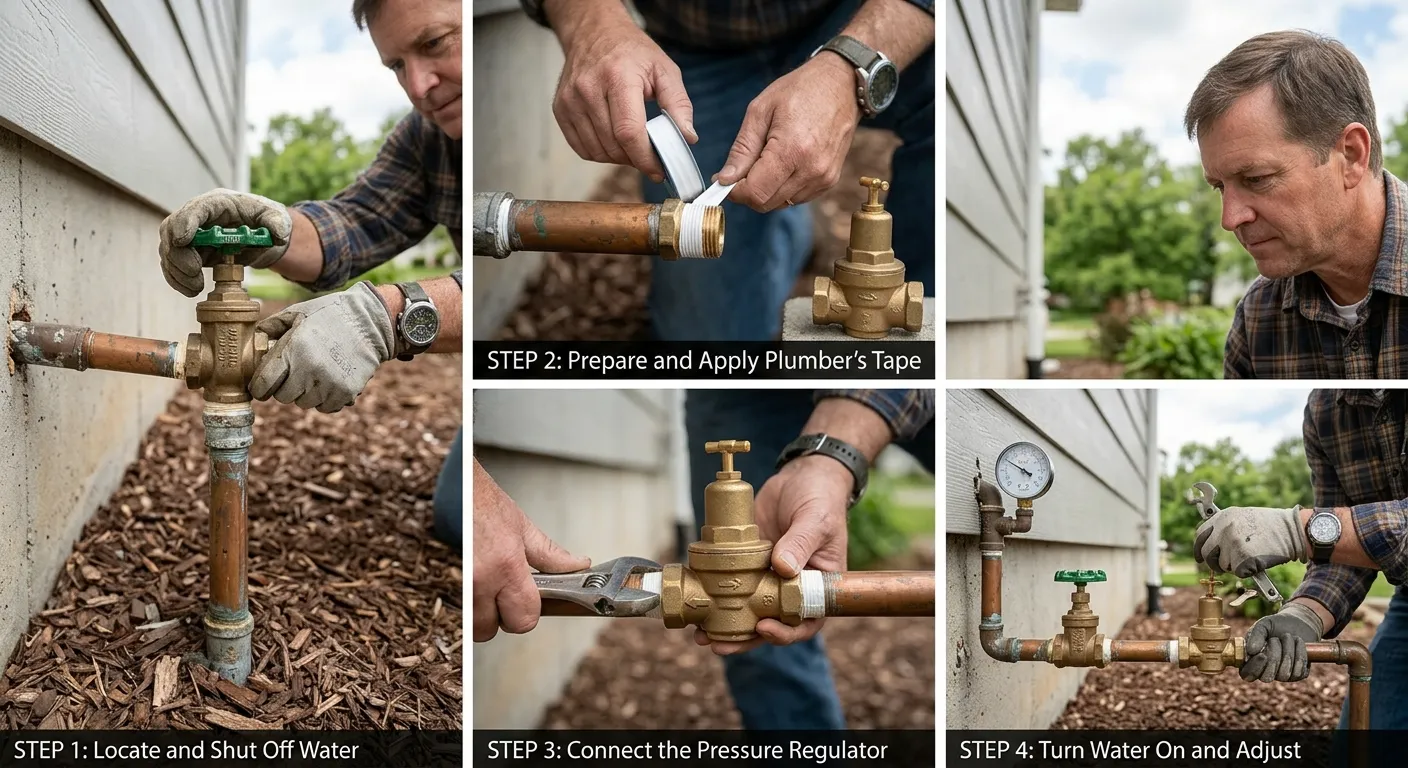
For first use, I would read the instructions, confirm the flow direction, and connect it with the water off. Then I would open the tap slowly, check for leaks, and set pressure within the RV maker’s limit. I like the reassurance of a visible gauge, but measured performance—not looks—would decide whether it met my expectations.

What Makes It Stand Out / Key Features
- Adjustable pressure control: Lets you choose an outlet setting that suits your RV’s stated pressure limit.
- Built-in gauge: Provides a pressure reading so you do not have to judge by faucet flow alone.
- Brass body: Uses metal construction for a part that sees frequent outdoor use and handling.
- Listed as lead-free: A relevant feature for a drinking-water hookup. Check the current listing for supporting compliance details.
- Inlet screen filter: Helps catch larger debris before it enters the valve. It does not replace a drinking-water filter.
- Listed as CSA approved: The supplied product description states this approval; confirm the applicable standard in the current documentation.
- RV-focused design: Intended for water hookups on campers, travel trailers, and other RVs.

What I Like
The main appeal is control without much added gear. Based on its design, these are the practical benefits I value most.
- You can see the setting: The gauge makes pressure checks more useful than guessing from shower strength.
- It suits changing campsites: Adjustable control helps when each park has a different water supply.
- It can protect more of your hookup: When fitted at the source, it can reduce pressure before water reaches the downstream hose and RV.
- The screen adds a first line of defense: Catching coarse debris can help keep it out of the valve.
- It keeps key parts together: The gauge and regulator form one unit to pack and install.
- It encourages a good habit: A quick pressure check at each stop is better than treating every tap as safe.

What Could Be Better
- It needs more attention than a preset valve: You must check the setting and follow the adjustment steps. Do not assume it arrives set for your RV.
- It cannot fix low supply pressure: This is a pressure reducer, not a pump. A blocked screen, clogged filter, or kinked hose can also hurt flow.
- Long-term performance remains unverified here: The supplied details do not establish gauge accuracy, pressure stability under load, or service life.

My Recommendation
I would shortlist the RVGUARD RV Water Pressure Regulator for owners who move between parks and want to check their water pressure at each stop. Its main advantage is the mix of an adjustable valve and a gauge. You get more control than a simple preset reducer, provided you take time to set it correctly.
| Best for | Why |
|---|---|
| Frequent campground travelers | The setting can be checked and changed as water supplies vary. |
| Owners who want a visible pressure reading | The gauge helps show what the regulator is delivering. |
| Campers building a complete water hookup | It combines pressure reduction and an inlet screen in one unit. |
| RV owners with a known pressure limit | Adjustable control lets them choose a setting within that limit. |
For a few short trips a year, a suitable preset model may be enough. For regular travel, I see more value in being able to check and adjust. Compare the current price, warranty, and included parts before buying, since Amazon offers can change.

Alternative Products You Can Consider
Renator M11-0660R Water Pressure Regulator is worth comparing if you want another adjustable model with a gauge. It fills much the same role as the RVGUARD, so neither design alone proves a clear winner. I would compare current pressure specifications, warranty terms, replacement support, and price before choosing.
Camco Brass Water Pressure Regulator, Model 40055 is a simpler option for campers who prefer preset control. Unlike the reviewed RVGUARD, this basic model does not give you an adjustable setting or a built-in gauge. It may suit occasional trips, but first confirm that its stated regulated pressure fits your RV’s requirements.
| Product | Best For | Key Difference |
|---|---|---|
| RVGUARD RV Water Pressure Regulator | Travelers who want adjustable control and a gauge | Combines a brass valve, pressure readout, and inlet screen |
| Renator M11-0660R | Buyers comparing adjustable, gauge-equipped options | A comparable design; current specifications and support can guide the choice |
| Camco 40055 | Campers who want simple preset pressure reduction | No adjustable setting or built-in pressure gauge |

Final Verdict: Which Should You Buy?
Choose the RVGUARD RV Water Pressure Regulator if you want adjustable pressure, a visible gauge, and an inlet screen. Its listed features make it a sensible shortlist pick for frequent campground use. I would favor this type of design when water supplies change from one stop to the next.
Choose the Renator M11-0660R if its current price, specifications, or support better meet your needs. Choose the Camco 40055 if you want a simpler preset valve and its pressure range suits your RV. No regulator is a fit-and-forget shield: check for leaks, watch the pressure, and stay within your RV maker’s limit.
FAQs Of best rv pressure regulator
What pressure should I set for my RV?
Use the pressure recommended by your RV manufacturer. Many owners use settings around 40–50 PSI, but that is not a universal rule. Stay below the lowest rated limit of your RV plumbing and connected parts.
Where should I install an RV water pressure regulator?
It is commonly installed at the campground spigot, before the drinking-water hose. That placement helps protect the downstream hose as well as the RV. Follow the regulator’s flow arrow and the instructions for your full hookup.
Can the RVGUARD regulator increase low water pressure?
No. The RVGUARD RV Water Pressure Regulator reduces pressure; it does not boost it. If flow is weak, check the source, hose, inlet screen, and water filter for restrictions.
Does the inlet screen replace a water filter?
No. The screen catches larger debris but does not make unsafe water safe to drink. Use a suitable drinking-water filter when needed, and connect only to an appropriate water source.
Should I check pressure with a faucet open or closed?
Check both. A closed faucet shows static pressure, while an open faucet shows pressure under flow. Follow the valve’s adjustment instructions, then confirm that pressure stays within your RV’s limit when the faucets are closed.