
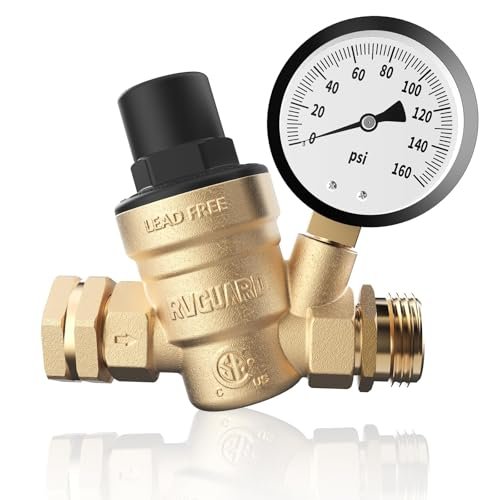
A campground faucet can deliver more pressure than your RV plumbing should handle, and a weak shower does not prove the supply is safe. Pressure and flow are different: a restricted hose can produce disappointing flow while the system still experiences excessive static pressure after every faucet closes. An RV water regulator with gauge gives you a practical way to reduce incoming pressure and see whether the downstream reading stays within your equipment limits. That matters for more than avoiding a burst hose. Persistent drips can soak cabinetry, damage flooring, and create conditions that support mold growth. Potable-water-compatible components also matter because every wetted fitting becomes part of the path to your drinking water. This review examines the RVGUARD adjustable brass regulator using the product information supplied, established plumbing principles, and a buyer-focused assessment of its design. I explain where its adjustable setting, gauge, and inlet screen add value, where the available information leaves unanswered questions, and how to install a regulator without creating new problems. The central distinction is simple: pressure regulation protects plumbing, while sanitation and suitable filtration address different water-quality risks. Neither function replaces the other. This article contains an affiliate link; a qualifying purchase may generate a commission. That commercial relationship does not change the limitations identified below.
I base this recommendation on a transparent technical assessment of the supplied listing and RV plumbing principles, not on claimed ownership, laboratory measurements, or an invented professional background. I have not physically tested this unit or independently verified its certification records, so I distinguish advertised features, expected behavior, and checks you should complete before purchase.
Recommended Products
| Product | Details | Links |
|---|---|---|
|
Top Pick
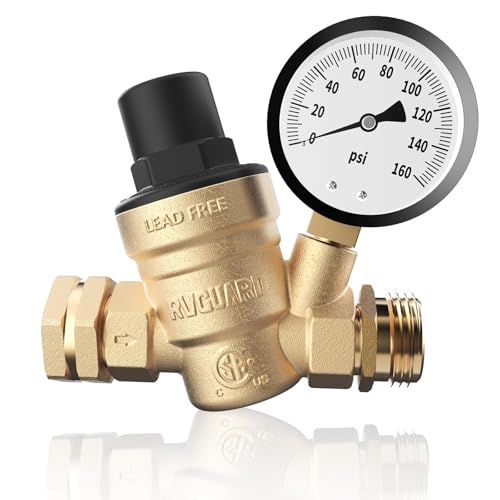 |
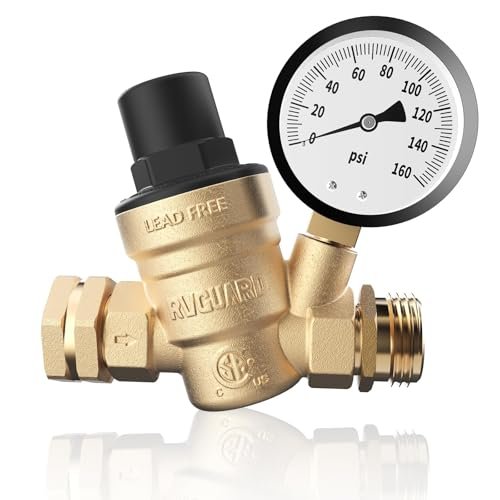
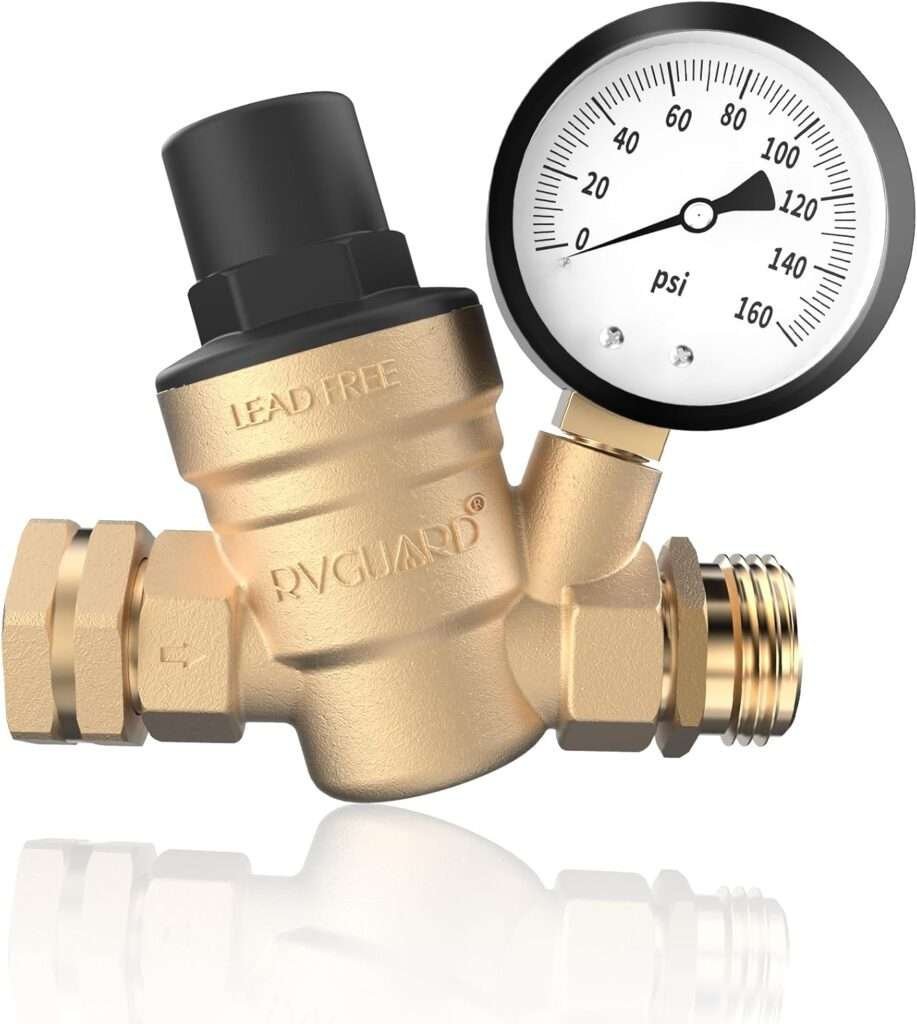
RVGUARD Adjustable RV Water Pressure Regulator With Gauge Editorial design rating: 4.2/5.0, provisional and not a hands-on test score. Advertised lead-free brass body, adjustable pressure reduction, pressure gauge, and inlet screen. The listing states CSA approval; verify the exact model, certification scope, and current documentation. |
Buy Now |
1. RVGUARD RV Water Pressure Regulator Valve, CSA Approved, Lead-Free Brass, Adjustable With Gauge And Inlet Screen Filter
Key Features That Stand Out
RVGUARD RV Water Pressure Regulator Valve, CSA Approved, Lead-Free Brass, Adjustable With Gauge And Inlet Screen Filter — here are the features that make it worth your attention:
- Adjustable pressure reduction: The listed design lets you select an outlet pressure instead of accepting a single fixed setting. I consider that useful when an RV, hose, filter, and other accessories have different pressure limits. Adjustment is not permission to chase the strongest possible shower. Set the regulator according to the lowest applicable equipment limit and the RV manufacturer’s instructions, then check the result with fixtures closed and again with water flowing. The supplied product information does not establish the adjustment range, maximum inlet pressure, or exact adjustment procedure, so confirm those details in the current manual.
- Advertised lead-free brass construction: Brass offers a substantial metal body and durable threaded connections when manufactured and installed correctly. The listing describes this regulator as lead-free, but I would still check documentation covering the wetted materials rather than treating the phrase as a complete drinking-water safety assessment. Lead-free does not necessarily mean zero lead, and a brass exterior does not reveal the composition of every internal part. Potable-water suitability, seal materials, and the scope of any applicable certification deserve attention alongside the body material.
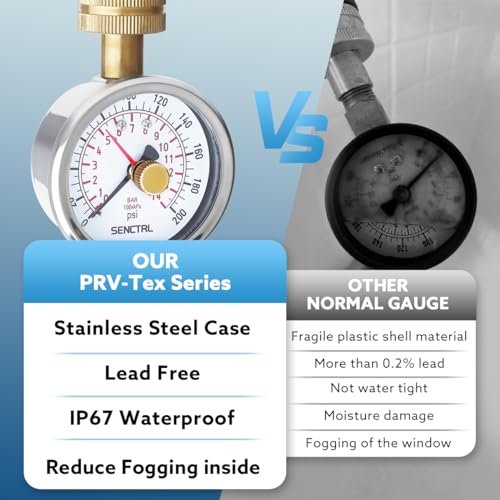
- Integrated pressure gauge: A visible gauge makes setup and troubleshooting more informative than an uninstrumented fixed reducer. It can help reveal a setting that is too high, a large pressure drop during demand, or a possible rise in downstream pressure after fixtures close. However, a gauge is a measuring instrument, not a guarantee of accuracy. The supplied information does not specify its accuracy class, calibration tolerance, or durability testing. I would use it as an operating reference and compare suspicious readings with a known-good independent gauge.
- Inlet screen filter: The advertised screen can intercept larger particles before they enter the regulating mechanism. That is valuable when connecting to an outdoor faucet that may release grit or pipe debris. The screen is not a drinking-water purifier and should not be credited with removing pathogens, dissolved metals, or chemicals without specific supporting claims. Its practical role is mechanical protection. A clogged screen can also reduce flow, so cleaning it belongs on the maintenance checklist whenever shower performance declines or the supply has visible sediment.
- Advertised CSA approval: The product title identifies CSA approval, which is a useful verification lead rather than a complete explanation of performance. Before relying on it, I would match the exact model and markings to the relevant certification record and determine which standard applies. An approval claim should not automatically be interpreted as confirmation of every advertised attribute, a particular flow rate, freeze resistance, gauge precision, or suitability for every drinking-water installation. The strongest purchase decision combines traceable documentation with clear operating specifications.
Why Recommended
- It combines control with feedback: An adjustable regulator and a readable gauge address two separate needs. The valve reduces pressure, while the gauge helps you inspect the resulting condition. I prefer that combination for RV owners who move between campgrounds because each new water source introduces a different operating situation. The benefit depends on checking the reading and using an appropriate setting; the presence of a gauge alone does not prevent incorrect adjustment or eliminate the need to inspect connections.
- It supports a sensible potable-water setup: The advertised lead-free brass construction is more relevant to an RV drinking-water connection than an unspecified utility fitting. I would pair it with a drinking-water hose, compatible washers, and clean capped connections. That approach reduces avoidable contamination opportunities without claiming that the regulator sanitizes anything. Keeping hose ends off the ground and separating potable-water equipment from sewer equipment remain essential hygiene practices, regardless of how robust the regulator appears.
- It can protect more than the RV interior: Installed at the water source, within its ratings and in the permitted orientation, a regulator can reduce pressure exposure for downstream hoses and accessories as well as onboard plumbing. That placement is a meaningful durability advantage when campground pressure exceeds a component’s limit. The full assembly still needs proper support and compatible fittings. A heavy brass regulator hanging from a strained plastic connection can introduce mechanical stress even while it reduces hydraulic pressure.
- Its limitations are manageable for an attentive owner: A serviceable screen, visible gauge, and adjustable valve make routine checks straightforward in principle. My recommendation is conditional because current pricing, verified flow performance, warranty terms, and complete certification details are not available in the supplied data. I would shortlist this model for its feature combination, then confirm those missing details before purchase. I would not describe it as the best regulator overall based on one listing or imply that it outperformed products that were not evaluated.
Performance Analysis
- Pressure regulation assessment: I have not measured this unit’s outlet stability or pressure creep. A useful real-world test would record supply pressure with suitable equipment, set the regulator according to its manual, and compare downstream readings with fixtures closed, one fixture running, and several fixtures operating. After closing the fixtures, watch for a continuing rise beyond the intended regulated level. That behavior can indicate a sealing problem, although trapped-water heating or other system conditions may also raise pressure. Do not assume a regulator relieves every source of downstream pressure.
- Flow and shower performance assessment: No verified flow curve or measured gallons-per-minute result was supplied, so I cannot promise strong showers or minimal restriction. A practical comparison would time a measured bucket fill through the same hose and fixture, using safe configurations and consistent supply conditions. Repeat with a clean screen and clean filter, then compare performance under simultaneous demand. A regulator can maintain an acceptable static reading yet experience substantial pressure loss during flow. Turning the adjustment higher is not the right first response to a clogged filter or undersized hose.
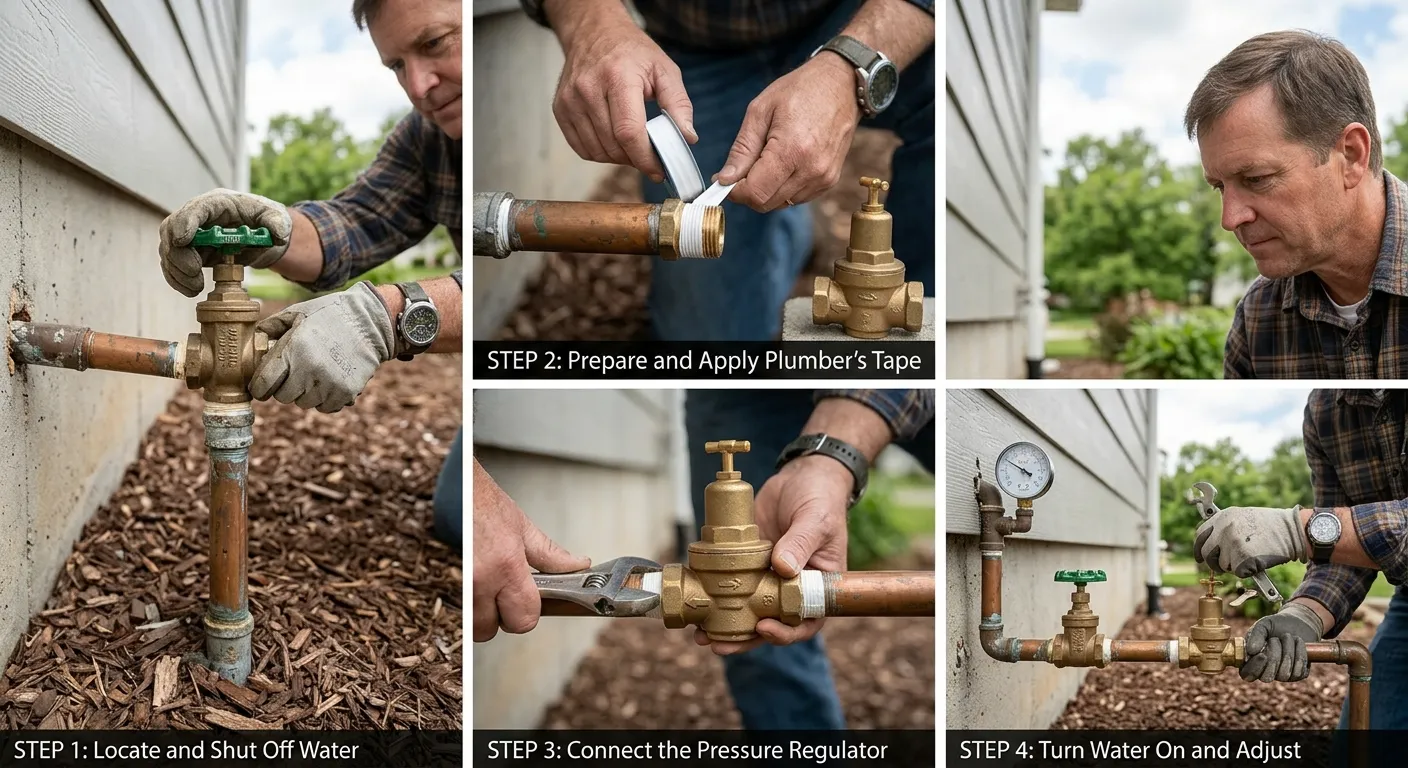
- Leak resistance and connection stability assessment: I have not performed a leak, vibration, or repeated-connection test on this sample. During installation, I would inspect the sealing washers, confirm the connection type, hand-tighten where instructed, and open the supply gradually while watching every joint. Standard garden-hose-style connections usually seal at a washer rather than through thread interference, so wrapping their threads with tape is generally unnecessary and may complicate assembly. Support the regulator and hose so their weight does not twist the campground faucet or the RV inlet.
- Cleaning and durability assessment: I have not subjected this regulator to corrosion exposure, freeze cycles, or long-term outdoor use. Expected durability depends on water chemistry, debris loading, installation stress, and storage conditions as much as on the brass body. Inspect the screen periodically, follow the manufacturer’s cleaning instructions, and avoid unapproved chemicals that could damage seals or contaminate potable-water surfaces. Before freezing weather, disconnect and winterize the assembly as directed. A regulator can retain water internally, so an exterior that looks drained does not establish freeze protection.
Best For
Your Guide To Buying rv water regulator with gauge
Adjustable Regulation With Documented Operating Limits
Choose a regulator whose permitted inlet pressure and adjustable outlet range cover your intended use. Many RV owners operate somewhere around 40 to 50 psi, but that common practice is not a universal specification or an instruction for your vehicle. Follow the RV manufacturer’s guidance and all component limits. Leave appropriate margin rather than selecting a setting at the weakest component’s maximum rating. Check whether the manual specifies an adjustment sequence, requires flow during setup, or provides a way to secure the setting. A regulator cannot reliably raise a low supply pressure, and turning its screw does not convert it into a booster pump.
Readable Gauge With A Useful Measurement Range
Look for a dial that you can read in the installed position and a scale that makes your intended operating pressure easy to distinguish. A very broad scale may compress normal RV readings into a small portion of the dial. Gauge fill, case material, and weather protection may affect readability and durability, but none automatically establishes measurement accuracy. Ask for accuracy specifications when precise control matters. Understand whether the gauge measures regulated outlet pressure, and recognize that its reading may differ from pressure at a distant shower during flow because hoses, filters, and fittings create losses.
Verified Potable-Water Materials And Suitable Seals
Evaluate the wetted assembly, not just the exterior body. For US purchases, documentation referring to applicable standards such as NSF/ANSI/CAN 61 and NSF/ANSI/CAN 372 can help clarify health-effects evaluation and lead-content compliance, respectively, when certification applies to the exact product. Those standards address different issues and should not be treated as interchangeable. Certification is not established here for the reviewed RVGUARD unit. Ask the manufacturer for model-specific evidence, check the certifier’s listing where available, and confirm that the regulator is intended for potable water at your expected temperatures.
Adequate Flow Capacity And Maintainable Debris Protection
Pressure specifications alone do not tell you how a regulator behaves while several fixtures run. Prefer published flow information that states the test conditions, including inlet pressure and allowed pressure drop. A headline gallons-per-minute figure without context offers limited comparison value. An accessible inlet screen helps protect the valve, but you should be able to inspect and clean it without damaging the assembly. Also check whether washers, gauges, or internal service parts are available. Replaceable parts can extend useful life, provided the manufacturer authorizes the repair and potable-water compatibility is maintained.
Important Materials
Brass, stainless steel, and engineered polymers each offer legitimate advantages; material choice should follow documented suitability rather than appearance. Brass provides durable threads and a compact, substantial body, but alloy composition and wetted-component compliance matter in drinking-water service. Stainless steel can offer excellent corrosion resistance when the grade, fabrication, and water chemistry are appropriate, yet a stainless housing does not prove superior regulation or lead-content compliance for the complete assembly. Polymer components can reduce weight and resist certain corrosion mechanisms, though their pressure, temperature, UV exposure, and thread-stress limits deserve careful review. Internal seals and diaphragms are equally important because water contacts them and their condition influences leakage and regulation. A metal body cannot compensate for a damaged washer, incompatible seal, or poorly supported connection. I would avoid selecting a regulator solely because it feels heavy or carries an unspecific premium-material claim. Instead, compare the complete wetted-material documentation, operating ratings, replacement-part availability, and manufacturer’s installation instructions. For the RVGUARD reviewed here, the supplied listing identifies lead-free brass but does not provide a complete internal-material specification.
Essential Factors
Size, weight, and mechanical stability matter more than body thickness by itself. A bulky gauge may be difficult to read behind a campground pedestal, and a heavy regulator can create leverage when attached through several elbows, filters, and quick-connect fittings. Choose a layout that keeps the assembly supported, accessible, and clear of ground contact without violating the manufacturer’s orientation requirements. Check thread compatibility before buying; many US RV drinking-water accessories use 3/4-inch garden-hose connections, but visually similar pipe threads are not interchangeable. Hose length and internal diameter also influence flowing pressure, so a regulator should be evaluated as part of the complete water path. I favor a simple arrangement with fewer unsupported adapters, clean sealing surfaces, and enough flexibility to prevent strain. Install the regulator near the source when permitted so downstream equipment receives regulated pressure, and place filters according to their instructions and ratings. At every stop, inspect for leaks after pressurization and reassess the gauge when demand changes. For storage, protect the dial from impact, keep potable-water openings capped after appropriate draining, and follow winterization instructions rather than assuming a solid metal body can tolerate freezing.
Budget Planning Guide
| Category | Description | Typical Features |
|---|---|---|
| Budget-Friendly | Approximately $15 to $30 as a general planning range, not a verified current offer. Some products in this tier are fixed-pressure reducers or omit a gauge, so check that the model actually meets your requirement. | Basic regulation, limited documentation, compact construction, and sometimes a simple gauge. Flow data, repair parts, adjustment capability, and certification details may be limited. |
| Mid-Range | Approximately $30 to $70 as a general planning range. This is a practical comparison tier for adjustable hose-connected regulators with gauges, but the supplied RVGUARD listing does not establish its current price. | Adjustable outlet pressure, metal body, visible gauge, inlet screen, and potentially clearer operating instructions. Confirm actual flow performance, warranty terms, and potable-water documentation. |
| Premium | Approximately $70 to $150 or more as a general planning range. Higher cost should purchase specific, documented advantages rather than simply a larger body or a more elaborate-looking dial. | Potentially stronger service support, replaceable components, better documented flow capacity, improved gauges, or specialized installation options. Verify each benefit because premium pricing does not guarantee it. |
Final Verdict
The RVGUARD adjustable regulator is a sensible shortlist option for RV owners who want pressure control and a visible downstream reference in one brass-bodied assembly. Its advertised inlet screen adds useful debris protection, and adjustable operation offers flexibility that a fixed reducer cannot provide. I would not buy it solely because the title says lead-free or CSA approved, and I would not promise exceptional shower performance without flow data. Confirm the exact model’s documentation, inlet and outlet limits, connection requirements, and current warranty before ordering. Then install it without mechanical strain, set it according to the RV and accessory limits, and inspect both static and flowing behavior. The most important purchase lesson is that an RV water regulator with gauge is a plumbing-protection tool, not a purifier, booster pump, or guarantee against every pressure problem. Used as part of a clean, properly rated water connection, this feature combination can make campground hookups easier to assess and manage. My recommendation remains conditional on verification of the specifications that the supplied listing does not establish.
FAQs About rv water regulator with gauge
1 What does an RV water regulator with gauge actually do?
2 What pressure should I set my RV water regulator to?
3 Should the regulator go at the campground faucet or at the RV?
4 Does the RVGUARD inlet screen make campground water safe to drink?
5 Will an adjustable regulator improve a weak RV shower?
6 How can I tell whether the gauge reading is trustworthy?
7 Why does pressure rise after I close all the faucets?
8 Does lead-free brass mean the regulator contains no lead?
9 What does the advertised CSA approval tell me?
10 Should I use thread tape when connecting this regulator?
11 Can I leave the regulator connected during freezing weather?
12 How often should I clean the inlet screen?
13 Can I use the regulator with my RV’s onboard water pump?
14 Is the RVGUARD regulator worth buying?