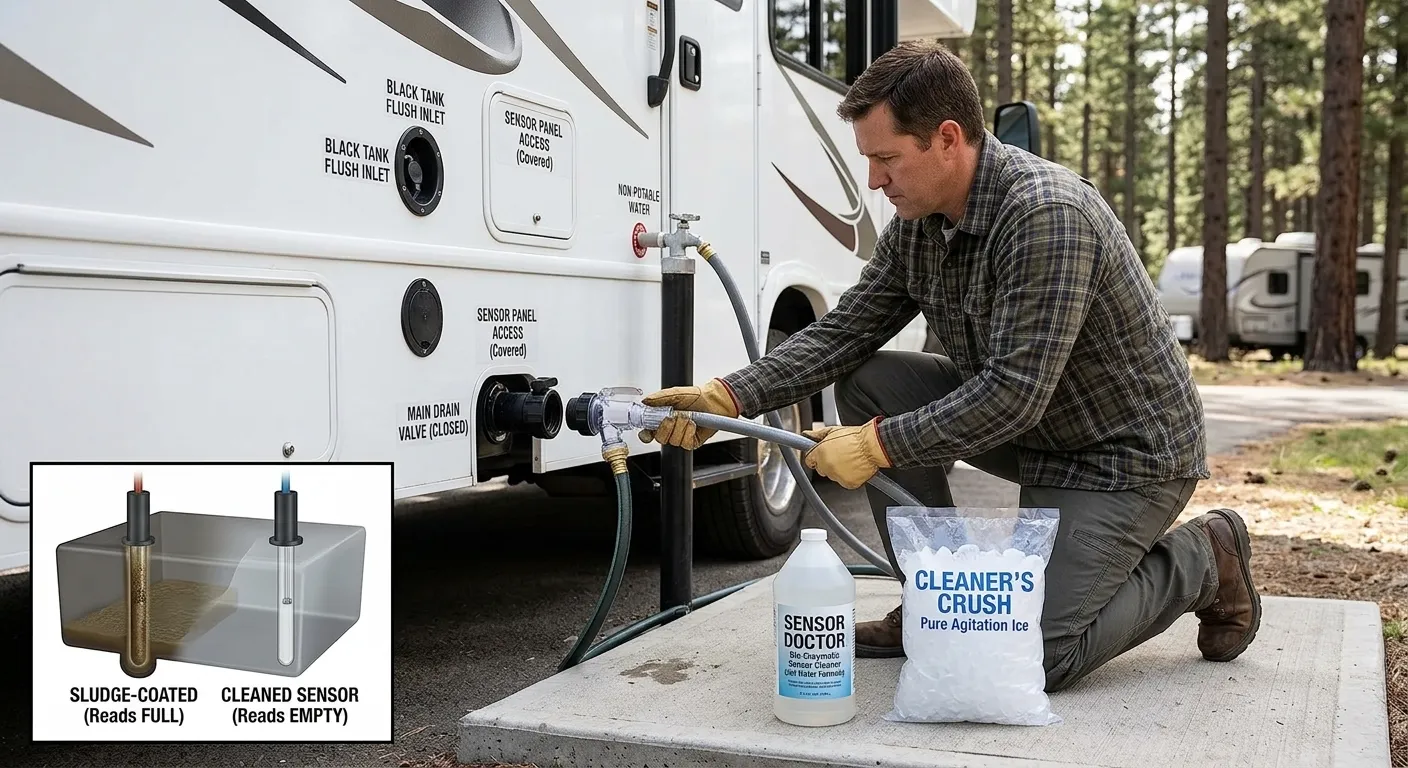

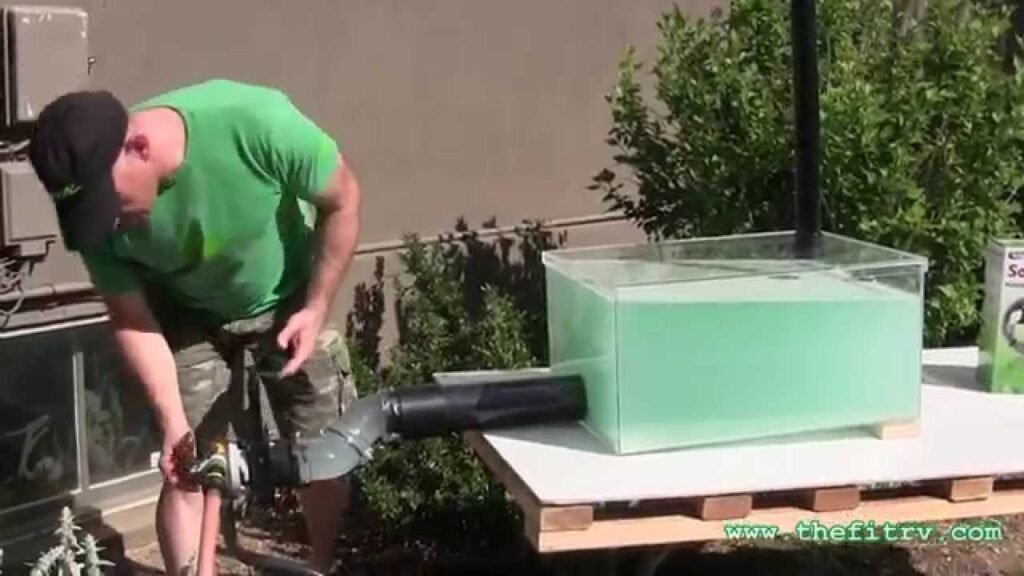
An RV black tank flush uses pressurized water to rinse waste, paper, and residue from the tank walls.
Nobody buys an RV to think about the black tank. But after one bad dump station experience early in my RV life I started asking the same question most new RV owners ask — how does an RV black tank flush work exactly? I had skipped the flush step for two trips in a row. The buildup, the sensor problems, and the smell that followed taught me a lesson I never forgot.
After years on the road I have seen the same mistake made over and over. Skip the flush and everything gets harder — dumping takes longer, odors come back faster, and sensors stop reading correctly. Once you properly understand how does an RV black tank flush work and why it matters, the whole process becomes simple and stress free. This guide walks you through everything clearly so dump day stays quick, clean, and easy every single time.

How an RV Black Tank Flush Works
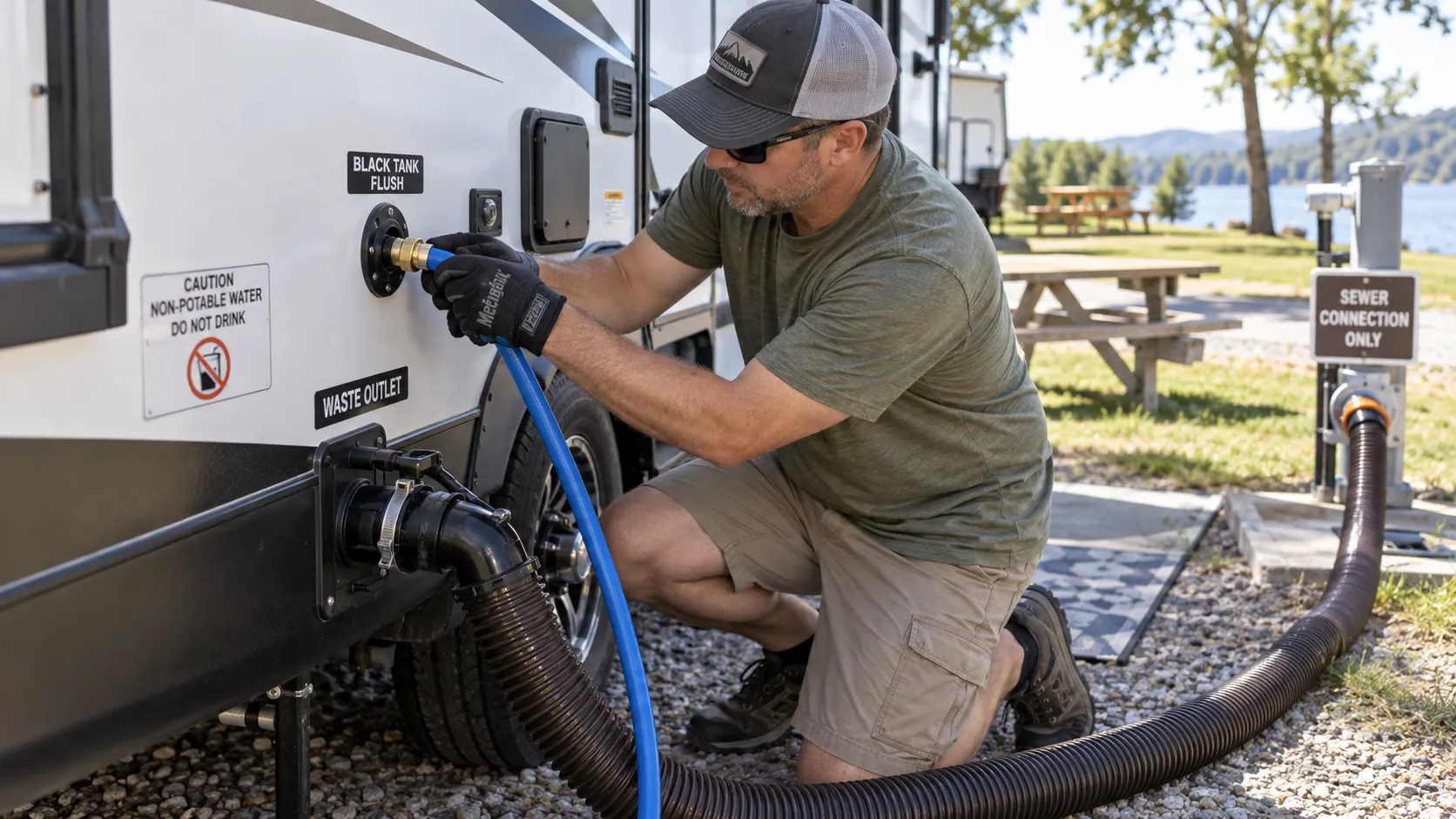
An RV black tank flush is a built-in rinse system designed to clean the inside of the sewage holding tank after dumping. It works by sending fresh water through a dedicated inlet on the RV, then through a spray nozzle or wash line inside the black tank. That water loosens waste and paper stuck to the tank walls and helps push debris out through the drain.
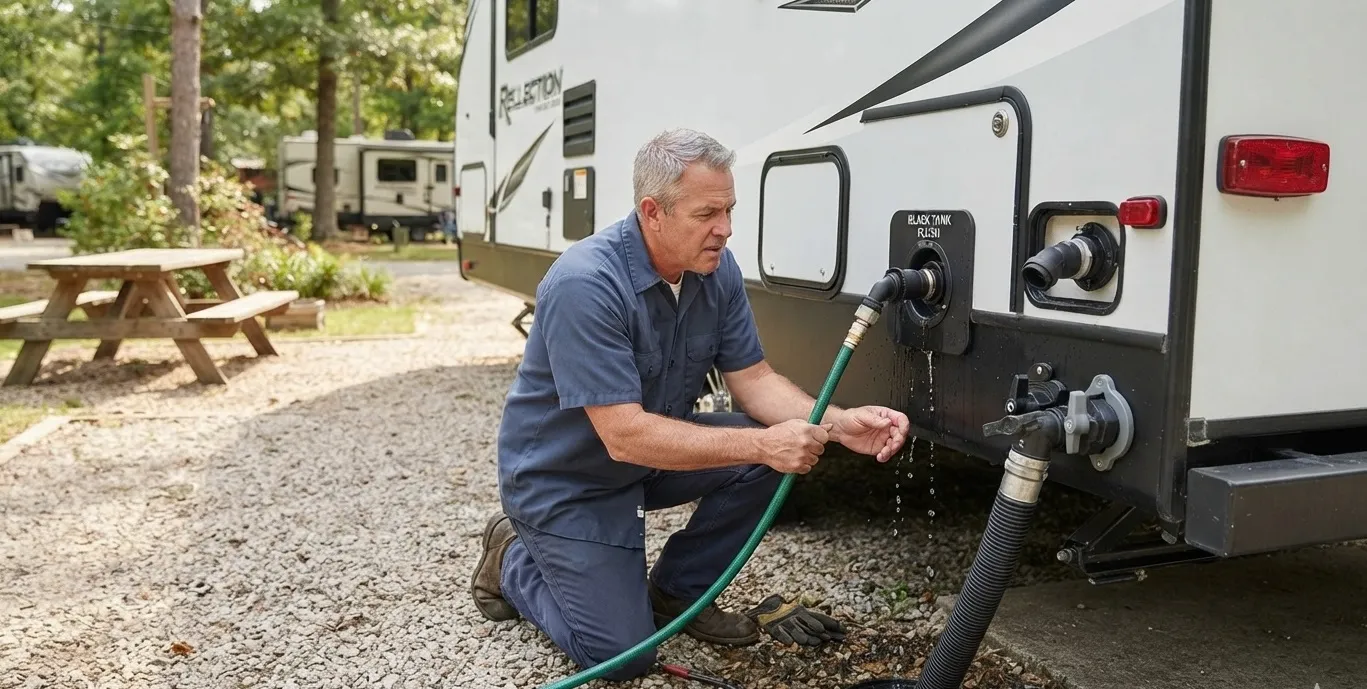
In simple terms, it works like a pressure rinse for your tank. You connect a hose to the flush inlet, open the black tank valve, and let water spray inside the tank for several minutes. The goal is not just to “fill and empty,” but to scrub away the buildup that can cause odors and inaccurate tank readings.
Why an RV Black Tank Flush Matters
A black tank flush is more than a convenience feature. It helps keep your sewer system cleaner, reduces smells, and lowers the chance of clogs. It also helps tank sensors work better, although sensors can still foul over time.
From experience, the biggest benefit is consistency. When I started using a proper flush routine, I noticed fewer odor problems and less “false full” sensor behavior. It is one of those small habits that makes RV life smoother over the long run.
Main Parts of the Black Tank Flush System
Most RV black tank flush systems are simple, but each part matters.
Flush inlet
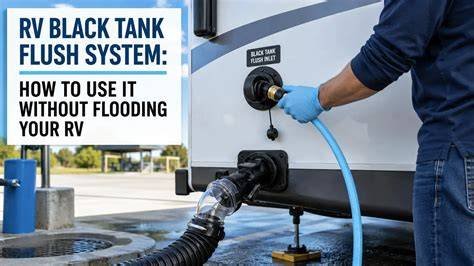
This is the outside connection where you attach a hose. It is usually labeled “Black Tank Flush” and should never be confused with a potable water inlet unless your RV is clearly set up that way.
Spray nozzle or rinse jets
Inside the tank, water is sprayed through a nozzle or a series of jets. These are aimed to wash the tank walls and move debris toward the outlet.
Backflow preventer
This is a safety device that helps stop contaminated water from flowing back into the freshwater supply. It is a critical protection feature, and many RVs use one by design.
Black tank valve
This valve must be open during flushing so dirty water and loosened waste can leave the tank. If the valve stays closed, the tank can overfill quickly.
Step-by-Step: How the Flush Process Works
Here is the basic process most RV owners follow.
Dump the black tank first
Open the sewer valve and empty the tank into the dump station or sewer hookup.Connect a hose to the flush inlet
Use a dedicated hose if possible. It is best not to mix this hose with your drinking water hose.Open the black tank valve
This lets waste and rinse water exit the tank as the flush system runs.Turn on the water
Let the rinse system spray inside the tank for several minutes. Some people pause and repeat the process for better cleaning.Watch the discharge
Keep flushing until the water coming out looks clearer and freer of debris.Shut off water and close the valve
Once the tank is clean, turn off the water, disconnect the hose, and close up the system.
A good flush is a bit like washing a dirty pan. One rinse helps, but a few careful passes usually do a much better job.
How It Differs From Tank Filling
An RV black tank flush does not work the same way as simply adding water to the tank. Filling with water may help loosen debris, but a flush system uses directed spray to clean the tank walls more effectively. That is why it is usually better at reducing buildup and lingering waste.
If you only add water through the toilet, you may still leave material stuck to the sides. That can lead to odor, sensor problems, and more work later.
Common Mistakes RV Owners Make
I have seen a few mistakes repeat over and over. Most are easy to avoid once you know what to watch for.
- Leaving the black tank valve closed during flushing, which can cause overflow
- Using the wrong hose and contaminating a freshwater line
- Flushing for too short a time, which leaves residue behind
- Forgetting to dump first, which makes the process less effective
- Ignoring a clogged flush nozzle, especially in older RVs
- Assuming the flush system replaces regular tank maintenance
A black tank flush is helpful, but it is not magic. It works best when paired with good dump habits, enough water in the tank, and routine cleaning.
Best Practices for Better Results
A few simple habits can make the system work much better.
- Dump the tank when it is about two thirds full if possible
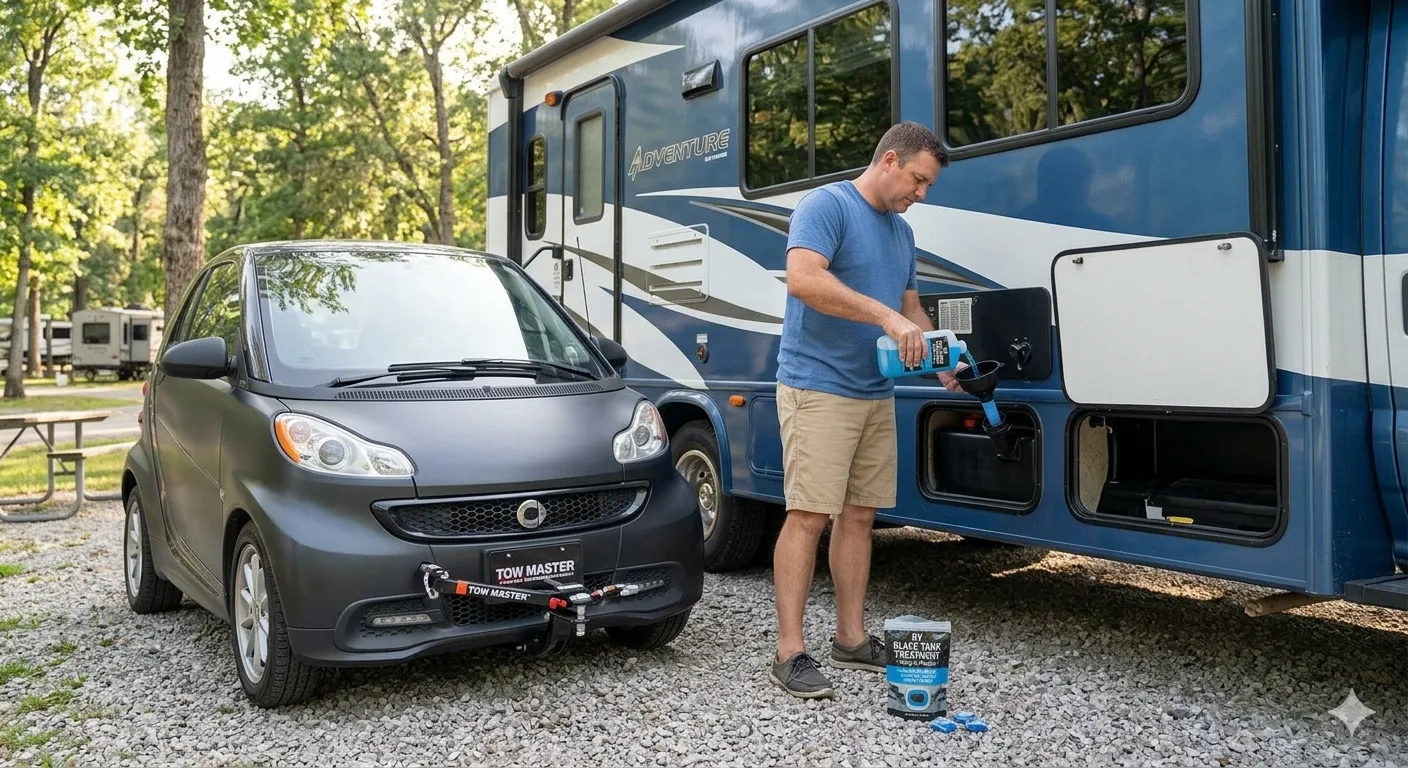
- Add several gallons of water back into the tank after dumping
- Use plenty of water when flushing, but do not overdo it
- Run the flush until the outflow is mostly clear
- Use RV-safe toilet paper and avoid flushing wipes or harsh solids
- Clean the system regularly if you travel often or full-time
One lesson I learned early: a dry tank is a sticky tank. Water is your friend in an RV black tank because it helps waste move out instead of clinging to the walls.

Benefits of Using an RV Black Tank Flush
A good flush system offers several real advantages.
- Less odor because residue has fewer places to sit and break down
- Better sanitation since the tank gets a deeper rinse
- Fewer clogs from built-up paper and waste
- More accurate sensors over time
- Easier maintenance for frequent travelers and full-timers
Industry guidance from RV sanitation experts consistently stresses the same point: keeping the black tank wet, cleaned, and properly dumped reduces problems. That lines up with what many seasoned RV owners learn through experience.
Limitations You Should Know
Even a well-designed flush system has limits.
It may not remove every bit of buildup, especially if the tank has hardened deposits or poor slope inside. Sensor probes can still get coated, and some systems have weak spray coverage. Older RVs may also have lower-pressure rinse systems that need longer flush times.
So while an RV black tank flush is a big help, it should be treated as one tool in a larger maintenance routine. If a tank has been neglected for months, a flush alone may not fully solve the problem.
Troubleshooting a Black Tank Flush System
If your flush is not working well, check the basics first.
- Make sure the water supply is on
- Confirm the black tank valve is open
- Inspect the hose for kinks
- Listen for water flow into the tank
- Check for a clogged nozzle or buildup in the rinse line
- Look for leaks around the inlet or inside plumbing connections
If water sprays poorly or backs up, the nozzle may be blocked with mineral scale or debris. In that case, the system may need cleaning, service, or a more thorough inspection.
How Often Should You Use It?
Most RV owners should use the black tank flush after every dump, especially after trips with heavy use. Full-time RVers and frequent travelers often rely on it as part of every sanitation routine. If you use your RV lightly, even occasional flushing is still valuable for preventing buildup.
The key is consistency. A short flush after every dump is easier than trying to rescue a tank that has been neglected for weeks.
Frequently Asked Questions of How Does an RV Black Tank Flush Work?
What does an RV black tank flush do?
It sprays water into the black tank to rinse away waste and paper after dumping. This helps reduce odors, buildup, and sensor problems.
Can I use the black tank flush without dumping first?
It is not recommended. The tank should be emptied first so the flush can clean out residue instead of just mixing with a full tank.
Do I need a special hose for the flush?
Yes, it is smart to use a dedicated hose for the black tank flush. That helps prevent contamination of your drinking water hose.
How long should I run the black tank flush?
Run it until the water flowing out looks mostly clear, which often takes several minutes. The exact time depends on the tank size, spray design, and how dirty the tank is.
Will a black tank flush fix bad odors?
It can help a lot, but not always by itself. Odors may also come from dry tank contents, vent issues, poor sealing, or buildup in other parts of the system.
Conclusion
An RV black tank flush is a simple but powerful system that helps keep your sewage tank cleaner, fresher, and easier to manage. It works by spraying pressurized water inside the tank, loosening waste, and helping it drain away more completely. When you use it correctly and consistently, you can avoid a lot of the mess and smell that frustrate RV owners.
If you want your RV sanitation routine to be easier and cleaner, make black tank flushing a habit, not an afterthought. Keep learning, stay consistent, and you will save yourself time, odor, and stress on the road.