
Use water, proper venting, enzymes, and a rinse routine to stop smells fast.
My first summer in an RV taught me one thing fast — a smelly black tank ruins everything. Good campsite, beautiful weather, great company. None of it matters when you walk inside and that smell hits you. I tried cheap deodorizers, I poured in extra water, I dumped more often. Nothing worked until I actually understood what was causing the problem and how to stop RV black tank odors properly.
After years of maintaining my own rig and helping other RV owners track down and fix persistent odor problems on the road, I have a clear simple system that works. This guide on how to stop RV black tank odors covers every real cause and every fix that actually works — no guesswork, no products that just mask the smell, just honest practical advice from real experience on the road.
Understanding the RV black tank system
Your RV has two main waste tanks. The black tank holds toilet waste. The grey tank holds sink and shower water. The toilet blade valve and bowl water act as the odor seal. A vent stack runs from the black tank up through the roof. It lets gas escape outside.
Odors come from anaerobic activity. Heat and low airflow make it worse. Hydrogen sulfide smells like rotten eggs. Ammonia and methane add to the mix. A clean tank with enough water and a clear vent will not smell inside.
The vent must be open and aligned. The pipe needs to sit near the roof cap for good draft. If it is short or blocked, smells can back up into the RV. A dry toilet bowl or bad seal lets gas enter the cabin fast.
What causes RV black tank odors?
Several issues often blend into one problem.
- Not enough water in the tank or bowl
- Leaving the black valve open at a site hookup
- A clogged or short roof vent stack
- Bathroom fan pulling a vacuum when you flush
- Tank walls coated with sludge or paper pyramids
- Old or dry toilet seals that leak gas
- Air admittance valves on sinks stuck open
- Using harsh chemicals that kill useful bacteria
- Hot weather and driving that churns the tank
These are the root causes. Fix them and you stop the stink.

How to Stop RV Black Tank Odors: Core routine
This is the simple plan on how to stop RV black tank odors. It is the routine I teach every new owner.
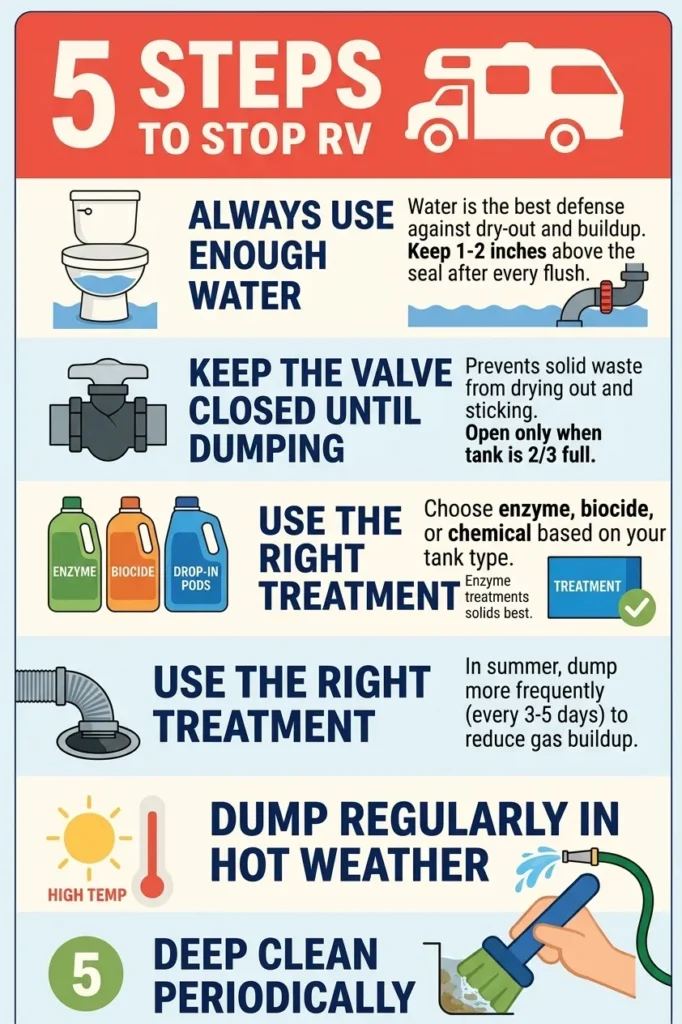
- Start with water. After every dump, pre-charge the black tank with 3 to 5 gallons of water.
- Use more water with every flush. Hold the pedal longer. Water moves waste and covers it.
- Keep a water seal in the toilet bowl. One inch of water blocks gas from the tank.
- Dump only when the tank is at least two-thirds full. A full tank drains better.
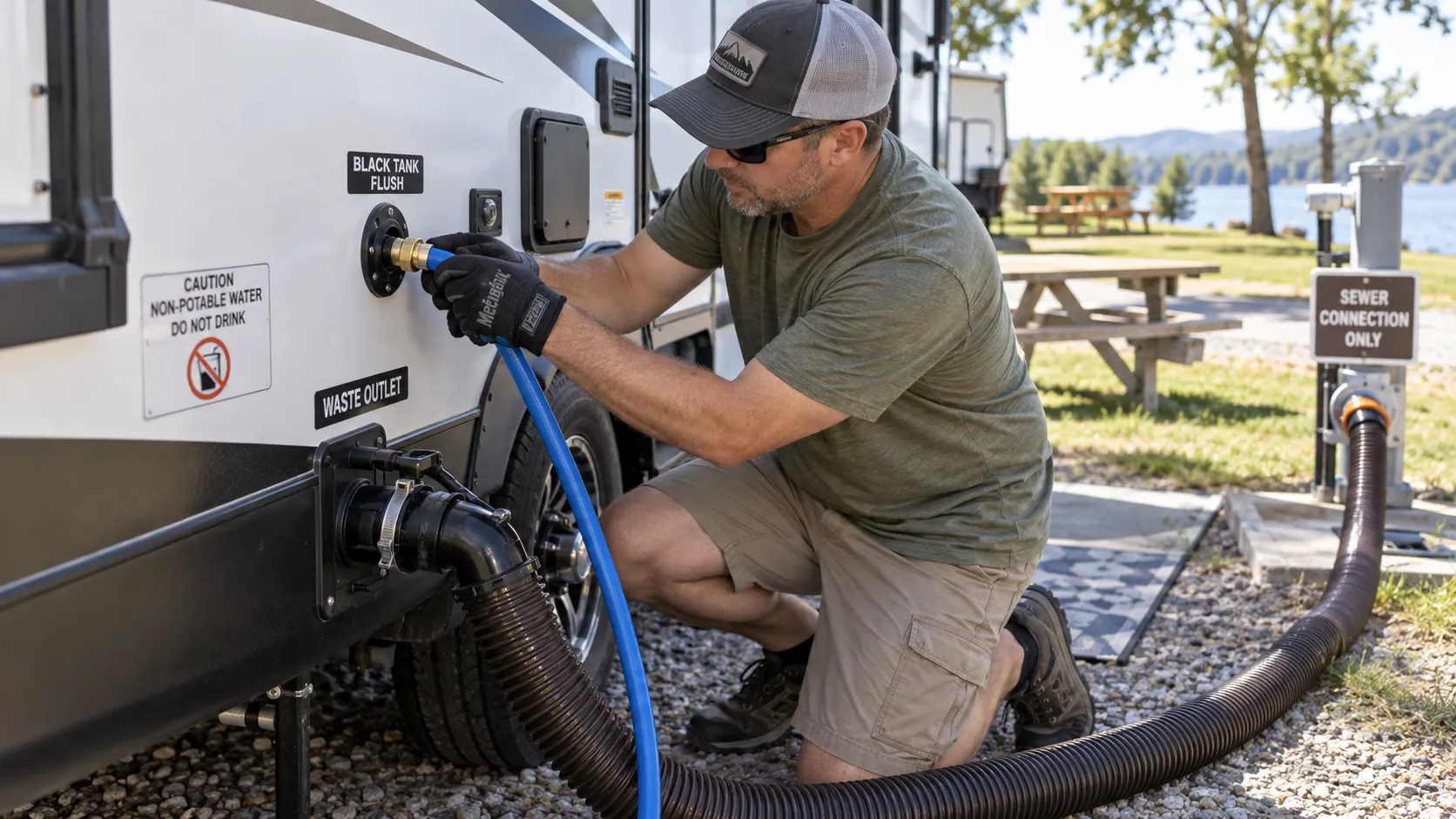
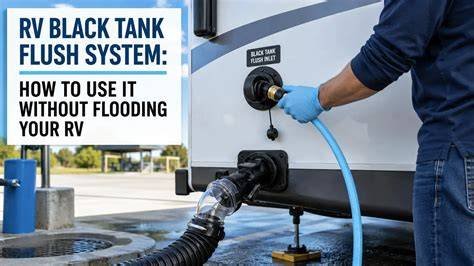
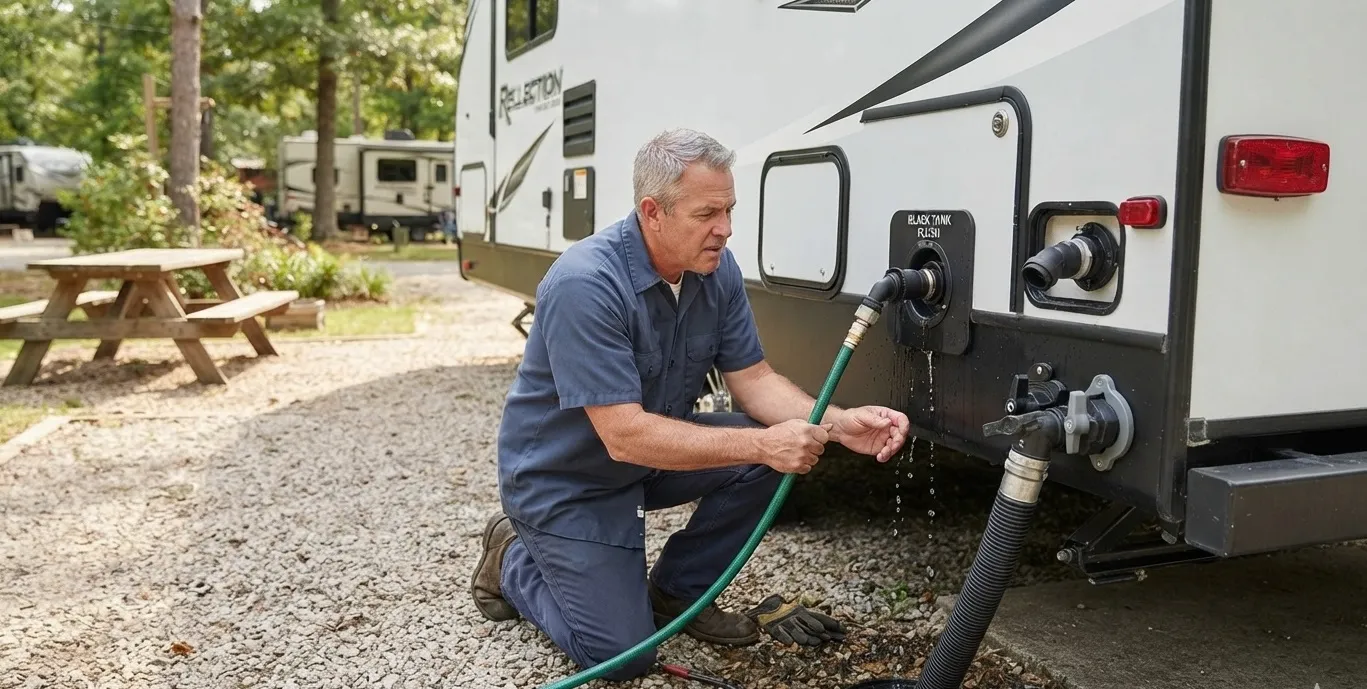
- Rinse after each dump. Use the built-in flush or a rinse wand until the water runs clear.
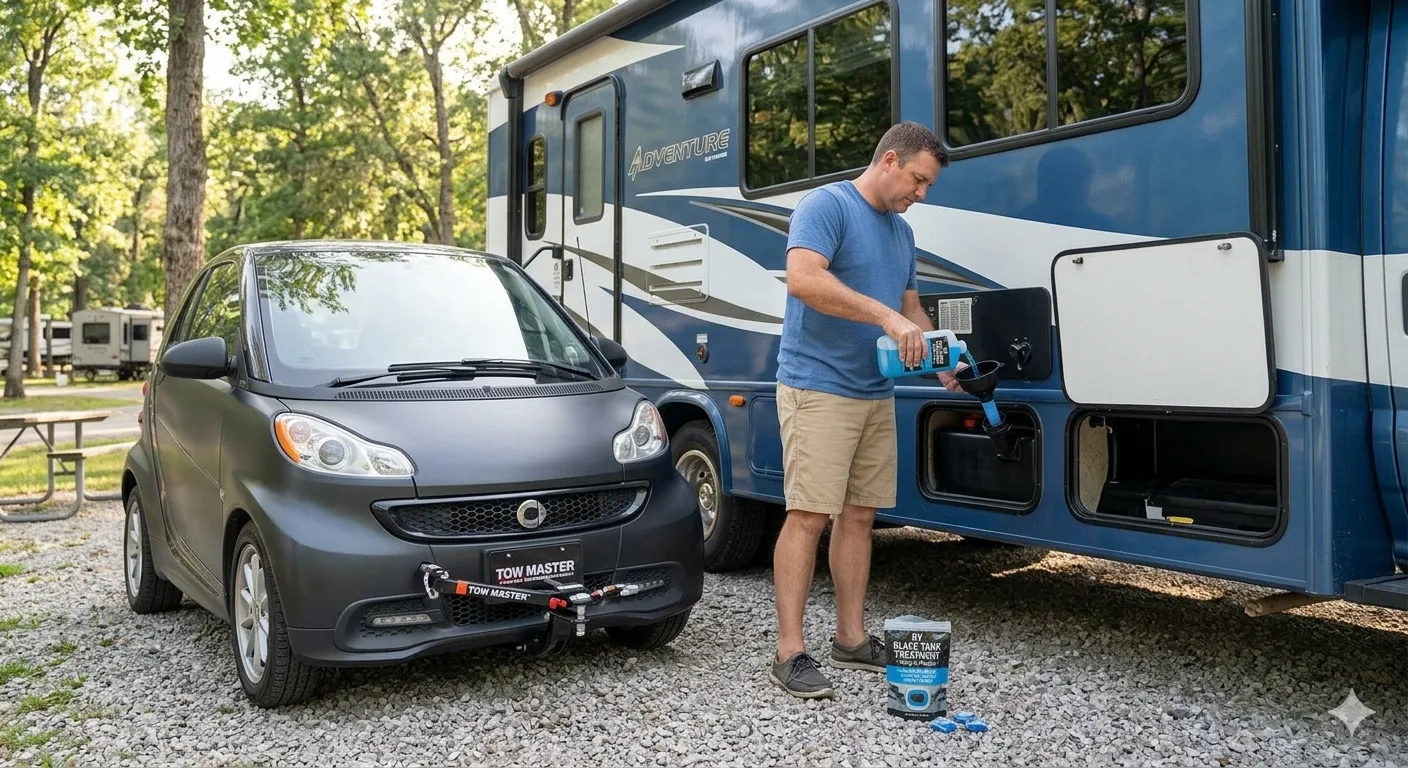
- Add a bacteria or enzyme treatment, then add two more gallons of water.
- Turn bathroom fans off when flushing. Fans can suck odors in.
- Check the roof vent each month. Make sure it is not blocked and the cap is sound.
- Inspect seals. Lube or replace the toilet seal if water will not stay in the bowl.
Follow this plan on how to stop RV black tank odors and keep it that way in any season.
How to Stop RV Black Tank Odors: Deep-clean reset
Do a deep reset if odors linger or sensors read wrong. I do this after buying a used RV or after a long boondock trip.
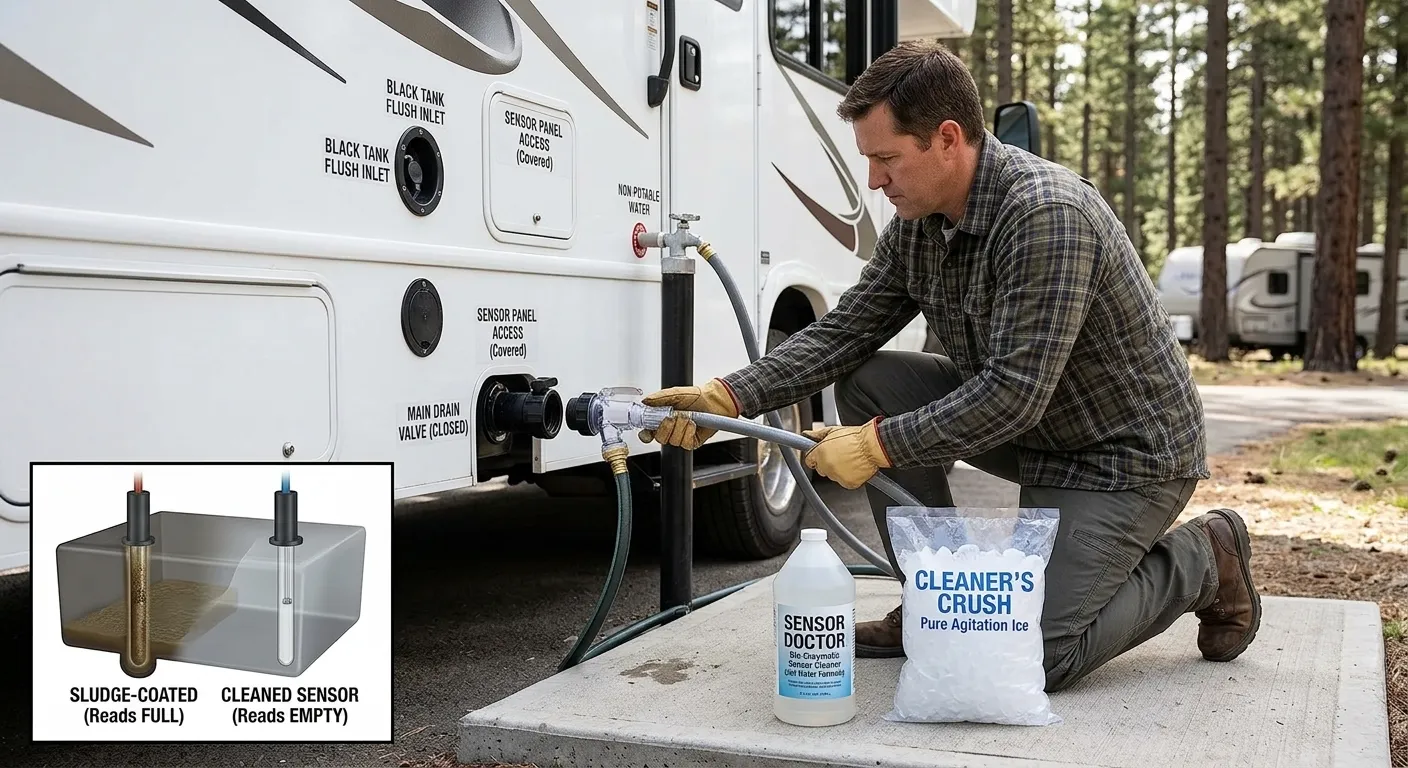
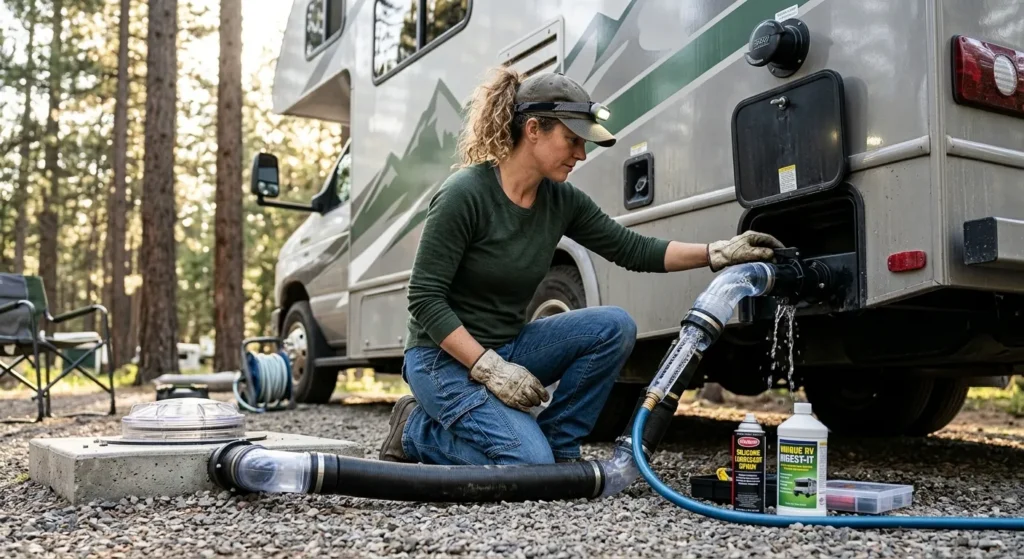
- Rinse long. Connect to the tank flush and rinse for 10 to 15 minutes. Watch a clear elbow at the sewer outlet to see when water clears.
- Soak overnight. Fill the black tank half to three-quarters full with warm water and an enzyme dose. Let it sit to break down sludge on the walls.
- Drive and slosh. A short drive helps the solution scrub the tank. Then dump and rinse again.
- Use a wand if needed. A rinse wand through the toilet can blast stuck paper pyramids.
- Try the soft-water method. Add a small dose of liquid water softener and mild detergent with lots of water. This helps lift residue. Rinse well after.
- Avoid bleach mixes. Bleach can create harsh fumes and can harm seals. Never mix bleach with any cleaner. Do not use it with bacteria treatments.
- Reset the bowl seal. Clean and lube the toilet blade seal. If it still leaks, replace it.
This deep-clean method is a safe path on how to stop RV black tank odors when routine steps fail.
How to Stop RV Black Tank Odors: Venting and hardware upgrades
Airflow fixes many odor problems. I have seen one simple vent cap change solve months of grief.
- Upgrade the roof vent cap. A siphon-style or wind-driven cap improves draw and reduces backdraft.
- Extend the vent pipe. Ensure the pipe reaches into the cap per the cap’s install guide.
- Seal the toilet. Replace worn seals or the whole blade valve if it sticks or leaks.
- Replace bad air admittance valves. These are under sinks and often fail. Grey odors can smell like black.
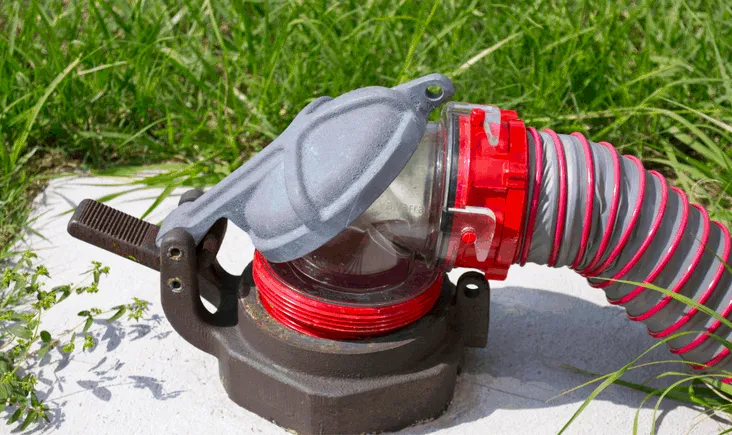
- Use a clear sewer elbow. It helps you see when the tank is truly clean.
- Check the anti-siphon vacuum breaker on the flush line. If it leaks, replace it.
Smart airflow is a key tactic in how to stop RV black tank odors for good.
How to Stop RV Black Tank Odors: Water, additives, and chemistry
Water is the main odor control. Additives help when used right.
- Bacteria and enzyme treatments. These boost breakdown and reduce gas. They work best with warm temps and enough water.
- Nitrate-based treatments. These redirect bacteria to reduce sulfur smells. They can help in hot weather.
- Plant oil deodorizers. These mask odors and can aid breakdown. Use with enough water.
- Avoid formaldehyde products. Several states restrict them. They can harm septic systems.
- Dose right. Follow the label for tank size and heat. More is not always better.
- Paper choice. RV paper helps sensors, but the real key is water. Many household 2-ply brands break down fine. Test a square in a jar of water to be sure.
Use this balanced approach when planning how to stop RV black tank odors in different climates.
How to Stop RV Black Tank Odors: Seasonal and travel tips
Conditions change. Your process should change too.
- Hot weather. Use more water and dump more often. Add treatment after each dump.
- Cold weather. Keep some liquid in the tank. Use RV antifreeze during storage to keep seals wet.
- Travel days. Pre-charge with water and treatment. Close roof vents so slosh does not push fumes inside.
- Altitude shifts. Gas expands as you climb. A clear vent and good bowl seal prevent blowback.
- Long-term storage. Leave one to two gallons of water with treatment in the black tank. Keep water in the bowl.
These small changes make a big impact on how to stop RV black tank odors across seasons.
Common mistakes that make odors worse
I see these mistakes often. They create the very odors people try to stop.
- Leaving the black valve open at full hookups
- Using too little water with each flush
- Running the bathroom fan during a flush
- Skipping rinses after dumping
- Mixing chemicals that kill good bacteria
- Ignoring a dry or leaking toilet bowl seal
- Forgetting the roof vent and sink air valves
- Blaming the black tank when the grey tank smells
Avoid these and you are already halfway on how to stop RV black tank odors.
Troubleshooting: Find and fix the source fast
Use these quick checks to target the cause.
- Smell only when flushing. Turn off the fan. Check the bowl water seal and toilet blade valve.
- Smell near sinks. Replace the air admittance valve. Run water to refill P-traps.
- Smell from the roof. Clear nests and debris. Upgrade the vent cap. Ensure the pipe reaches the cap.
- Smell at a campsite hookup. Use a proper sewer donut or threaded adapter. Wind can push sewer gas back.
- Smell all the time. Inspect for loose fittings or a cracked vent line. A smoke test can spot leaks.
This simple tree helps you decide how to stop RV black tank odors without guesswork.
A simple weekly checklist you can use
I keep this checklist on my phone. It works.
- Keep one inch of water in the toilet bowl
- Add two gallons of water after every dump
- Rinse until clear after dumping
- Add treatment per label and temperature
- Check the roof vent and vent cap
- Lube toilet seals monthly
- Turn bathroom fans off when flushing
- Keep the black valve closed until two-thirds full
Use this to lock in how to stop RV black tank odors week after week.
Frequently Asked Questions of How to Stop RV Black Tank Odors
How often should I dump the black tank?
Dump when the tank is at least two-thirds full. A fuller tank drains better and helps move solids and paper.
What additive works best to stop odors?
Enzyme or bacteria treatments work well with enough water and heat. Nitrate-based formulas can help in very hot weather.
Why does my RV smell worse when the bathroom fan is on?
The fan creates negative pressure. It can pull gas past the toilet seal during a flush.
Can I use bleach in my RV black tank?
It is not best for routine use. It can harm seals and disrupt good bacteria. Never mix bleach with any other cleaner.
Do I need special RV toilet paper?
It helps sensors, but water use matters more. Many soft household papers work if you flush with plenty of water.
Why do I get a rotten egg smell while driving?
Slosh and heat release hydrogen sulfide. Pre-charge with water and treatment, and keep vents and seals in good shape.
Could the grey tank be the real source?
Yes, often it is. Sinks and showers grow biofilm that smells like sewage if traps dry or vents fail.
Conclusion
Stopping black tank smells is simple once you control water, airflow, and cleaning. Build a steady routine, keep the vent clear, and care for seals. With the steps here, you now know how to stop RV black tank odors in any season or campsite.
Make this week your reset. Do a deep rinse, fix the vent, and start the routine. If this helped, subscribe for more RV care guides, or leave a comment with your toughest odor question.