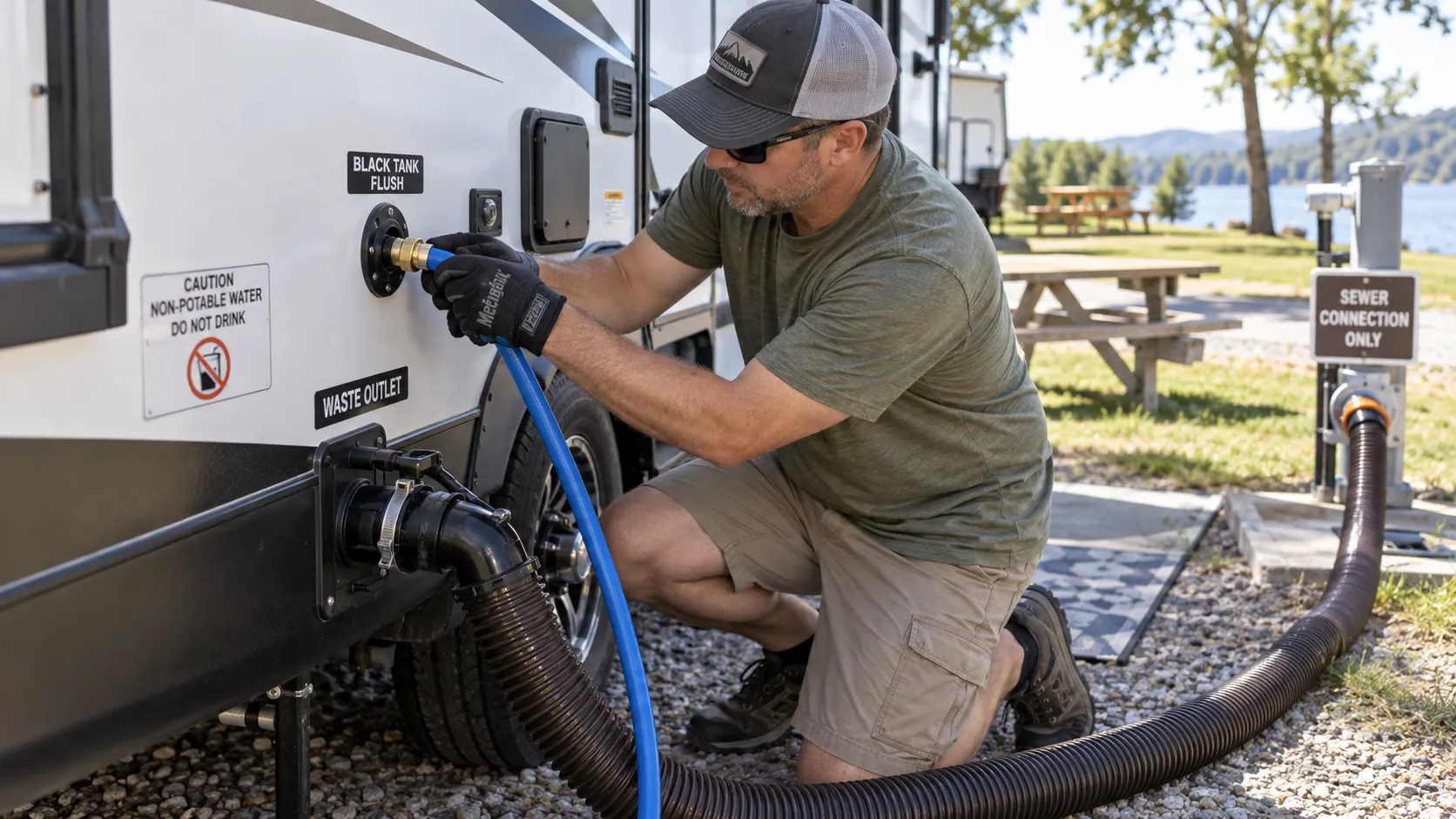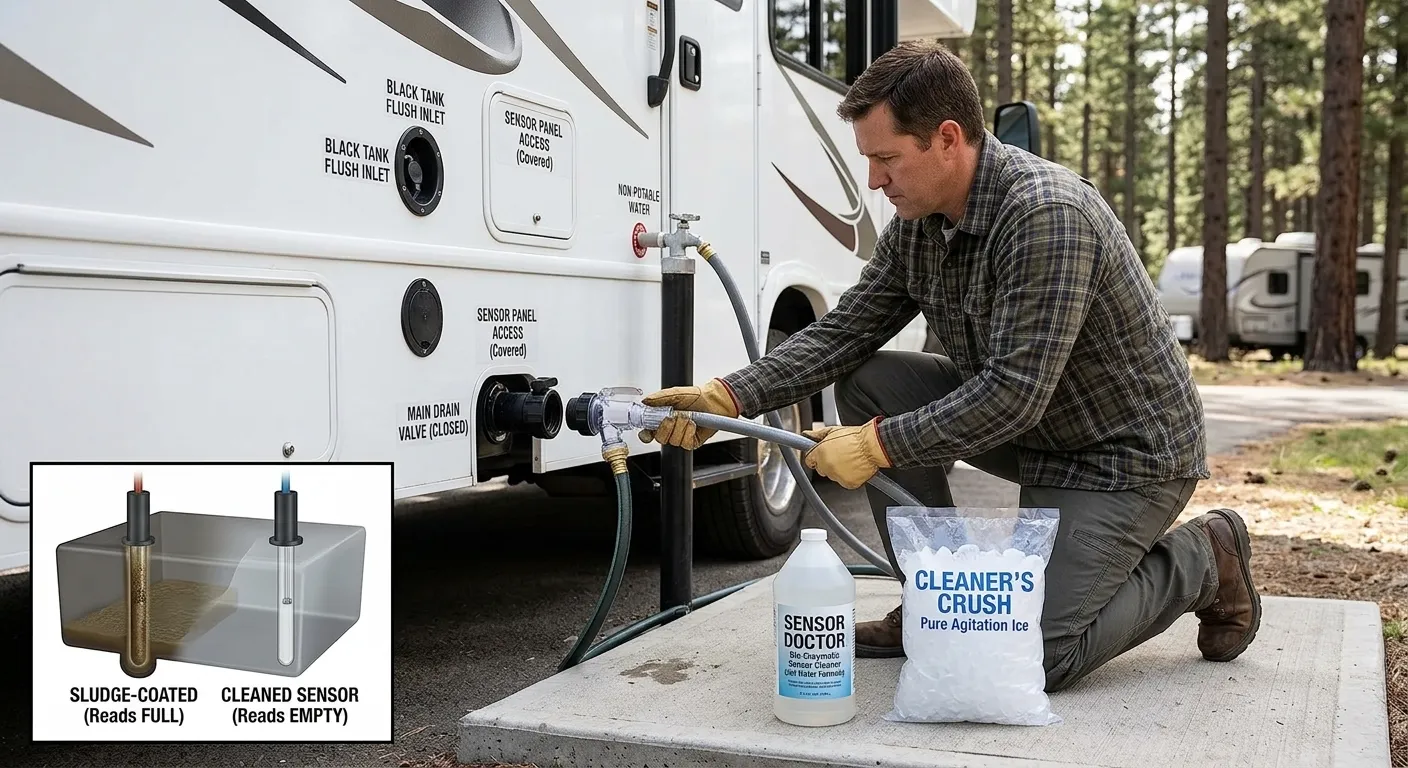

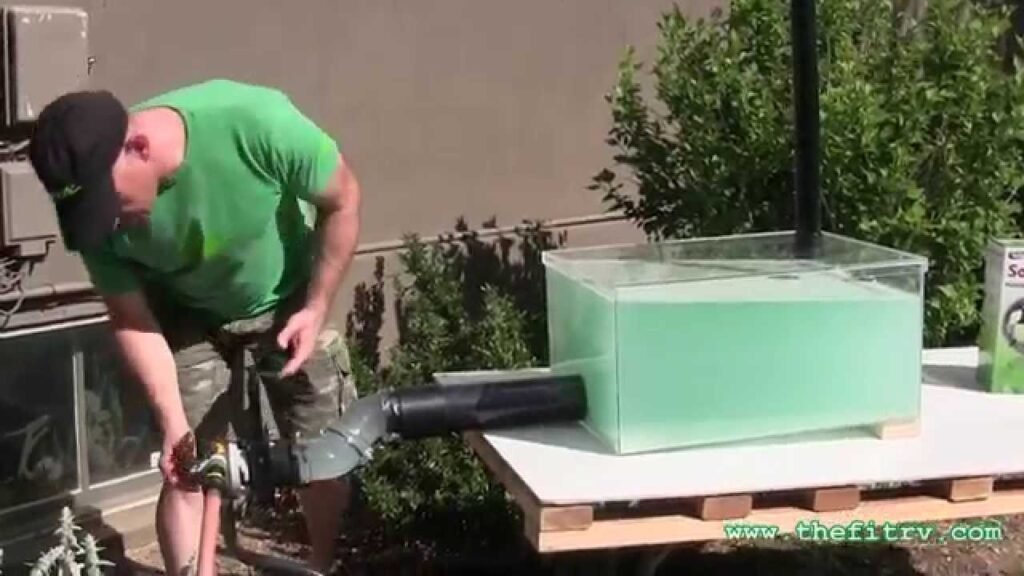
Fill, soak, agitate, and rinse using a wand, water, and gravity.
Not every RV comes with a built in flush system. Mine did not for the first two years I owned it. I was camping in a desert in summer with a tank that needed cleaning and nothing but a garden hose, a wand, and whatever I had in the cabinet. I figured out how to clean a black tank without a flush system the hard way — through trial, error, and a few very unpleasant afternoons at the dump station.
After maintaining black tanks in deserts, forests, and frozen winter campgrounds without a built in flush system, I have a clear simple process that works every time. This guide on how to clean a black tank without a flush system covers every tool, every step, and every habit that keeps your tank clean, your sensors reading correctly, and your rig smelling fresh — no built in flush system required.
How Your RV Black Tank Works
Your RV black tank holds toilet waste and drains by gravity through a gate valve. A roof vent equalizes pressure and helps odors escape. Most rigs have tank sensors that often show false readings when waste sticks to the walls.
You do not need a built-in sprayer to get the tank clean. Water volume, contact time, and directed rinsing are the keys. Once you learn how to clean a black tank without a flush system, you can keep sensors honest and odors down anywhere.

What You Need to Clean Rv Black Tank Without a Flush System
Gather a simple, dedicated kit. Keep it separate from fresh-water gear.
- Nitrile gloves and eye protection
- Non-potable garden hose and a hose shutoff valve
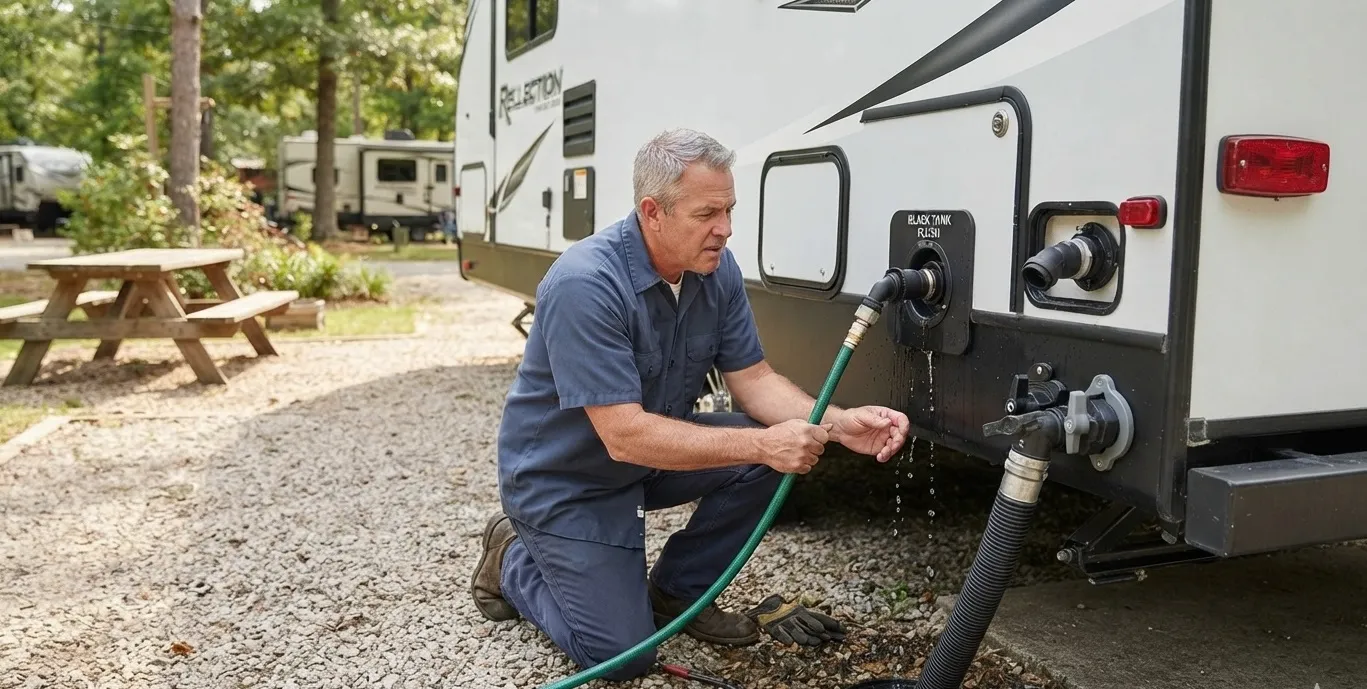
- Clear sewer elbow to see what’s coming out
- Sewer hose with tight fittings
- Flexible tank-wand sprayer that goes down the toilet
- Bucket or collapsible pail
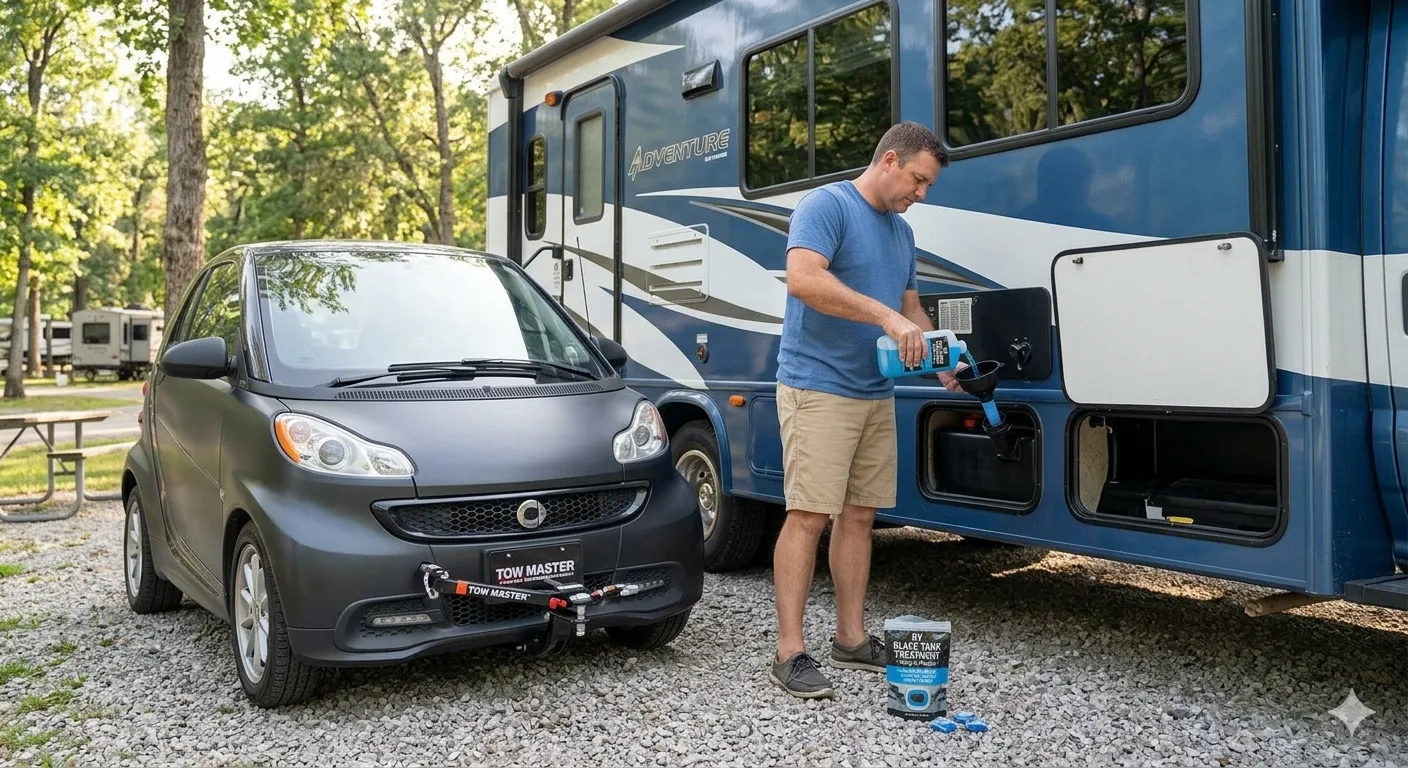
- Enzyme or bio-based tank treatment
- A few ounces of mild dish soap or specialized tank cleaner
- optional reverse-flush adapter for the sewer outlet
- Paper towels and disinfectant for cleanup
These low-cost tools are enough to master how to clean a black tank without a flush system on any trip.
Safety First
Black tanks contain harmful bacteria and gases. Protect yourself and your RV.
- Wear gloves and avoid touching your face.
- Use a dedicated, labeled hose. Never connect it to fresh water.
- Ventilate by opening the bathroom fan after closing the toilet lid.
- Never mix bleach with ammonia or unknown chemicals. It can create toxic gas.
- Secure all fittings before adding water or pressure.
I follow these rules on every service call. Simple steps prevent big problems when learning how to clean a black tank without a flush system.

Step-by-Step: How to Clean a Black Tank Without a Flush System
Follow this process on full hookups or at a dump station. It is fast, safe, and effective.
Prep and inspect
Make sure the sewer hose, clear elbow, and seals are tight. Level the RV so the tank drains well.Drain the tank
Open the black valve and empty the tank. Watch flow in the clear elbow. Close the valve when it slows to a trickle.Pre-fill and soak
Add 10–15 gallons of water through the toilet. Add enzyme treatment and 2–4 ounces of mild dish soap. Let it soak for 30–60 minutes. If you can drive, take a short 10–15 minute loop to slosh.Rinse with a tank wand
Insert the wand through the toilet. Keep the toilet valve open. Spray in a slow circle, aiming at corners and sensor areas. Drain again. Repeat until water runs mostly clear.Optional reverse flush from the sewer side
If you have a reverse-flush adapter, attach it to the outlet with your hose. Briefly backfill the tank for 20–30 seconds, then drain. Do two or three cycles. Do not over-pressurize.Final check and set-up for next use
Drain fully. Close the valve. Add 3–5 gallons of water plus treatment to start the next cycle. Water is your friend.
This routine is the backbone of how to clean a black tank without a flush system. It solves most odor, buildup, and sensor issues without fancy gear.
Deep-Clean Methods That Work Without a Built-In Flush
Sometimes you need a little more. These methods add power without installing a sprayer.
Soak-and-slosh method
- Fill the tank to two-thirds with warm water and treatment.
- Drive 15–30 minutes on a bumpy, safe road.
- Drain, then wand-rinse until clear.
Detergent and water softener (the balanced “GEO-style” clean)
- Add 2–4 ounces of mild liquid detergent and 4–8 ounces of liquid water softener.
- Fill tank halfway with warm water and soak overnight.
- Drain and wand-rinse.
Note: Softener helps reduce sticking. Avoid strong degreasers.
Hot-water rescue
- Close the valve. Add several buckets of hot (not boiling) water plus enzyme cleaner.
- Soak 1–2 hours, then rinse with a wand.
These methods round out how to clean a black tank without a flush system when buildup is stubborn or sensors are stuck.

Unclogging, Sensor Care, and Recovery
Pyramid plug fix
- Close the valve. Add hot water, enzyme cleaner, and a bit of dish soap.
- Let it sit 1–2 hours.
- Use the wand to break the cone from above. Drain and repeat.
Clogs near the outlet
- Close the valve. Use a reverse-flush adapter to backfill and move debris.
- Alternate short fills and drains. Do not leave it pressurized.
Sensor recovery
- Aim the wand along each side wall.
- Use an enzyme soak overnight, then rinse.
- Skip the “ice cube myth.” Tests show ice does not scrub tank walls well.
I have cleared dozens of tanks this way. The slow soak plus targeted spray is the most reliable part of how to clean a black tank without a flush system.
Odor Control and Preventive Maintenance
Odor problems come from dry tanks, poor venting, or stuck waste. Prevention is cheap and easy.
Daily habits
- Always start with 3–5 gallons of water in the tank after every dump.
- Use plenty of water with each flush.
- Keep the black valve closed until the tank is at least half full.
Treatments
- Enzyme or bio-based treatments help break down solids and control odor.
- Avoid formaldehyde products where restricted. They can harm septic systems.
Vent checks
- Make sure the roof vent is clear.
- Avoid running the bathroom fan with the toilet valve open. It can pull odors inside.
These steps are core to how to clean a black tank without a flush system and keep it fresh all season.

Common Mistakes to Avoid
- Leaving the black valve open on full hookups. Liquids drain and solids pile up.
- Using too little water. Dry tanks cause clogs and false sensor readings.
- Mixing random chemicals. Stick to simple, proven cleaners.
- Overusing bleach. Occasional light use is fine, but it can damage seals and kill helpful bacteria.
- Forcing high pressure for too long. You can blow seals or burp sewage inside.
Avoid these and you’ll master how to clean a black tank without a flush system with fewer surprises.
Time, Cost, and Maintenance Schedule
What to expect
- Routine clean at a dump station: 20–40 minutes.
- Deep clean with soak: 2–12 hours of passive time.
- Cost: Under $10 per clean for treatment and supplies.
Simple schedule
- Every dump: Drain, wand rinse, and start with 3–5 gallons of water plus treatment.
- Monthly: Soak-and-slosh or overnight enzyme soak.
- Quarterly: Inspect valve seals, hose gaskets, and vent.
This schedule keeps you ahead and proves how to clean a black tank without a flush system can be easy and cheap long term.
Frequently Asked Questions of How to Clean a Black Tank Without a Flush System
How often should I clean the black tank without a built-in flush?
Do a basic rinse at every dump and a deeper soak once a month. Adjust if you notice odors or sticky sensors.
Can I use bleach to clean the black tank?
Use it sparingly and diluted. Frequent or strong bleach can harm seals and kill beneficial bacteria.
Do ice cubes help clean the black tank?
Not much. Tests and real-world use show ice does not scrub walls well. Use water, enzyme soaks, and a wand.
What toilet paper should I use in an RV?
Use septic-safe or RV-specific paper that breaks down fast. Do a quick jar test at home if unsure.
How do I know the tank is clean without a flush system?
Watch the clear elbow. When water runs clear and sensors reset after a soak and rinse, you are in good shape.
Conclusion
You do not need a built-in sprayer to get pro-level results. With water, time, a wand, and smart habits, you can master how to clean a black tank without a flush system anywhere you camp. Start with a soak, rinse with intent, keep water in the tank, and close the valve until it is half full.
Take the checklist on your next trip and try this method once. Then share your results, subscribe for more RV maintenance guides, and ask questions so we can solve the tough jobs together.