
Open the tank drain and low-point valves, then vent faucets.
After maintaining and winterizing dozens of RVs—from weekend trailers to full-time Class A motorhomes—I’ve learned that the small maintenance jobs deserve just as much attention as the big repairs. Draining the fresh water tank is one of them. It sounds simple, but finding the right drain and checking that the tank has emptied can leave a new owner scratching their head. In this guide, I’ll walk you through How To Drain RV Fresh Water Tank, share practical checks to help you avoid leaks, and explain when your water system also needs sanitizing.
Why Draining Your RV Fresh Water Tank Matters
Stale water is the enemy of taste, health, and plumbing. It grows bacteria, leaves biofilm, and can gunk up sensors. Draining removes sediment and keeps your system light and healthy.
You also save weight. Water weighs about 8.34 pounds per gallon. An 80-gallon tank adds more than 660 pounds. Emptying before travel boosts fuel economy and handling.
Finally, proper draining helps before storage, after boondocking, and before sanitizing. If you care about long-term reliability, learn how to drain RV fresh water tank as part of normal maintenance.
Safety, Tools, and Prep Checklist
Great results start with simple prep. Use this checklist before you reach for a valve.
- Park on level ground or with a slight nose-up incline. This helps direct flow to the drain.
- Chock the wheels and set the parking brake for safety.
- Turn off the water pump and disconnect city water.
- Turn off the water heater and let it cool fully. Hot water can scald.
- Open a few faucets to vent the system and prevent vacuum lock.
- Gather tools: gloves, flashlight, towels, a dedicated potable-water hose, a drain hose or short length of tubing, and a bucket or floor pan.
- Know your disposal plan. Only drain potable water on approved ground or into a dump station.
These steps make how to drain RV fresh water tank easier and cleaner, with less mess and no surprises.

Find the Right Valves: A Quick RV Plumbing Map
Every RV is a bit different, but the key parts are similar. Locate these before you begin.
- Fresh tank drain valve or plug. Usually a capped hose stub or small valve near the tank’s lowest point.
- Low-point drains for cold and hot lines. Often two small valves under the rig or in the utility bay. Opening them speeds draining.
- Water heater drain/anode port and pressure relief valve. Only open after the heater has cooled.
- Pump inlet and winterize siphon tube (if equipped). Helpful for alternate drain methods.
- City water connection and gravity fill port. Can help with rinsing after the drain.
Snap a phone photo of labels and valve positions. It makes future work faster and avoids mix-ups when you learn how to drain RV fresh water tank on the road.
Step-by-Step: How to Drain RV Fresh Water Tank (Gravity Method)
This is the simplest and most common method. It uses the tank’s drain and low-point valves.
- Power down. Turn off the water pump and water heater. Unplug city water.
- Open faucets to vent. Crack open a sink and the shower to let air in.
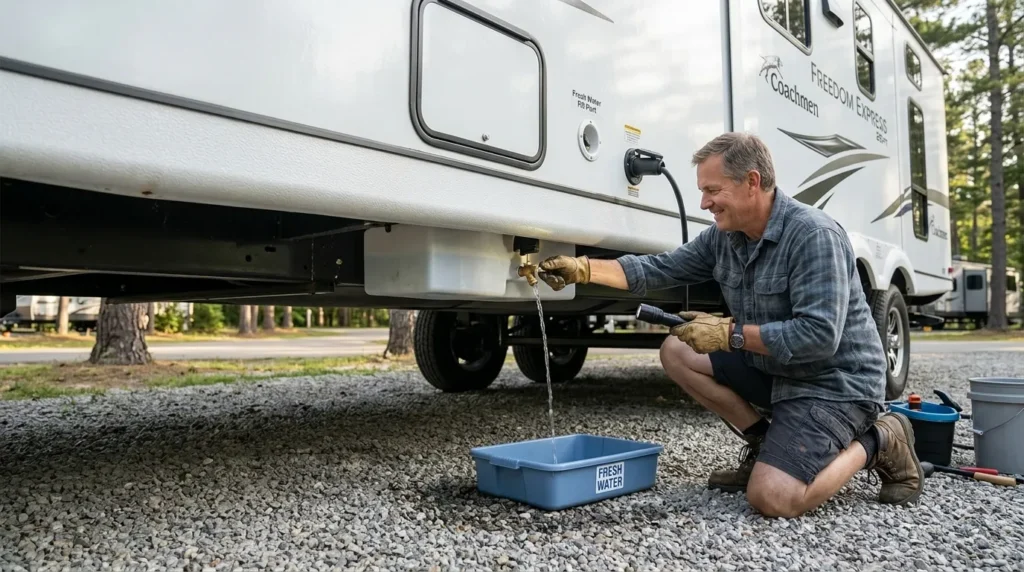
- Open the tank drain. Position a drain hose to guide water to a safe spot. Open the valve or remove the cap.
- Open low-point drains. This clears the hot and cold lines so they do not hold stale water.
- Speed the flow. Park with a slight incline toward the drain side if needed.
- Pulse the pump briefly. One- to two-second bursts can clear a stubborn pocket. Do not run dry.
- Let it finish. When the stream slows to drips, close low-point drains and the tank drain.
Tip: If sediment appears, repeat a quick fill-and-drain rinse. This is how to drain RV fresh water tank while flushing grit that can foul valves and filters.

Step-by-Step: How to Drain RV Fresh Water Tank Using the Water Pump
Use this if your drain valve is hard to reach, stuck, or if you want a directed discharge.
- Connect a hose to an exterior shower or a utility port. Run the hose to a safe drain point or bucket.
- Open the selected faucet to full cold.
- Turn on the pump and run water out until flow slows. Do not let the pump run dry.
- Open low-point drains to release line water.
- Finish by closing valves and cycling the pump for one second to clear the last bit, then switch it off.
This approach is an efficient backup for how to drain RV fresh water tank when gravity alone is slow or not possible.
Optional: Rinse, Sanitize, and Deodorize After Draining
A clean tank tastes better and lasts longer. Do this after long storage, a sulfur smell, or if you used questionable sources.
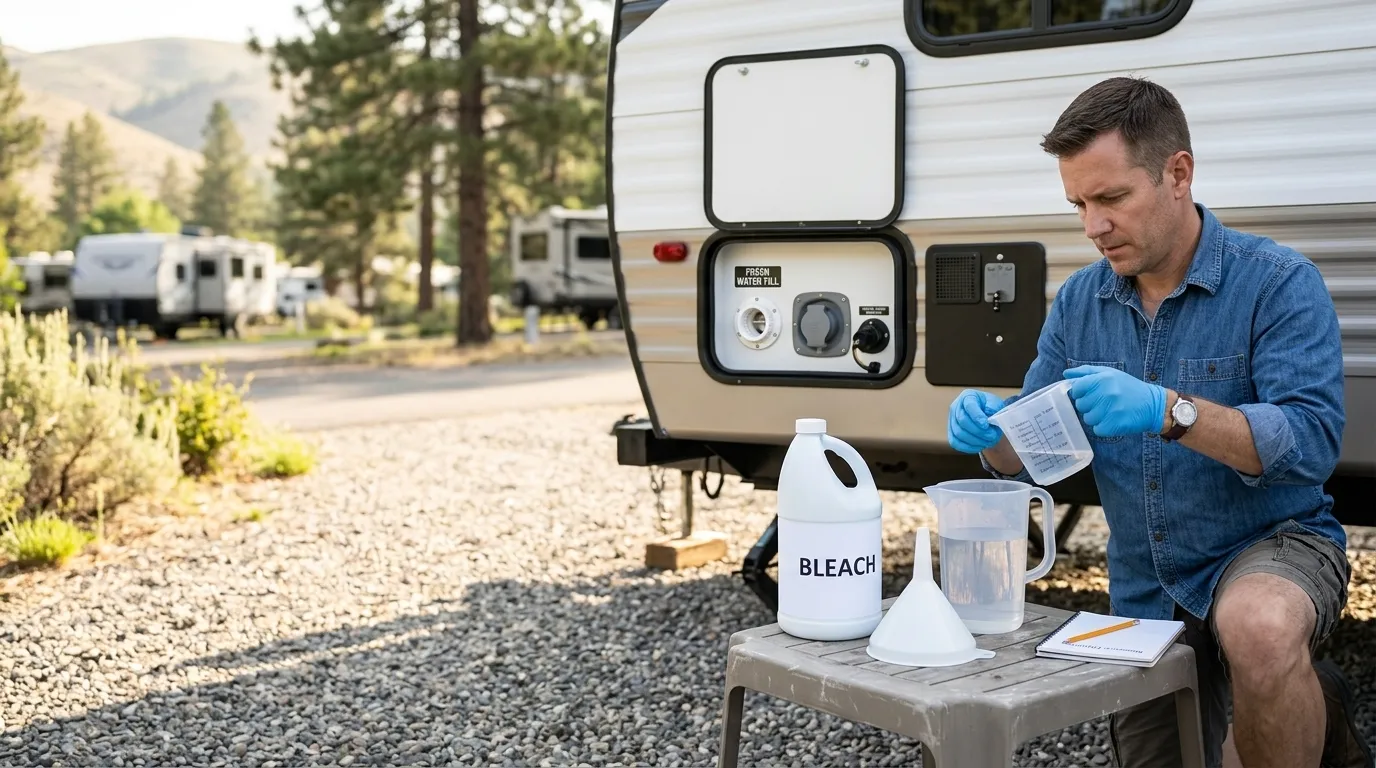
Sanitize with diluted bleach
- Mix 1/4 cup unscented household bleach per 15 gallons of tank capacity. For a 60-gallon tank, use 1 cup.
- Fill the tank with the solution. Run faucets until you smell chlorine, then shut them.
- Let sit 4 to 8 hours.
- Drain fully. Refill with fresh water and drain again until the smell fades.
Deodorize with vinegar (optional)
- Add 1 cup of white vinegar per 10 gallons. Fill, circulate, sit 1 to 2 hours, then drain and flush.
Replace any carbon filters afterward. This is the most reliable way I’ve found for how to drain RV fresh water tank and leave it fresh without lingering odors.
Winterizing Notes That Connect to How to Drain RV Fresh Water Tank
If temperatures drop below freezing, draining is step one.
- Drain the fresh tank, water lines via low-point drains, and the water heater after it cools.
- Bypass the water heater before adding RV antifreeze to lines. Never fill the fresh tank with antifreeze.
- Use compressed air (low pressure, 20–30 psi) to blow out lines if you prefer the dry method.
- Label valves in winterize position to avoid spring startup confusion.
This is how to drain RV fresh water tank as part of a safe winterizing workflow that prevents split lines and costly leaks.
Troubleshooting and Pro Tips From the Road
From years of service bays and campsites, here are fixes that work.
- Stuck drain valve. Gently wiggle the handle while relieving line pressure at a faucet. Do not force it.
- Slow trickle. Open more faucets to vent, check for kinks in the drain hose, or park with a stronger incline.
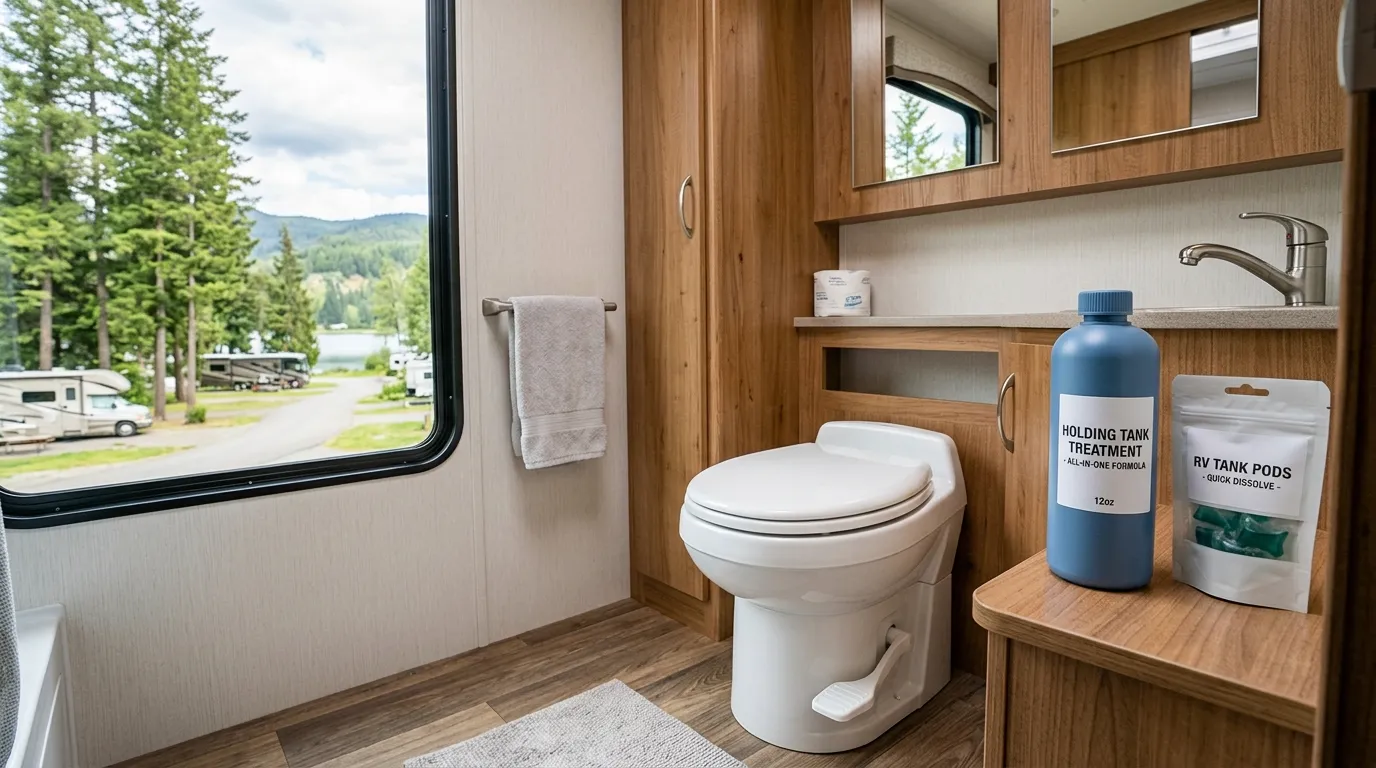
- Persistent odor. Sanitize twice. Replace the pump strainer and carbon filters. Biofilm can hide there.
- False tank-level readings. After draining, fill halfway and drive a short distance to slosh and loosen residue. Drain again.
- Drip after closing. Replace a worn cap or O-ring. Keep a spare cap and PTFE tape in your kit.
A quick story: in Utah, I got a rotten-egg smell after a hot week boondocking. Draining, then a bleach sanitize, solved it in one day. That experience cemented how to drain RV fresh water tank as a habit after dry camping.
Environmental and Legal Disposal Best Practices
Be a good neighbor and protect waterways.
- Potable water only. You may drain clean, untreated water onto gravel or grass where allowed. Keep it away from storm drains.
- Sanitizing solution. Discharge at a dump station. Even low-chlorine water can harm plants and aquatic life.
- Campground rules. Many parks require you to use the dump station for any tank water. Always ask.
- Avoid erosion. Use a short hose to guide flow and prevent soil washout.
These habits keep you compliant and respectful while practicing how to drain RV fresh water tank anywhere you camp.
Timing and Frequency: A Simple Care Schedule
Consistency matters more than complexity.
- After each trip longer than a weekend, drain the fresh tank and low-point lines.
- Monthly during storage, drain and refill for 5 minutes to refresh the system.
- Before big trips, drain stale water, then refill fresh and sanitize if it has been more than 60 days.
Tie these to your packing checklist, and how to drain RV fresh water tank becomes quick muscle memory.
Frequently Asked Questions of how to drain rv fresh water tank
How long does it take to drain an RV fresh water tank?
Most tanks drain in 10 to 30 minutes by gravity. Large tanks or small drain valves can take longer, especially without venting.
Can I drain onto the ground at a campsite?
Only if it is clean potable water and the campground allows it. Sanitizing water and anything with additives should go to a dump station.
Do I need to open the water heater when draining the fresh tank?
Not for the tank alone, but you should drain the water heater during winterizing or periodic maintenance. Always let it cool first to avoid burns.
What if my drain valve is stuck or I cannot find it?
Use the pump method via an exterior shower to route water to a safe place. Then schedule a fix for the valve or inspect with a tech.
How often should I sanitize the system?
Every 60 to 90 days, after storage, or any time you notice odor or cloudy water. Always sanitize after filling from unknown sources.
Is bleach safe for my RV plumbing?
Yes, at proper dilution and with thorough rinsing. Avoid scented bleach and never mix it with vinegar or other chemicals in the system.
Can I drive with some water in the tank?
Yes, but water sloshes and adds weight. If you do, keep it low or full to reduce surge, and secure all valves.
Conclusion
You now know how to drain RV fresh water tank the smart, safe way. Open the right valves, vent the system, use the pump when needed, and follow up with a simple sanitize. Do this on a schedule, and you will enjoy clean water, accurate sensors, and fewer plumbing repairs.
Take 15 minutes today to locate your valves and practice a dry run. Want more practical RV care tips? Subscribe, share this guide with a fellow traveler, or drop your questions in the comments.