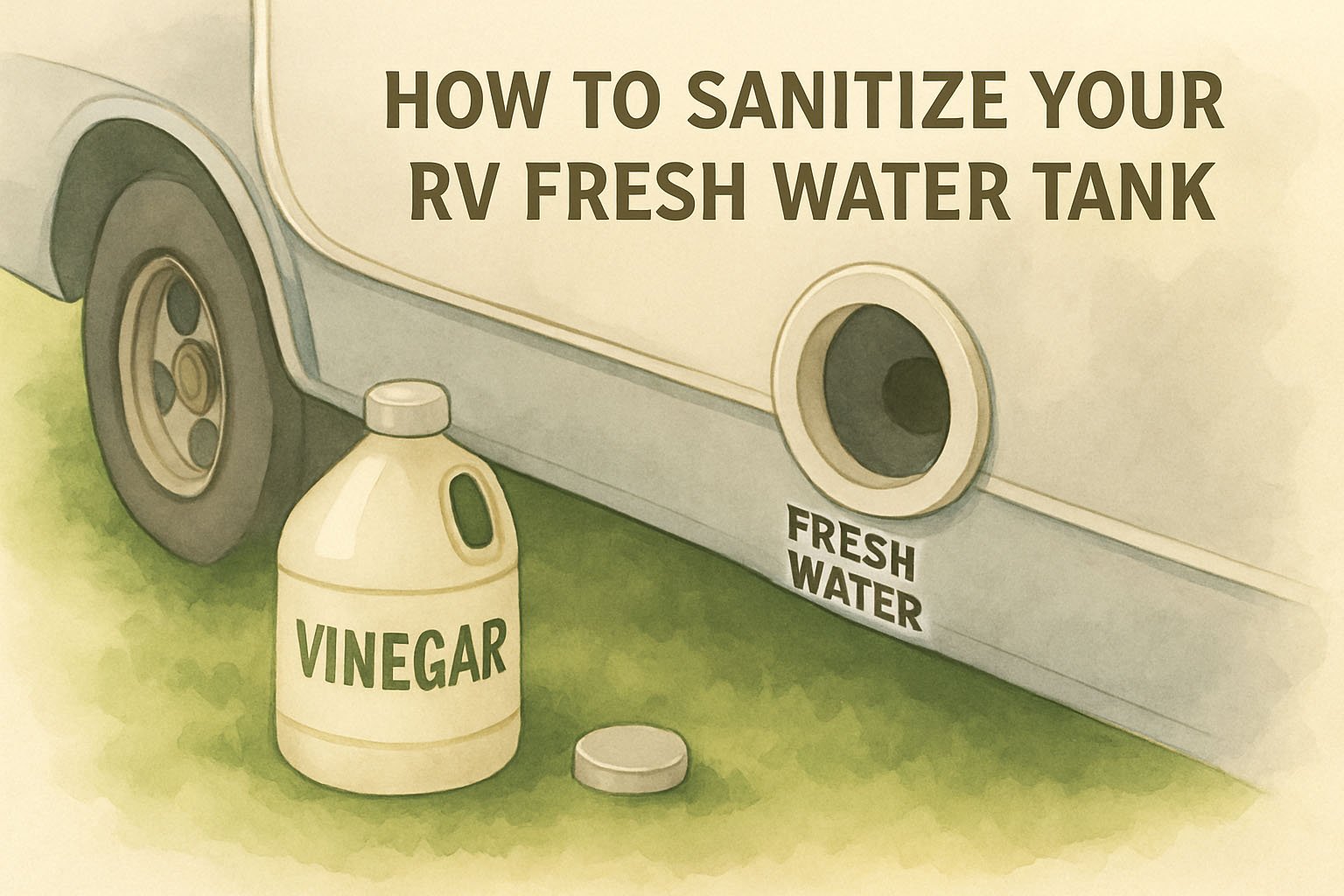

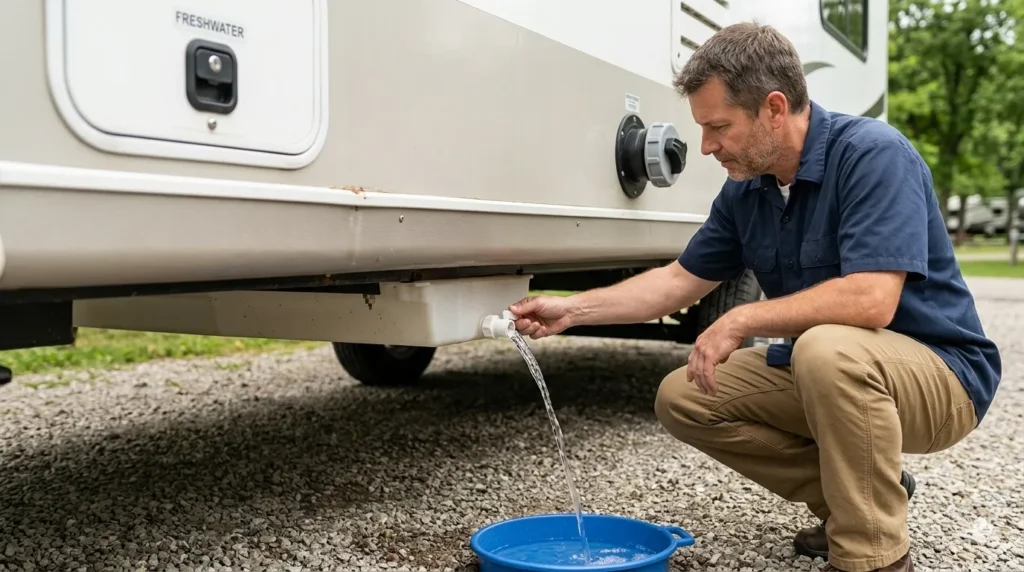
Turn off systems, open tank drain and low point valves, direct water safely.
Knowing How To Empty Fresh Water Tank In RV makes routine maintenance, storage preparation, and water changes easier. I recommend starting with your RV’s owner’s manual, since drain locations and procedures vary by model. In this guide, I’ll walk you through turning off the water pump and water heater, locating the freshwater tank drain, and choosing an appropriate place to release the water. I’ll also explain common mistakes and when draining alone isn’t enough—because emptying the tank doesn’t replace proper sanitizing or winterizing.
Why and when you should drain the fresh water tank
Your fresh tank can grow microbes if water sits still. Mineral scale and biofilm can build up. That can cause smells, bad taste, and clogged screens. Draining keeps your system clean and safe.
There are many times when you should drain. Before storage. Before winter. After a long trip. After filling with bad water. When you need to reduce weight for travel. This is also part of how to empty fresh water tank in RV with a focus on safety and care.
Follow local rules when you drain. Never dump water near streams or storm drains. Many parks ask you to use a dump station or a gravel area.
Here are quick answers people often ask:
- Do I need to drain after each trip? If the RV will sit more than a week, yes. It helps stop stale water and odor.
- Can I drain while on city water? No. Disconnect, power down, and relieve pressure first.
- Will draining help with taste? Yes. Old water and residue cause most taste issues.
Tools and prep checklist
I keep a small kit for this task. It makes the job fast and clean.
- Clean potable water hose to route discharge
- Work gloves and paper towels
- Bucket or drain pan for a test catch
- Adjustable pliers for stubborn caps or valves
- Flashlight to find the drain valve
- Teflon tape and spare valve cap in case of leaks
Prep steps before you begin:
- Park on level ground or with a slight tilt toward the drain side.
- Turn off the water pump and water heater. Unplug shore power and let the heater cool.
- Shut the city water supply. Open a faucet to relieve pressure.
- Find your fresh tank drain valve and the hot and cold low point drains. Check your owner’s manual if unsure.
If you like checklists, this part will become second nature. It is the base for how to empty fresh water tank in RV without mess.
Step-by-step: how to empty fresh water tank in RV
Follow this simple flow. I teach it on walkthroughs with new owners.
- Power down. Turn off the pump and water heater. Let the heater cool if it was on.
- Relieve pressure. Open a sink cold tap for a few seconds. Close it.
- Position a hose. If your tank drain has a barb or thread, add a hose to route water to a safe spot.
- Open the fresh tank drain. Turn the valve or remove the cap. Water should flow strong.
- Let air in. Open a couple of faucets inside. This breaks vacuum and speeds flow.
- Open low point drains. Open the hot and cold low point valves. This clears the lines.
- optional water heater drain. Turn off heater power and gas. Open the heater drain plug only after it is cool. Allow it to empty.
- Pulse the pump. With drains open, tap the pump switch for two to three seconds. This can push out low spots. Do not run it dry for long.
- Check for slow flow. If it slows, adjust the RV tilt or move the hose to help. A small slope helps the last gallon out.
- Close low point drains. When flow stops, close the hot and cold low point valves.
- Close the fresh tank drain. Re-cap or turn off the valve. Do not overtighten.
- Inspect for drips. Wipe fittings. If a drip remains, replace the washer or re-tape threads.
You now know the core of how to empty fresh water tank in RV the safe way. On my first trailer, I forgot to open a faucet for air. Flow crawled. Once I cracked a tap, the tank emptied fast. Little habits matter.
Where and how to dispose of the drained water
Fresh tank water is potable unless you added chemicals. Clear water is fine to release on gravel or landscaped areas in many places. Always check park or city rules. Never drain across roads, pads, or near storm grates.
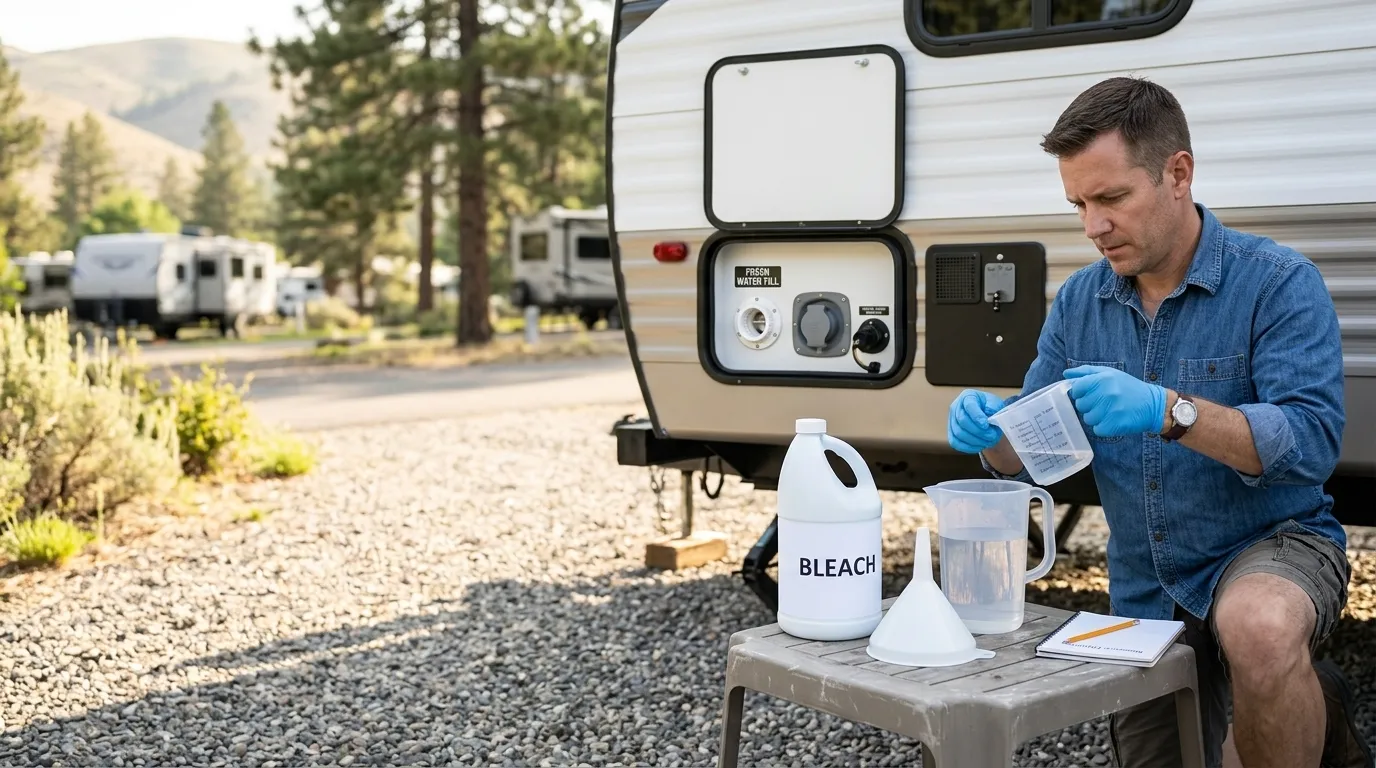
If you used bleach for a sanitize cycle, dilute it well first. Then send it to a dump station or a sanitary sewer inlet if allowed. Do not drain near plants you care about. Bleach can burn leaves.
For boondocking, walk the hose away from your site and spread the flow. Be a good neighbor. This is part of how to empty fresh water tank in RV without leaving a trace.
Sanitize and refill after you drain
A fresh tank needs a sanitize cycle a few times a year. I do it at the start of the season and after any bad water.
- Mix a safe bleach dose. A common guide is one quarter cup of plain bleach for each 15 gallons of tank size. Check your manual for exact amounts.
- Add the solution to the tank. Fill the rest with clean water.
- Run each faucet until you smell bleach. Include the shower and outside sprayer.
- Let it sit for four to eight hours.
- Drain the tank and lines. Refill with fresh water. Flush until the bleach smell is gone.
If bleach lingers, add a baking soda rinse. One tablespoon per gallon in the tank can help. This step pairs well with how to empty fresh water tank in RV since you already have drains open.

Troubleshooting and common mistakes
I have seen the same hiccups on many rigs. Here is how to handle them.
- Cannot find the drain. Look near the fresh tank underbelly or in the utility bay. The valve may be a small pull handle or a plastic cap.
- Slow trickle only. Open faucets to vent. Open low point drains. Tilt the RV a bit toward the drain side.
- Valve stuck or leaks. Use gentle plier pressure. Replace worn caps and washers. A drip after closing often needs a new o-ring.
- Bad smell returns fast. Biofilm may be in the lines. Do a full sanitize, including the water heater. Replace faucet aerators if needed.
- Running the pump dry. Use only short pulses with drains open. Prolonged dry run can damage the pump.
Avoid these mistakes during how to empty fresh water tank in RV. They cost time and can damage parts.
Maintenance schedule and storage tips
Make a simple rhythm. It keeps water clean and safe.
- Drain after trips longer than a week if the RV will sit.
- Sanitize at the start of the season, mid-season, and before storage.
- Keep the tank dry during long storage. Leave caps loose for airflow.
- Use a white, potable water hose only. Store it capped to keep dirt out.
- Shade helps. Heat speeds growth. Park out of direct sun when you can.
I learned to add “drain fresh” to my departure checklist. It is a small step that saves big headaches. This habit locks in how to empty fresh water tank in RV as part of normal care.

Variations by RV type and hardware
Not all rigs drain the same. Know your layout.
- Travel trailers often have a simple gravity drain under the belly. You may need to slide under and remove a cap.
- Fifth wheels and motorhomes may route the drain to a utility bay with a labeled valve. Some use a multi-valve panel for fill, sanitize, and winterize.
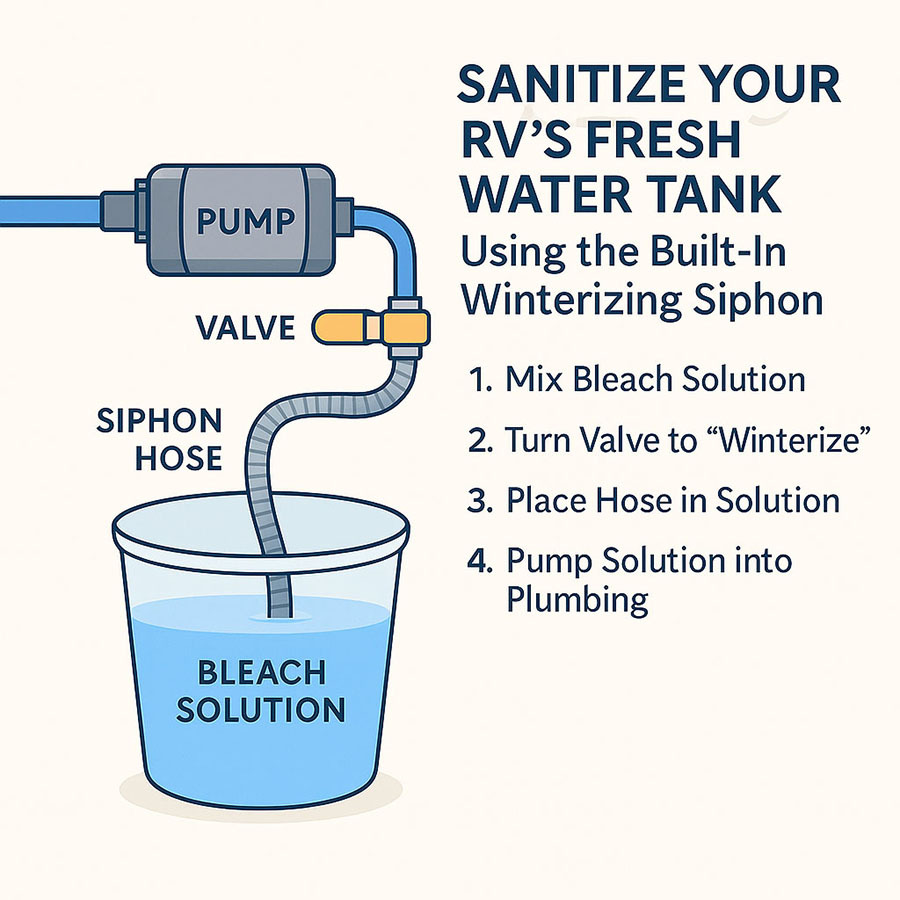
- Some rigs have a siphon tube to draw sanitizer. Others need you to pour it into the gravity fill.
Always confirm with your manual. Labels fade. A quick photo of your valves helps when you are on the road. This small prep supports how to empty fresh water tank in RV with zero guesswork.
Frequently Asked Questions
How often should I drain the fresh water tank?
Drain it after any trip if the RV will sit more than a week. If you use it weekly, drain and sanitize at least every one to two months.
Can I drain my fresh water tank on the ground?
If the water is untreated and you follow local rules, many places allow it on gravel or soil. Never drain near storm drains, sidewalks, or waterways.
Do I need to drain the water heater too?
It is a good idea during seasonal maintenance or winterizing. Turn off power and gas, let it cool, then remove the drain plug and anode if fitted.
How long does it take to drain a fresh tank?
Most tanks empty in 10 to 30 minutes, based on size and valve size. Opening faucets and low point drains speeds the flow.
Can I use the pump to help drain the tank?
Yes, for short pulses only with drains open. Do not run the pump dry for more than a few seconds.
What if I cannot find a fresh tank drain valve?
Look for a small capped line or a short hose near the tank. If you still cannot find it, check your manual or contact the manufacturer.
How to empty fresh water tank in RV during winterizing?
Follow the drain steps, then blow out lines or add RV antifreeze per your system. Make sure the water heater is bypassed before antifreeze.
Conclusion
A clean, safe water system starts with one simple habit. Learn how to empty fresh water tank in RV, do it on a schedule, and follow safe disposal rules. Add a quick sanitize a few times a year, and you will enjoy fresh, odor-free water on every trip.
Make today the day you set your routine. Save this guide, build a small kit, and practice once in your driveway. Want more practical RV care tips? Subscribe for new checklists and field-tested advice.