
Sanitize RV fresh water tank with safe bleach levels, full flush, and routine checks.
Clean water is essential for comfortable RV travel. I’ll show you how to Sanitize RV Fresh Water Tank safely, including how to prepare the system, follow product-label dosage instructions, and flush the tank and plumbing afterward. I’ll also share practical maintenance tips to help keep your water fresh between trips.
What It Means To Sanitize An RV Fresh Water Tank
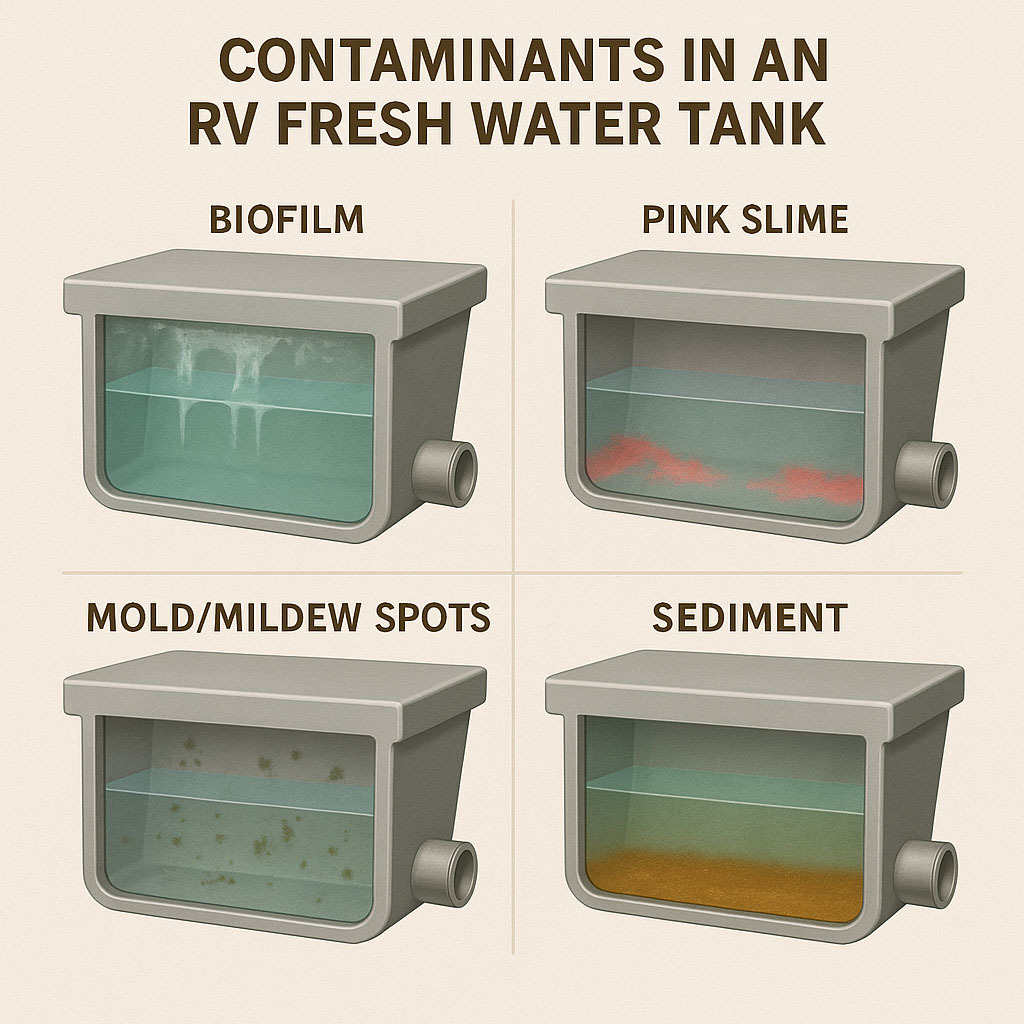
Sanitizing kills bacteria, viruses, and mold in your tank and lines. It also breaks up biofilm, the slimy layer where germs hide and grow. The goal is safe drinking water and no bad taste or odors.
Fresh water systems can grow microbes fast, especially after storage or hot weather. If you sanitize rv fresh water tank on a schedule, you avoid risk from E. coli, Legionella, and algae. Public health guidance supports using 50–100 ppm free chlorine for shock sanitation with full contact time, then flushing until no chlorine smell remains.
In plain terms, sanitize rv fresh water tank means dose the tank, run treated water to all faucets, let it sit, then flush and test. It is simple, safe, and cheap.
Why And When To Sanitize Your RV Fresh Water Tank
You should sanitize rv fresh water tank in these cases:
- After buying a new or used RV; you do not know its water history.
- After storage, even a few weeks. Stagnant water breeds growth.
- After using questionable park water or a non-potable hose.
- If you smell sulfur, bleach, plastic, or taste is off.
- At least every 3–6 months, even with filters.
From my own trips, waiting too long led to a sulfur smell that clung to coffee and ice. A full sanitize fixed it in one day. Since then, I sanitize rv fresh water tank at the start of each season and after any sketchy hookup.
Safety First: Chemicals, Concentrations, And Gear
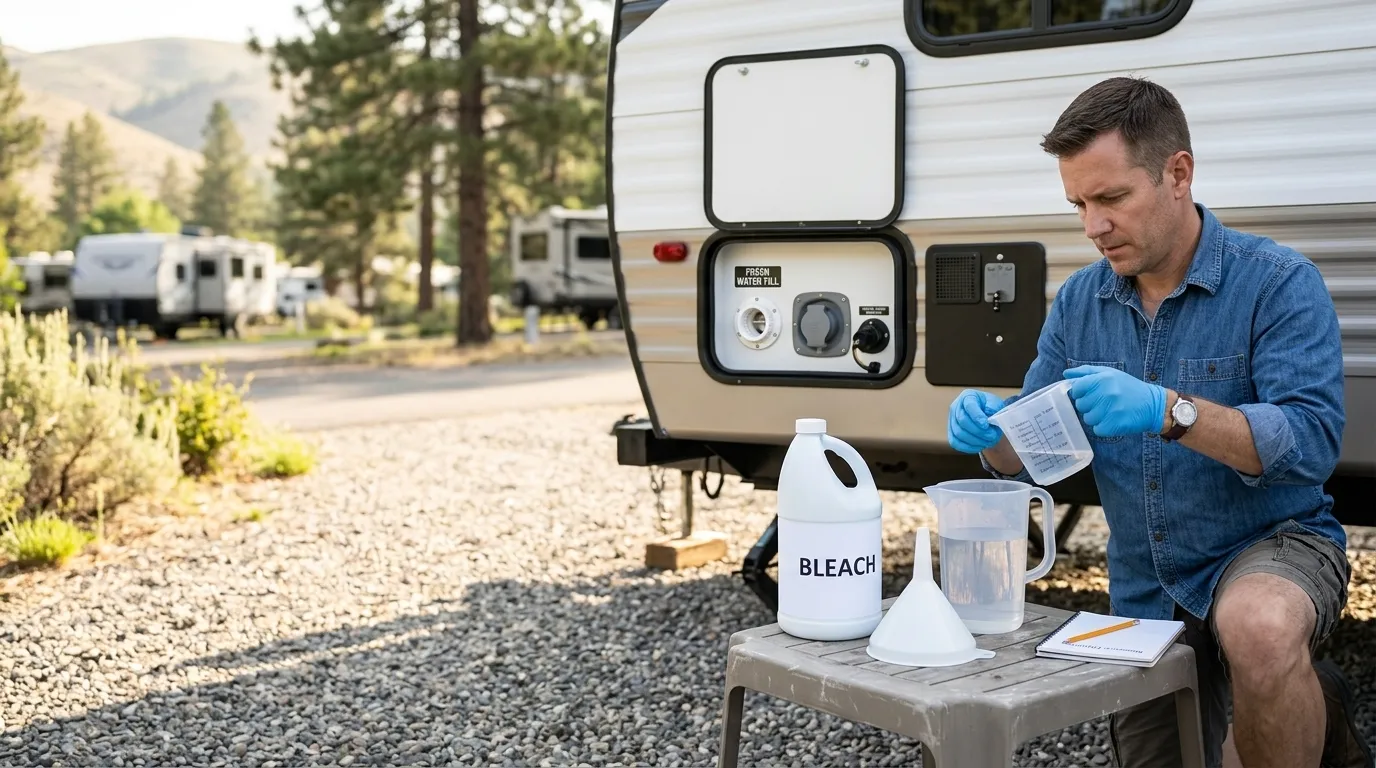
Use only unscented, plain household bleach (5–6% sodium hypochlorite). The target is about 50–100 ppm free chlorine in the tank. A practical rule that hits this range:
- Add 1/4 cup bleach for every 15 gallons of tank capacity.
Examples:
- 30-gallon tank: 1/2 cup bleach total.
- 45-gallon tank: 3/4 cup bleach total.
- 60-gallon tank: 1 cup bleach total.
Gear and prep:
- Clean, potable water hose dedicated to fresh water only.
- Funnel and a measuring cup used only for water tasks.
- Gloves and eye protection if you tend to splash.
- Bypass the water heater so bleach stays out of the heater tank.
- Turn the water heater off at the breaker and switch.
Accurate dosing and good contact time matter. It is how you sanitize rv fresh water tank without harming seals or leaving taste behind.
Step-By-Step: How To Sanitize RV Fresh Water Tank With Bleach
Follow these steps end-to-end. Plan a half day plus a few hours of soak time.
- Turn off the water heater and pump. If you have a bypass on the water heater, set it to bypass.
- Drain the fresh tank and lines. Open low-point drains. Open all faucets and the shower until flow stops. Close drains.
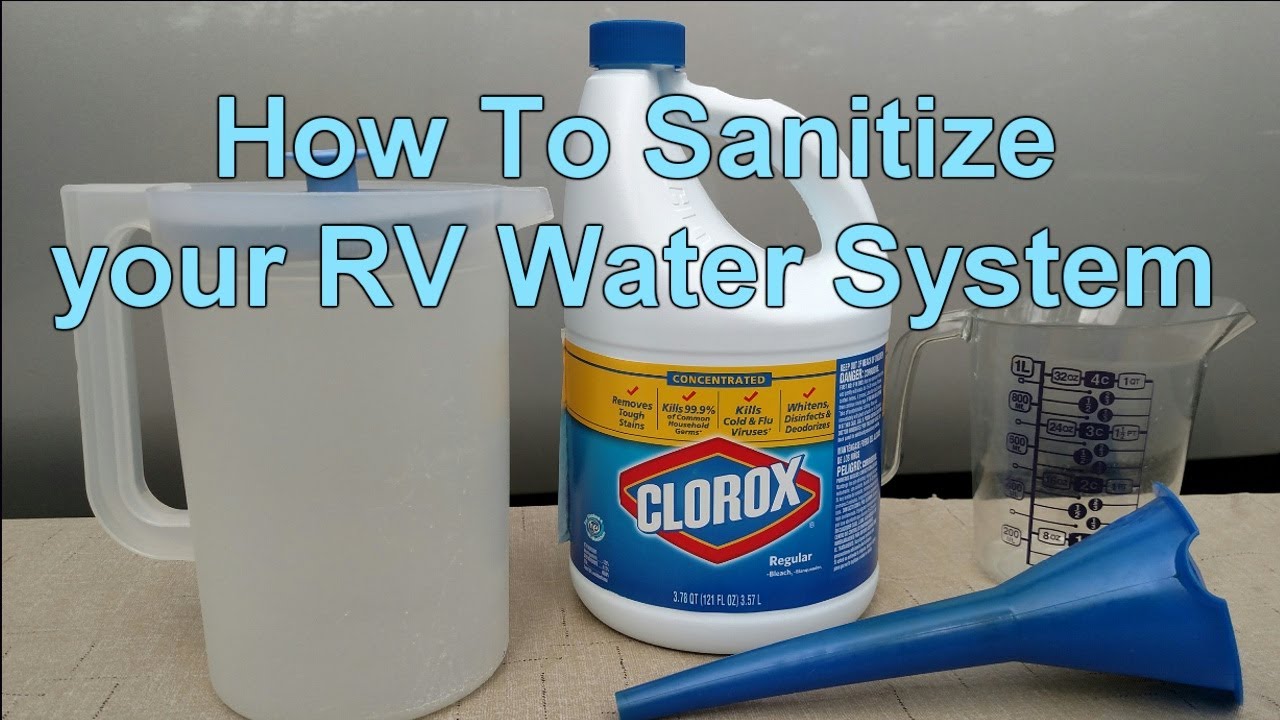
- Measure bleach. Use 1/4 cup per 15 gallons of tank size. Mix the bleach into a gallon or two of clean water to dilute before adding.
- Pour the bleach mix into the fresh tank. Use the gravity fill or a funnel on the fill port.
- Fill the tank with potable water until nearly full.
- Turn on the pump. One faucet at a time, run cold, then hot, until you smell bleach, then close. Do sinks, shower, toilet, outside shower, and city water inlet if your rig allows backflow sanitation.
- Let it sit 4–8 hours. Overnight is fine. Drive a few miles to slosh if you can. That helps contact all surfaces.
- Drain the system fully. Open low-point drains and the tank drain.
- Flush. Refill with fresh water and run each faucet until the chlorine smell fades. Repeat a second full flush if needed.
- Optional deodorize. Mix 1/4 cup baking soda per 10 gallons of water. Fill, circulate to faucets, sit 30 minutes, then drain and refill with plain water once.
- Replace or reinstall carbon filters. Test with chlorine test strips. You want near-zero chlorine at the tap.
This process is the gold standard to sanitize rv fresh water tank. It is cheap, fast, and works.
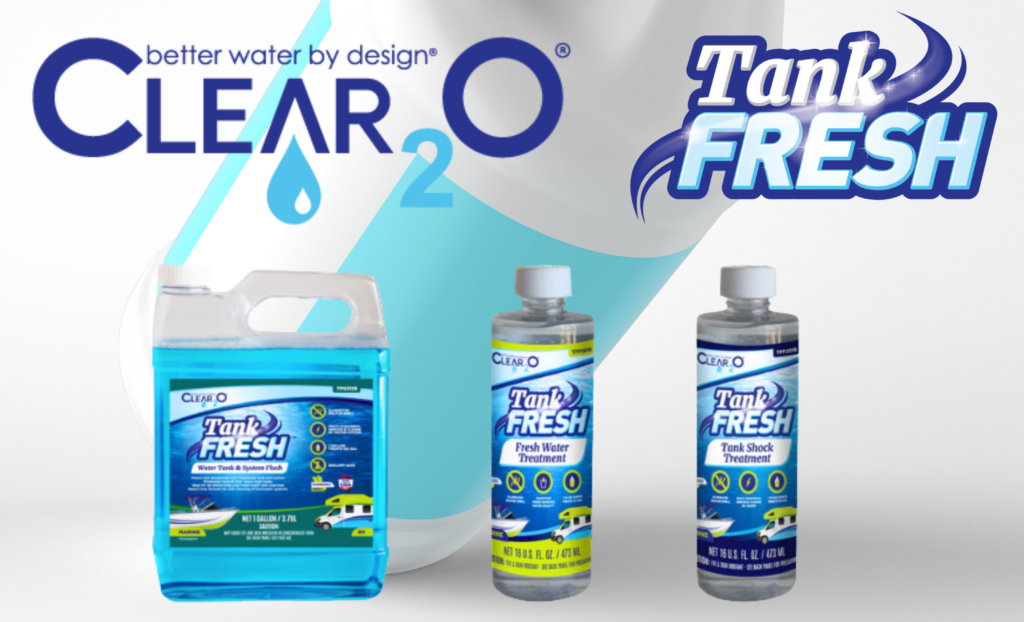
Alternatives To Bleach: Vinegar, Hydrogen Peroxide, And Tank Sanitizers
Bleach is the most proven option. Still, some owners prefer different products. Here is what works and what to expect.
- White vinegar: Helps dissolve scale and reduce odors. It is not a broad disinfectant at low levels. If you use it, aim for 1 cup per 10 gallons. Circulate and soak 4–8 hours, then flush. Do not mix with bleach.
- Hydrogen peroxide (3%): Effective at higher contact times. A common dose is 1 cup per 10 gallons, which yields about 190 ppm. Soak 4–8 hours. Flush until the taste is clean.
- Chlorine dioxide solutions (e.g., RV sanitizers): Very effective against biofilm and odor with less taste carryover. Follow the label for dose and contact time.
If you choose an alternative, still sanitize rv fresh water tank on the same schedule. Always follow the product label. Do not combine chemicals.
Flushing, Deodorizing, And Taste Tips
Sometimes the water tastes off after a sanitize. Try these steps:
- Use a final baking soda rinse. Mix 1/4 cup per 10 gallons, circulate, soak 30 minutes, then flush.
- Install a fresh carbon filter at the cold galley faucet. It will polish taste.
- Avoid scented bleach. Only use plain, unscented bleach.
- Sanitize the hose. Fill it with the same solution, soak 30 minutes, then flush.
If taste lingers, fill and drain once more. Then let the tank sit full of fresh water for a day. This helps when you sanitize rv fresh water tank after long storage.
Maintenance Plan: Prevent Contamination And Keep Water Tasting Great
A simple plan keeps problems away:
- Sanitize rv fresh water tank every 3–6 months, and always after storage.
- Use only a dedicated, potable water hose with clean end caps.
- Flush the hose before each fill. Let water run for 30–60 seconds.
- Keep the tank at least one-third full on trips. This limits air and growth.
- Replace carbon filters every 3 months or sooner if flow slows.
- Screen the tank vent to block insects.
- Winterize properly. Then sanitize rv fresh water tank when you dewinterize.
On long tours, I log fill locations and dates. If a park has metallic or sulfur water, I add a mid-trip sanitize. It has saved coffee, soup, and ice more than once.
Troubleshooting: Common Problems After You Sanitize
Persistent chlorine smell
- Do one more full refill and flush. Install a carbon filter. A baking soda rinse helps knock it down fast.
Rubber or plastic taste
- Flush hot and cold lines longer. Heat can leach taste from new hoses. Replace any old vinyl lines if they stay smelly.
Cloudy water on first fill
- Air bubbles from flushing will clear. If it stays cloudy, drain and refill, then check your source water.
Pump runs short cycles
- Air remains in lines. Open the farthest faucet and run until stream is steady. Check for leaks at low-point drains.
Sulfur or rotten egg smell returns fast
- Biofilm may be heavy. Sanitize rv fresh water tank again with full contact time. Consider a chlorine dioxide product for biofilm.
Environmental And Safety Notes
Chlorinated flush water can stress lawns. Drain to gravel or a driveway if possible. You can neutralize chlorine with vitamin C crystals (ascorbic acid). A teaspoon in a bucket removes most free chlorine.
Store bleach sealed, away from heat and sunlight. Replace old bottles yearly. Never mix bleach with vinegar or ammonia. Always bypass the water heater during sanitation, and only relight after you flush and refill with clean water.
These small steps make it safer to sanitize rv fresh water tank without harming your rig or the campsite.
Frequently Asked Questions of sanitize rv fresh water tank
How often should I sanitize my RV fresh water tank?
Sanitize every 3–6 months, and after any storage period. Also sanitize rv fresh water tank after using a suspect water source or buying a used RV.
How much bleach do I need for a 40-gallon tank?
Use about 2/3 cup of unscented bleach. That follows the 1/4 cup per 15 gallons rule to sanitize rv fresh water tank to 50–100 ppm.
Do I need to bypass the water heater?
Yes, always bypass. You want to sanitize rv fresh water tank and the cold and hot lines, but not the water heater tank with bleach.
Can I use pool shock instead of household bleach?
Stick to plain, unscented household bleach. Some pool shocks are too strong or have additives not meant to sanitize rv fresh water tank plumbing.
Is vinegar enough to disinfect the tank?
Vinegar helps with odor and scale but is weaker as a disinfectant. Use bleach or chlorine dioxide if your goal is to sanitize rv fresh water tank.
How long should the solution sit in the system?
Allow 4–8 hours for contact time. Overnight is fine when you sanitize rv fresh water tank for a full shock.
Is it safe to drink from the RV tank after sanitizing?
Yes, after you flush until there is no chlorine smell and test shows near-zero chlorine. Many travelers still use a carbon filter at the tap for taste.
Conclusion
A clean, safe water system is not luck. It is a simple habit. Dose correctly, let it sit, flush well, and test. When you sanitize rv fresh water tank on a schedule, you protect your health, your plumbing, and your peace of mind on the road.
Put a reminder on your calendar and gather your kit now. If this guide helped, subscribe for more RV care tips, or share your own sanitizing routine in the comments.